
Surah Luqman – Read Online, PDF & Translation | Faiz e Islam
Surah Luqman is the 31st chapter of the Holy Quran, revealed in Makkah, with 34 verses across 4 rukus, placed in Juz 21. It takes its name from Luqman, a wise man mentioned in verses 12-19, who is remembered for the timeless counsel he gave his son — warning against shirk (associating partners with Allah), and urging gratitude, patience, humble speech, and steadfast prayer. The Surah opens by affirming the Quran as a source of guidance and mercy for those who do good, then weaves together Luqman’s practical wisdom with core reminders of faith: Allah’s knowledge encompasses the unseen, the wombs, and the future, and every soul will ultimately return to Him. It closes with a reflection on the signs of Allah’s creation and the limits of human and worldly knowledge. Read the complete Surah Luqman online in Arabic on Faiz e Islam, with English translation, audio recitation, and a free PDF download.
Surah Luqman Download PDF
Surah Luqman Overview
| Surat Luqman Ayats | Surah Lukman Words | Surah Lucman Letter | Surah Luqman Ruku |
| 34 | 550 | 1739 | 4 |
Listen Surah Luqman Online
Colour Coded Tajweed Rules

Surah Luqman Read Online
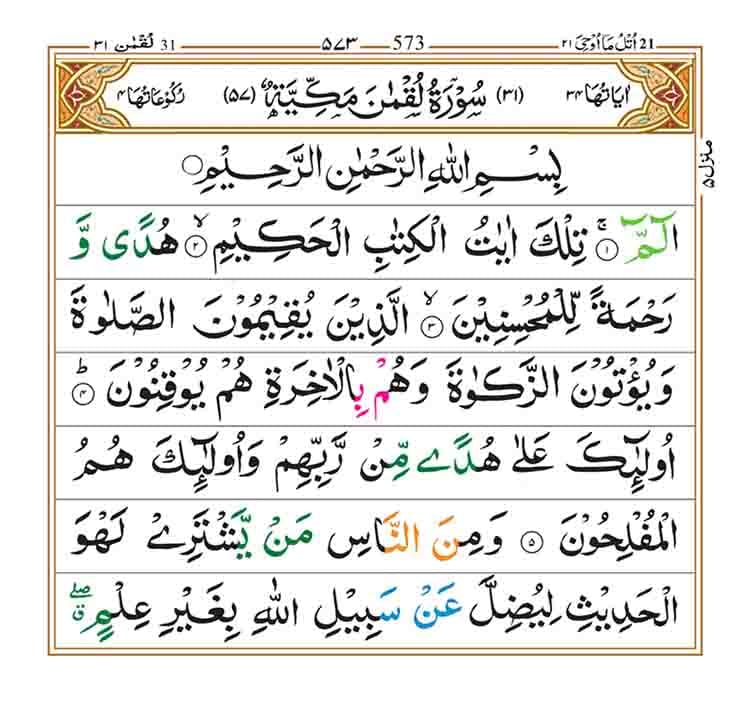
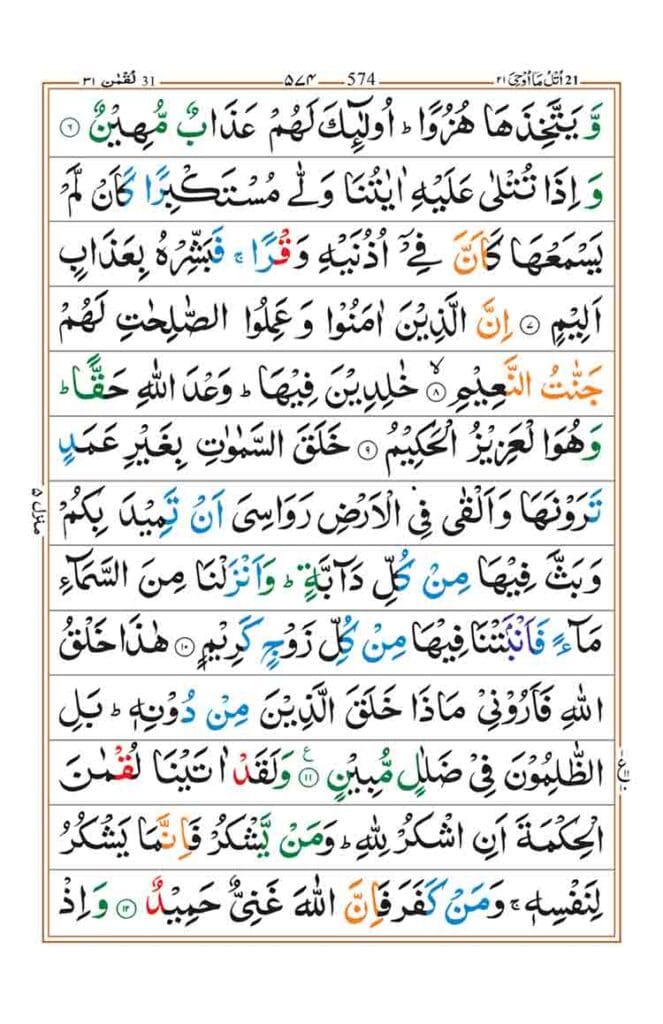
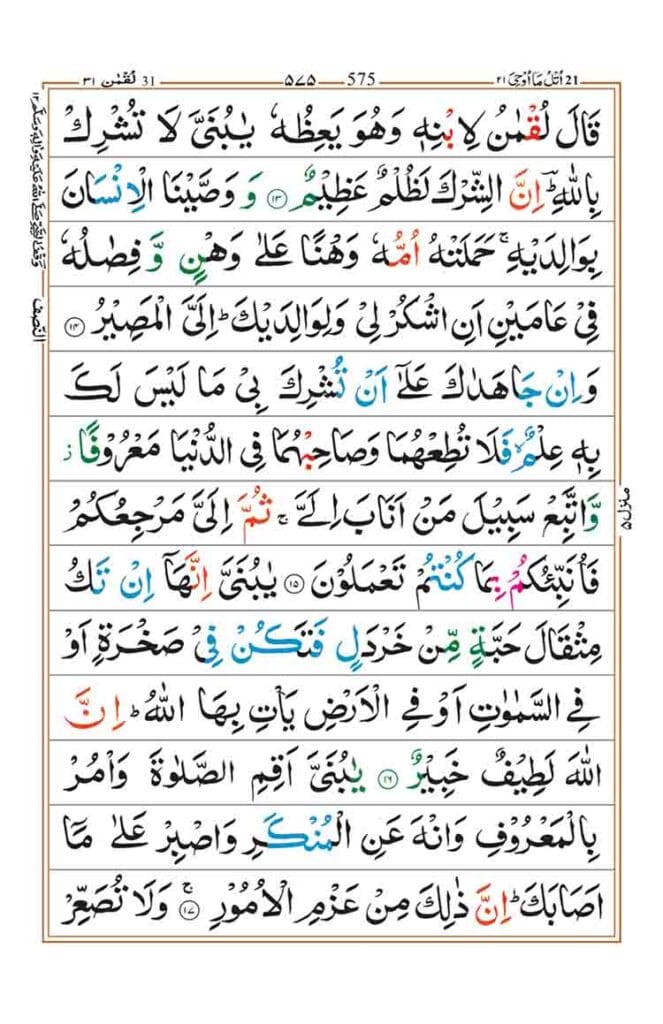
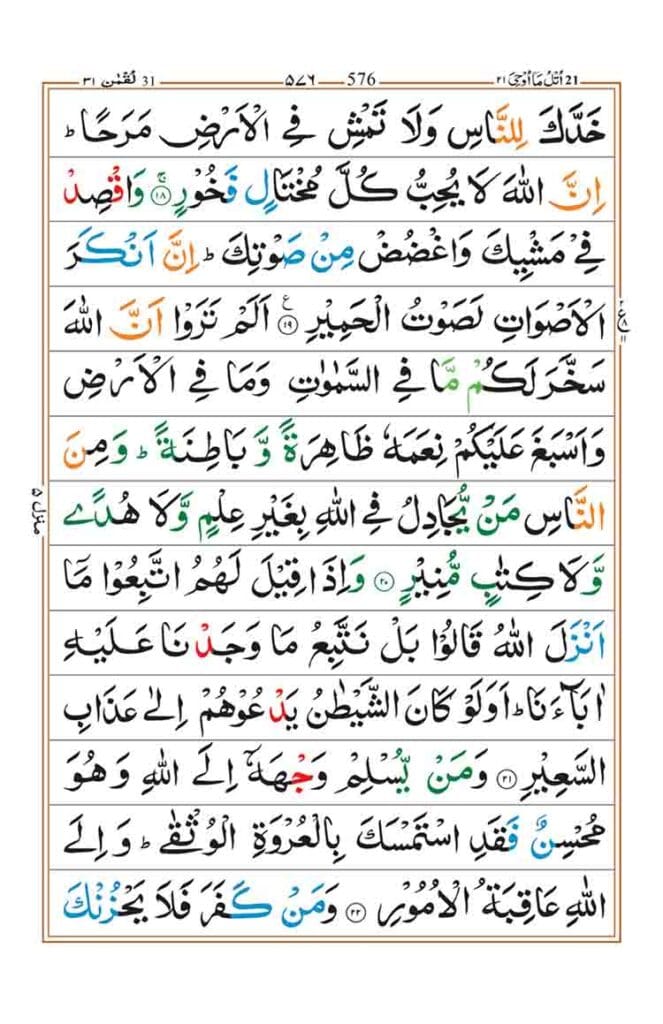
Full Arabic Text, Transliteration, and English Translation of Surah Luqman
بِسْمِ اللَّهِ الرَّحْمَٰنِ الرَّحِيمِ
Bismillāhi r-raḥmāni r-raḥīm
In the Name of Allah—the Most Compassionate, Most Merciful.
1. الٓمٓ
Alif-Laaam-Meeem.
Alif, Lam, Meem.
2. تِلْكَ آيَاتُ الْكِتَابِ الْحَكِيمِ
Tilka āyātu l-kitābi l-ḥakīm.
These are verses of the wise Book,
3. هُدًى وَرَحْمَةً لِّلْمُحْسِنِينَ
Hudan wa raḥmatan lil-muḥsinīn.
As guidance and mercy for the doers of good
4. الَّذِينَ يُقِيمُونَ الصَّلَاةَ وَيُؤْتُونَ الزَّكَاةَ وَهُم بِالْآخِرَةِ هُمْ يُوقِنُونَ
Al-ladhīna yuqīmūna ṣ-ṣalāta wa yu’tūna z-zakāta wa hum bil-ākhirati hum yūqinūn.
Who establish prayer and give zakah, and they, of the Hereafter, are certain [in faith].
5. أُولَٰئِكَ عَلَىٰ هُدًى مِّن رَّبِّهِمْ ۖ وَأُولَٰئِكَ هُمُ الْمُفْلِحُونَ
Ulā’ika ‘alā hudan min rabbihim wa ulā’ika humu l-mufliḥūn.
Those are on [right] guidance from their Lord, and it is those who are the successful.
6. وَمِنَ النَّاسِ مَن يَشْتَرِي لَهْوَ الْحَدِيثِ لِيُضِلَّ عَن سَبِيلِ اللَّهِ بِغَيْرِ عِلْمٍ وَيَتَّخِذَهَا هُزُوًا ۚ أُولَٰئِكَ لَهُمْ عَذَابٌ مُّهِينٌ
Wa mina n-nāsi man yashtarī lahwa l-ḥadīthi liyuḍilla ‘an sabīli llāhi bighayri ‘ilmin wa yattakhidhahā huzuwan, ulā’ika lahum ‘adhābun muhīn.
And of the people is he who buys the amusement of speech to mislead [others] from the way of Allah without knowledge and takes it in ridicule. Those will have a humiliating punishment.
7. وَإِذَا تُتْلَىٰ عَلَيْهِ آيَاتُنَا وَلَّىٰ مُسْتَكْبِرًا كَأَن لَّمْ يَسْمَعْهَا كَأَنَّ فِي أُذُنَيْهِ وَقْرًا ۖ فَبَشِّرْهُ بِعَذَابٍ أَلِيمٍ
Wa idhā tutlā ‘alayhi āyātunā wallā mustakbiran ka-an lam yasma’hā ka-anna fī udhunayhi waqran, fabashshirhu bi-‘adhābin alīm.
And when our verses are recited to him, he turns away arrogantly as if he had not heard them, as if there was in his ears deafness. So give him tidings of a painful punishment.
8. إِنَّ الَّذِينَ آمَنُوا وَعَمِلُوا الصَّالِحَاتِ لَهُمْ جَنَّاتُ النَّعِيمِ
Inna l-ladhīna āmanū wa ‘amilū ṣ-ṣāliḥāti lahum jannātu n-na’īm.
Indeed, those who believe and do righteous deeds – for them are the Gardens of Pleasure.
9. خَالِدِينَ فِيهَا ۖ وَعْدَ اللَّهِ حَقًّا ۚ وَهُوَ الْعَزِيزُ الْحَكِيمُ
Khālidīna fīhā, wa’da llāhi ḥaqqan, wa huwa l-‘azīzu l-ḥakīm.
Wherein they abide eternally; [it is] the promise of Allah [which is] truth. And He is the Exalted in Might, the Wise.
10. خَلَقَ السَّمَاوَاتِ بِغَيْرِ عَمَدٍ تَرَوْنَهَا ۖ وَأَلْقَىٰ فِي الْأَرْضِ رَوَاسِيَ أَن تَمِيدَ بِكُمْ وَبَثَّ فِيهَا مِن كُلِّ دَابَّةٍ ۚ وَأَنزَلْنَا مِنَ السَّمَاءِ مَاءً فَأَنبَتْنَا فِيهَا مِن كُلِّ زَوْجٍ كَرِيمٍ
Khalaqa s-samāwāti bighayri ‘amadin tarawnahā wa alqā fī l-arḍi rawāsiya an tamīda bikum wa baththa fīhā min kulli dābbah, wa anzalnā mina s-samā’i mā’an fa anbatnā fīhā min kulli zawjin karīm.
He created the heavens without pillars that you see and has cast into the earth firmly set mountains, lest it should shift with you, and dispersed therein from every creature. And We sent down rain from the sky and made grow therein [plants] of every noble kind.
11. هَٰذَا خَلْقُ اللَّهِ فَأَرُونِي مَاذَا خَلَقَ الَّذِينَ مِن دُونِهِ ۚ بَلِ الظَّالِمُونَ فِي ضَلَالٍ مُّبِينٍ
Hādhā khalqu llāhi fa arūnī mādhā khalaqa l-ladhīna min dūnih, bali ẓ-ẓālimūna fī ḍalālin mubīn.
This is the creation of Allah. So show Me what those other than Him have created. Rather, the wrongdoers are in clear error.
12. وَلَقَدْ آتَيْنَا لُقْمَانَ الْحِكْمَةَ أَنِ اشْكُرْ لِلَّهِ ۚ وَمَن يَشْكُرْ فَإِنَّمَا يَشْكُرُ لِنَفْسِهِ ۖ وَمَن كَفَرَ فَإِنَّ اللَّهَ غَنِيٌّ حَمِيدٌ
Wa laqad ātaynā Luqmāna l-ḥikmata ani shkur lillāh, wa man yashkur fa-innamā yashkuru linafsihi, wa man kafara fa-inna lllāha ghaniyyun ḥamīd.
And We had certainly given Luqman wisdom [and said], “Be grateful to Allah.” And whoever is grateful is grateful for [the benefit of] himself. And whoever denies [His favor] – then indeed, Allah is Free of need and Praiseworthy.
13. وَإِذْ قَالَ لُقْمَانُ لِابْنِهِ وَهُوَ يَعِظُهُ يَا بُنَيَّ لَا تُشْرِكْ بِاللَّهِ ۖ إِنَّ الشِّرْكَ لَظُلْمٌ عَظِيمٌ
Wa idh qāla Luqmānu li-bnihi wa huwa ya’iẓuhu yā bunayya lā tushrik billāh, inna sh-shirka la-ẓulmun ‘aẓīm.
And [mention, O Muhammad], when Luqman said to his son while he was instructing him, “O my son, do not associate [anything] with Allah. Indeed, association [with him] is great injustice.”
14. وَوَصَّيْنَا الْإِنسَانَ بِوَالِدَيْهِ حَمَلَتْهُ أُمُّهُ وَهْنًا عَلَىٰ وَهْنٍ وَفِصَالُهُ فِي عَامَيْنِ أَنِ اشْكُرْ لِي وَلِوَالِدَيْكَ إِلَيَّ الْمَصِيرُ
Wa waṣṣaynā l-insāna bi-wālidayhi ḥamalat-hu ummuhu wahnan ‘alā wahnin wa fiṣāluhu fī ‘āmayni ani shkur lī wa li-wālidayka ilayya l-maṣīr.
And We have enjoined upon man [care] for his parents. His mother carried him, [increasing her] in weakness upon weakness, and his weaning is in two years. Be grateful to Me and to your parents; to Me is the [final] destination.
15. وَإِن جَاهَدَاكَ عَلَىٰ أَن تُشْرِكَ بِي مَا لَيْسَ لَكَ بِهِ عِلْمٌ فَلَا تُطِعْهُمَا ۖ وَصَاحِبْهُمَا فِي الدُّنْيَا مَعْرُوفًا ۖ وَاتَّبِعْ سَبِيلَ مَنْ أَنَابَ إِلَيَّ ۚ ثُمَّ إِلَيَّ مَرْجِعُكُمْ فَأُنَبِّئُكُم بِمَا كُنتُمْ تَعْمَلُونَ
Wa in jāhadāka ‘alā an tushrika bī mā laysa laka bihi ‘ilmun fa-lā tuṭi’huma wa ṣāḥibhumā fī d-dunyā ma’rūfan wa ttabi’ sabīla man anāba ilayy, thumma ilayya marji’ukum fa unabbi’ukum bimā kuntum ta’malūn.
But if they endeavor to make you associate with Me that of which you have no knowledge, do not obey them but accompany them in [this] world with appropriate kindness and follow the way of those who turn back to Me [in repentance]. Then to Me will be your return, and I will inform you about what you used to do.
16. يَا بُنَيَّ إِنَّهَا إِن تَكُ مِثْقَالَ حَبَّةٍ مِّنْ خَرْدَلٍ فَتَكُن فِي صَخْرَةٍ أَوْ فِي السَّمَاوَاتِ أَوْ فِي الْأَرْضِ يَأْتِ بِهَا اللَّهُ ۚ إِنَّ اللَّهَ لَطِيفٌ خَبِيرٌ
Yā bunayya innahā in taku mithqāla ḥabbatin min khardalin fatakun fī ṣakhratin aw fī s-samāwāti aw fī l-arḍi ya’ti bihā l-lāh, inna l-lāha laṭīfun khabīr.
“O my son, indeed if wrong should be the weight of a mustard seed and should be within a rock or [anywhere] in the heavens or in the earth, Allah will bring it forth. Indeed, Allah is Subtle and Acquainted.
17. يَا بُنَيَّ أَقِمِ الصَّلَاةَ وَأْمُرْ بِالْمَعْرُوفِ وَانْهَ عَنِ الْمُنكَرِ وَاصْبِرْ عَلَىٰ مَا أَصَابَكَ ۖ إِنَّ ذَٰلِكَ مِنْ عَزْمِ الْأُمُورِ
Yā bunayya aqimi ṣ-ṣalāta wa’mur bil-ma’rūfi wanha ‘ani l-munkari waṣbir ‘alā mā aṣābak, inna dhālika min ‘azmi l-umūr.
“O my son, establish prayer, enjoin what is right, forbid what is wrong, and be patient over what befalls you. Indeed, [all] that is of the matters [requiring] determination.
18. وَلَا تُصَعِّرْ خَدَّكَ لِلنَّاسِ وَلَا تَمْشِ فِي الْأَرْضِ مَرَحًا ۖ إِنَّ اللَّهَ لَا يُحِبُّ كُلَّ مُخْتَالٍ فَخُورٍ
Wa lā tuṣa”ir khaddaka lin-nāsi wa lā tamshi fi l-arḍi maraḥan, inna l-lāha lā yuḥibbu kulla mukhtālin fakhūr.
And do not turn your cheek [in contempt] toward people and do not walk through the earth exultantly. Indeed, Allah does not like everyone self-deluded and boastful.
19. وَاقْصِدْ فِي مَشْيِكَ وَاغْضُضْ مِن صَوْتِكَ ۚ إِنَّ أَنكَرَ الْأَصْوَاتِ لَصَوْتُ الْحَمِيرِ
Waqṣid fī mashyika wa ghduḍ min ṣawtik, inna ankara l-aṣwāti la-ṣawtu l-ḥamīr.
And be moderate in your pace and lower your voice; indeed, the most disagreeable of sounds is the voice of donkeys.”
20. أَلَمْ تَرَوْا أَنَّ اللَّهَ سَخَّرَ لَكُم مَّا فِي السَّمَاوَاتِ وَمَا فِي الْأَرْضِ وَأَسْبَغَ عَلَيْكُمْ نِعَمَهُ ظَاهِرَةً وَبَاطِنَةً ۗ وَمِنَ النَّاسِ مَن يُجَادِلُ فِي اللَّهِ بِغَيْرِ عِلْمٍ وَلَا هُدًى وَلَا كِتَابٍ مُّنِيرٍ
Alam taraw anna l-lāha sakhkhara lakum mā fi s-samāwāti wa mā fi l-arḍi wa asbagha ‘alaykum ni’amahu ẓāhiratan wa bāṭinah, wa mina n-nāsi man yujādilu fi l-lāhi bighayri ‘ilmin wa lā hudan wa lā kitābin munīr.
Do you not see that Allah has subjected to you whatever is in the heavens and whatever is in the earth and amply bestowed upon you His favors, [both] apparent and unapparent? But of the people is he who disputes about Allah without knowledge or guidance or an enlightening Book [from Him].
21. وَإِذَا قِيلَ لَهُمُ اتَّبِعُوا مَا أَنزَلَ اللَّهُ قَالُوا بَلْ نَتَّبِعُ مَا وَجَدْنَا عَلَيْهِ آبَاءَنَا ۚ أَوَلَوْ كَانَ الشَّيْطَانُ يَدْعُوهُمْ إِلَىٰ عَذَابِ السَّعِيرِ
Wa idhā qīla lahumu ttabi’ū mā anzala l-lāhu qālū bal nattabi’u mā wajadnā ‘alayhi ābā’anā, awa law kāna sh-shayṭānu yad’ūhum ilā ‘adhābi s-sa’īr.
And when it is said to them, “Follow what Allah has revealed,” they say, “Rather, we will follow that upon which we found our fathers.” Even if Satan was inviting them to the punishment of the Blaze?
22. وَمَن يُسْلِمْ وَجْهَهُ إِلَى اللَّهِ وَهُوَ مُحْسِنٌ فَقَدِ اسْتَمْسَكَ بِالْعُرْوَةِ الْوُثْقَىٰ ۗ وَإِلَى اللَّهِ عَاقِبَةُ الْأُمُورِ
Wa man yuslim wajhahu ilā l-lāhi wa huwa muḥsinun fa qadi stamsaka bil-‘urwati l-wuthqā, wa ilā l-lāhi ‘āqibatu l-umūr.
And whoever submits his face to Allah while he is a doer of good – then he has grasped the most trustworthy handhold. And to Allah will be the outcome of [all] matters.
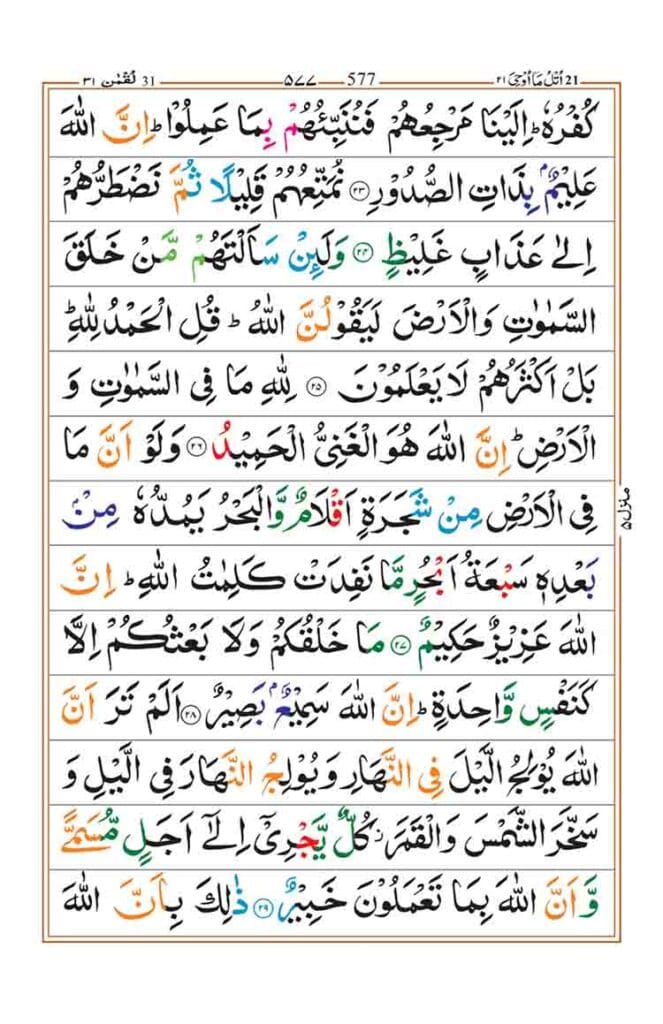
23. وَمَن كَفَرَ فَلَا يَحْزُنكَ كُفْرُهُ ۚ إِلَيْنَا مَرْجِعُهُمْ فَنُنَبِّئُهُم بِمَا عَمِلُوا ۚ إِنَّ اللَّهَ عَلِيمٌ بِذَاتِ الصُّدُورِ
Wa man kafara fa-lā yaḥzunka kufruh, ilaynā marji’uhum fa-nunabbi’uhum bimā ‘amilū, inna l-lāha ‘alīmun bi-dhāti ṣ-ṣudūr.
And whoever has disbelieved – let not his disbelief grieve you. To Us is their return, and We will inform them of what they did. Indeed, Allah is Knowing of that within the breasts.
24. نُمَتِّعُهُمْ قَلِيلًا ثُمَّ نَضْطَرُّهُمْ إِلَىٰ عَذَابٍ غَلِيظٍ
Numatti’uhum qalīlan thumma naḍṭarruhum ilā ‘adhābin ghalīẓ.
We grant them enjoyment for a little; then We will force them to a massive punishment.
25. وَلَئِن سَأَلْتَهُم مَّنْ خَلَقَ السَّمَاوَاتِ وَالْأَرْضَ لَيَقُولُنَّ اللَّهُ ۚ قُلِ الْحَمْدُ لِلَّهِ ۚ بَلْ أَكْثَرُهُمْ لَا يَعْلَمُونَ
Wa la-in sa’altahum man khalaqa s-samāwāti wa l-arḍa layaqūlunna l-lāh, quli l-ḥamdu lillāh, bal aktharuhum lā ya’lamūn.
And if you asked them, “Who created the heavens and earth?” they would surely say, “Allah.” Say, “[All] praise is [due] to Allah “; but most of them do not know.
26. لِلَّهِ مَا فِي السَّمَاوَاتِ وَالْأَرْضِ ۚ إِنَّ اللَّهَ هُوَ الْغَنِيُّ الْحَمِيدُ
Lillāhi mā fi s-samāwāti wa l-arḍ, inna l-lāha huwa l-ghaniyyu l-ḥamīd.
To Allah belongs whatever is in the heavens and earth. Indeed, Allah is the Free of need, the Praiseworthy.
27. وَلَوْ أَنَّ مَا فِي الْأَرْضِ مِن شَجَرَةٍ أَقْلَامٌ وَالْبَحْرُ يَمُدُّهُ مِن بَعْدِهِ سَبْعَةُ أَبْحُرٍ مَّا نَفِدَتْ كَلِمَاتُ اللَّهِ ۗ إِنَّ اللَّهَ عَزِيزٌ حَكِيمٌ
Wa law anna mā fi l-arḍi min shajaratin aqlāmun wa l-baḥru yamudduhu min ba’dihi sab’atu abḥurin mā nafidat kalimātu l-lāh, inna l-lāha ‘azīzun ḥakīm.
And if whatever trees upon the earth were pens and the sea [was ink], repleted by seven [more] seas, the words of Allah would not be exhausted. Indeed, Allah is Exalted in Might and Wise.
28. مَّا خَلْقُكُمْ وَلَا بَعْثُكُمْ إِلَّا كَنَفْسٍ وَاحِدَةٍ ۗ إِنَّ اللَّهَ سَمِيعٌ بَصِيرٌ
Mā khalqukum wa lā ba’thukum illā kanafsin wāḥidah, inna l-lāha samī’un baṣīr.
Your creation and your resurrection are not but as a single soul. Indeed, Allah is Hearing and Seeing.
29. أَلَمْ تَرَ أَنَّ اللَّهَ يُولِجُ اللَّيْلَ فِي النَّهَارِ وَيُولِجُ النَّهَارَ فِي اللَّيْلِ وَسَخَّرَ الشَّمْسَ وَالْقَمَرَ كُلٌّ يَجْرِي إِلَىٰ أَجَلٍ مُّسَمًّى وَأَنَّ اللَّهَ بِمَا تَعْمَلُونَ خَبِيرٌ
Alam tara anna l-lāha yūliju al-layla fi n-nahāri wa yūliju n-nahāra fi l-layli wa sakhkhara sh-shamsa wa l-qamara kullun yajrī ilā ajalin musammā, wa anna l-lāha bimā ta’malūna khabīr.
Do you not see that Allah causes the night to enter the day and causes the day to enter the night and has subjected the sun and the moon, each running [its course] for a specified term, and that Allah, with whatever you do, is Acquainted?
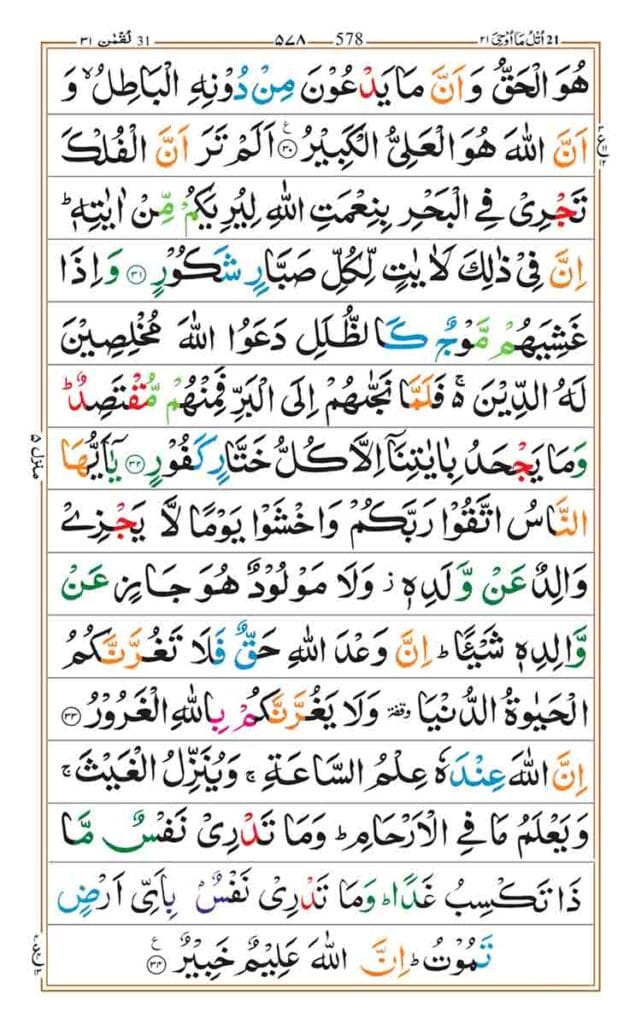
30. ذَٰلِكَ بِأَنَّ اللَّهَ هُوَ الْحَقُّ وَأَنَّ مَا يَدْعُونَ مِن دُونِهِ الْبَاطِلُ وَأَنَّ اللَّهَ هُوَ الْعَلِيُّ الْكَبِيرُ
Dhālika bi-anna l-lāha huwa l-ḥaqqu wa anna mā yad’ūna min dūnihi l-bāṭilu wa anna l-lāha huwa l-‘aliyyu l-kabīr.
That is because Allah is the Truth, and that which they call upon besides Him is falsehood, and because Allah is the Most High, the Grand.
31. أَلَمْ تَرَ أَنَّ الْفُلْكَ تَجْرِي فِي الْبَحْرِ بِنِعْمَتِ اللَّهِ لِيُرِيَكُم مِّنْ آيَاتِهِ ۚ إِنَّ فِي ذَٰلِكَ لَآيَاتٍ لِّكُلِّ صَبَّارٍ شَكُورٍ
Alam tara anna l-fulka tajrī fi l-baḥri bini’mati l-lāhi liyuriyakum min āyātih, inna fī dhālika la-āyātin likulli ṣabbārin shakūr.
Do you not see that ships sail through the sea by the favor of Allah that He may show you of His signs? Indeed in that are signs for everyone patient and grateful.
32. وَإِذَا غَشِيَهُم مَّوْجٌ كَالظُّلَلِ دَعَوُا اللَّهَ مُخْلِصِينَ لَهُ الدِّينَ فَلَمَّا نَجَّاهُمْ إِلَى الْبَرِّ فَمِنْهُم مُّقْتَصِدٌ ۚ وَمَا يَجْحَدُ بِآيَاتِنَا إِلَّا كُلُّ خَتَّارٍ كَفُورٍ
Wa idhā ghashiyahum mawjun ka-ẓ-ẓulali da’awu l-lāha mukhliṣīna lahu d-dīna falammā najjāhum ilā l-bari faminhum muqtaṣid, wa mā yajḥadu bi-āyātinā illā kullu khattārin kafūr.
And when waves come over them like canopies, they supplicate Allah, sincere to Him in religion. But when He delivers them to the land, there are [some] of them who are moderate [in faith]. And none rejects Our signs except everyone treacherous and ungrateful.
33. يَا أَيُّهَا النَّاسُ اتَّقُوا رَبَّكُمْ وَاخْشَوْا يَوْمًا لَّا يَجْزِي وَالِدٌ عَن وَلَدِهِ وَلَا مَوْلُودٌ هُوَ جَازٍ عَن وَالِدِهِ شَيْئًا ۚ إِنَّ وَعْدَ اللَّهِ حَقٌّ ۖ فَلَا تَغُرَّنَّكُمُ الْحَيَاةُ الدُّنْيَا وَلَا يَغُرَّنَّكُم بِاللَّهِ الْغَرُورُ
Yā ayyuhā n-nāsu ttaqū rabbakum wa kshaw yawman lā yajzī wālidun ‘an waladihi wa lā mawlūdun huwa jāzin ‘an wālidihi shay’ā, inna wa’da l-lāhi ḥaqqun fa-lā taghurrannakumu l-ḥayātu d-dunyā wa lā yaghurrannakum billāhi l-gharūr.
O mankind, fear your Lord and fear a Day when no father will avail his son, nor will a son avail his father at all. Indeed, the promise of Allah is truth, so let not the worldly life delude you and be not deceived about Allah by the Deceiver.
34. إِنَّ اللَّهَ عِندَهُ عِلْمُ السَّاعَةِ وَيُنَزِّلُ الْغَيْثَ وَيَعْلَمُ مَا فِي الْأَرْحَامِ ۖ وَمَا تَدْرِي نَفْسٌ مَّاذَا تَكْسِبُ غَدًا ۖ وَمَا تَدْرِي نَفْسٌ بِأَيِّ أَرْضٍ تَمُوتُ ۚ إِنَّ اللَّهَ عَلِيمٌ خَبِيرٌ
Inna l-lāha ‘indahu ‘ilmu s-sā’ati wa yunazzilu l-ghaytha wa ya’lamu mā fi l-arḥām, wa mā tadrī nafsun mādhā taksibu ghadan wa mā tadrī nafsun bi-ayyi arḍin tamūt, inna l-lāha ‘alīmun khabīr.
Indeed, Allah [alone] has knowledge of the Hour and sends down the rain and knows what is in the wombs. And no soul perceives what it will earn tomorrow, and no soul perceives in what land it will die. Indeed, Allah is Knowing and Acquainted.
Meaning & Importance of Surah Luqman
The name “Luqman” highlights the central theme of the Surah—wisdom guided by divine truth. Luqman’s advice offers a powerful lesson on parenting, character development, and belief in Allah.
Key teachings of Surah Luqman include:
Shirk (associating partners with Allah) is the gravest injustice.
Parents deserve kindness and respect, even if they are not believers.
Believers must establish prayer, enjoin good, and forbid evil with patience.
Arrogance, pride, and loud speech are disliked by Allah.
Allah’s knowledge encompasses the unseen, the wombs, the future, and the earth.
Virtues & Benefits of Surah Lucman
Serves as a guide for parents and educators in instilling faith and manners in children.
Encourages gratitude, humility, and self-awareness.
Describes the qualities of “Ibad-ur-Rahman”, which serve as a model for every believer.
Helps develop a balanced personality rooted in faith, ethics, and wisdom.
Emphasizes the importance of individual responsibility and conscious living.
Teaches that Allah is all-knowing, and nothing escapes His knowledge or plan.
Reciting and reflecting on Surah Luqman helps believers build strong foundations in both faith and character, rooted in wisdom, worship, and humility.