
Surah As Sajdah – Read Online, PDF & Translation | Faiz e Islam
Surah As Sajdah is the 32nd chapter of the Holy Quran, revealed in Makkah, with 30 verses across 3 rukus, placed in Juz 21. It opens by affirming that the Quran is a genuine revelation from the Lord of the worlds, not a fabricated tale, and describes how Allah created the heavens and earth, formed man from clay, and shaped the human soul with purpose. The Surah takes its name — “As-Sajdah,” meaning “The Prostration” — from verse 15, which describes true believers as those who fall into prostration and glorify their Lord the moment they are reminded of His signs. It goes on to contrast the humility of the righteous with the arrogance of disbelievers, closing with a clear reminder of the Day of Judgment, when every soul will be held accountable. The Prophet Muhammad ﷺ is reported to have regularly recited Surah As-Sajdah during Fajr prayer on Fridays. Read the complete Surah As-Sajdah online in Arabic on Faiz e Islam, with English translation, audio recitation, and a free PDF download.
Surah As Sajdah Download Full PDF
Surah As Sajdah Overview
| Surah Al Sajdah Ayats | Surah As Sajda Words | Surah As Sajdah Letter | Surah As Sajdah Ruku |
| 30 | 375 | 1563 | 3 |
Listen Surah As Sajdah Online
Colour Coded Tajweed Rules

Surah As Sajdah Read Online
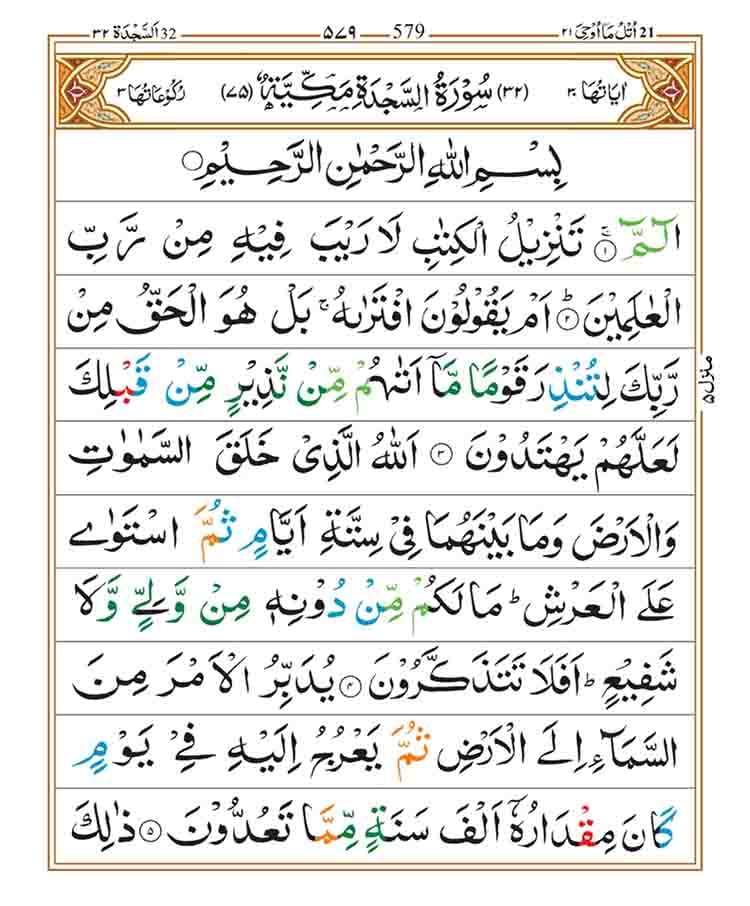
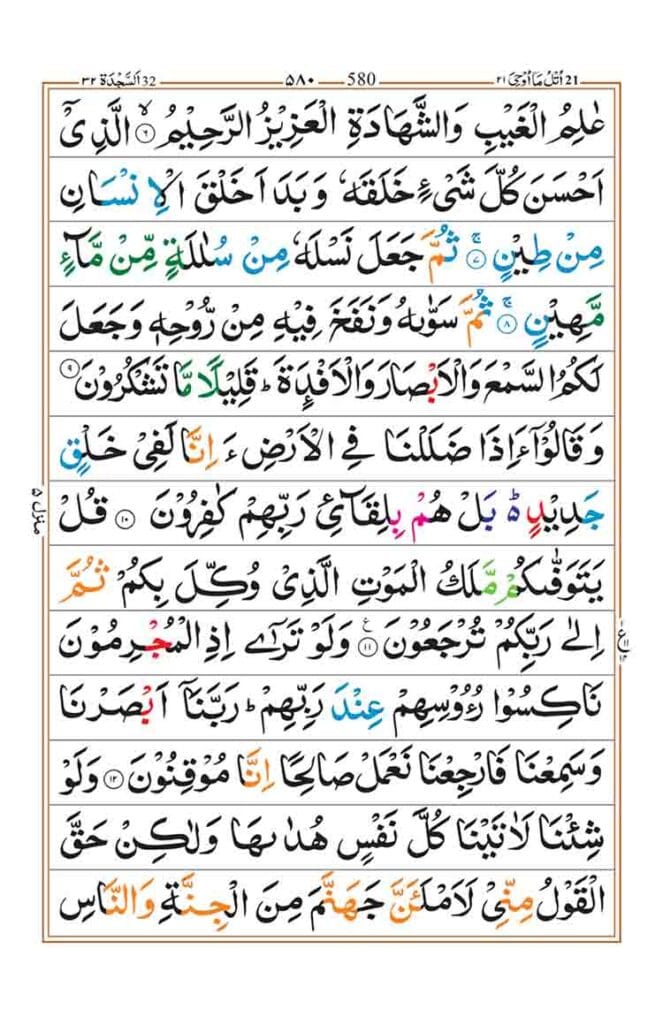
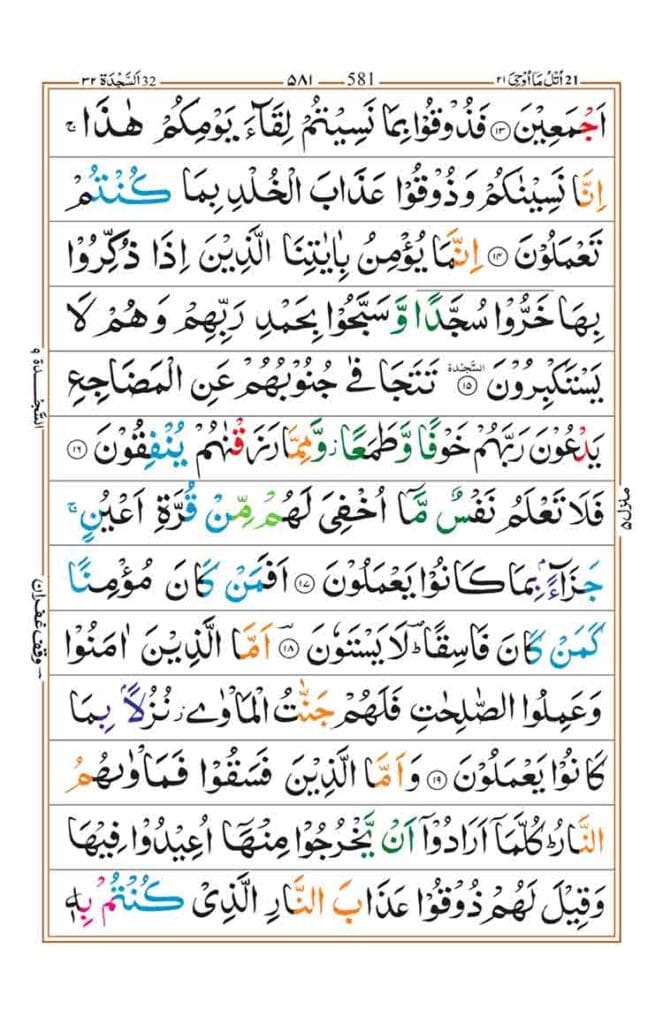
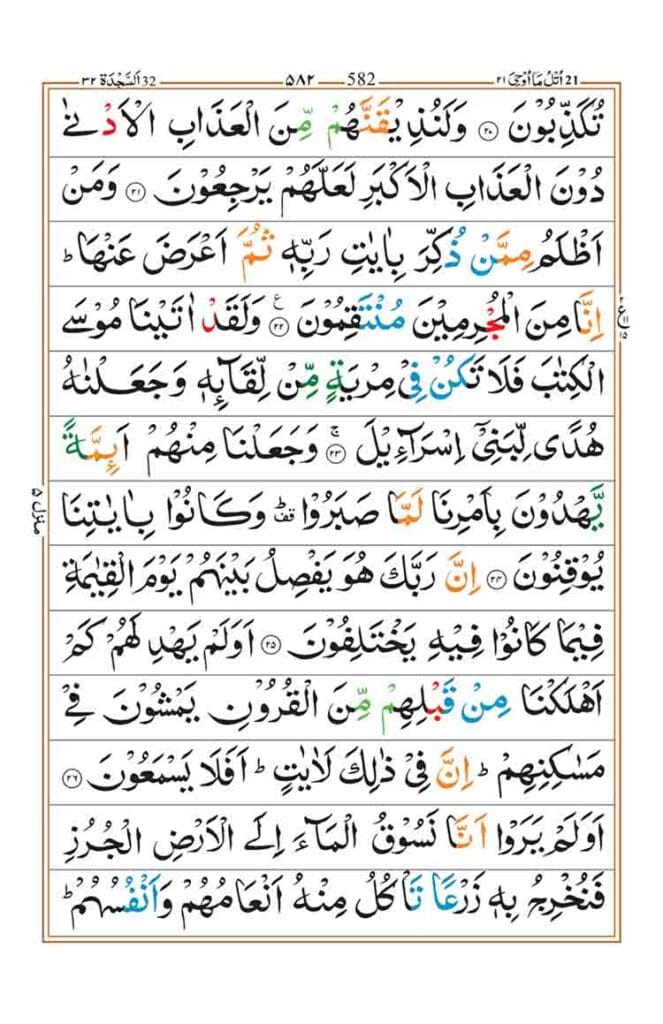
Full Arabic Text, Transliteration, and English Translation of Surah As Sajdah
بِسْمِ اللَّهِ الرَّحْمَٰنِ الرَّحِيمِ
Bismillāhi r-raḥmāni r-raḥīm
In the Name of Allah—the Most Compassionate, Most Merciful.
1. الم
Alif-Laaam-Meeem.
Alif, Lam, Meem.
2. تَنزِيلُ الْكِتَابِ لَا رَيْبَ فِيهِ مِن رَّبِّ الْعَالَمِينَ
Tanzīlu l-kitābi lā raiba fīhi min rabbi l-‘ālamīn.
The revelation of the Book about which there is no doubt is from the Lord of the worlds.
3. أَمْ يَقُولُونَ افْتَرَاهُ ۚ بَلْ هُوَ الْحَقُّ مِن رَّبِّكَ لِتُنذِرَ قَوْمًا مَّا أَتَاهُم مِّن نَّذِيرٍ مِّن قَبْلِكَ لَعَلَّهُمْ يَهْتَدُونَ
Am yaqūlūna ftarāh, bal huwa l-ḥaqqu min rabbika li-tundhira qawman mā atāhum min nadhīrin min qablika la’allahum yahtadūn.
Or do they say, “He invented it”? Rather, it is the truth from your Lord, [O Muhammad], that you may warn a people to whom no warner has come before you [so] perhaps they will be guided.
4. اللَّهُ الَّذِي خَلَقَ السَّمَاوَاتِ وَالْأَرْضَ وَمَا بَيْنَهُمَا فِي سِتَّةِ أَيَّامٍ ثُمَّ اسْتَوَىٰ عَلَى الْعَرْشِ ۖ مَا لَكُم مِّن دُونِهِ مِن وَلِيٍّ وَلَا شَفِيعٍ ۚ أَفَلَا تَتَذَكَّرُونَ
Allāhu lladhī khalaqa s-samāwāti wa l-arḍa wa mā baynahumā fī sittati ayyāmin thumma stawā ‘alā l-‘arsh, mā lakum min dūnihi min waliyyin wa lā shafī’, afalā tatadhakkarūn.
It is Allah who created the heavens and the earth and whatever is between them in six days; then He established Himself above the Throne. You have not besides Him any protector or any intercessor; so will you not be reminded?
5. يُدَبِّرُ الْأَمْرَ مِنَ السَّمَاءِ إِلَى الْأَرْضِ ثُمَّ يَعْرُجُ إِلَيْهِ فِي يَوْمٍ كَانَ مِقْدَارُهُ أَلْفَ سَنَةٍ مِّمَّا تَعُدُّونَ
Yudabbiru l-amra mina s-samā’i ilā l-arḍi thumma ya’ruju ilayhi fī yawmin kāna miqdāruhu alfata sanatin mimmā ta’uddūn.
He arranges [each] matter from the heaven to the earth; then it will ascend to Him in a Day, the extent of which is a thousand years of those which you count.
6. ذَٰلِكَ عَالِمُ الْغَيْبِ وَالشَّهَادَةِ الْعَزِيزُ الرَّحِيمُ
Dhālika ‘ālimu l-ghaybi wa sh-shahādati l-‘azīzu r-raḥīm.
That is the Knower of the unseen and the witnessed, the Exalted in Might, the Merciful,
7. الَّذِي أَحْسَنَ كُلَّ شَيْءٍ خَلَقَهُ ۖ وَبَدَأَ خَلْقَ الْإِنسَانِ مِن طِينٍ
Alladhī aḥsana kulla shay’in khalaqah, wa bada’a khalqa l-insāni min ṭīn.
Who perfected everything which He created and began the creation of man from clay.
8. ثُمَّ جَعَلَ نَسْلَهُ مِن سُلَالَةٍ مِّن مَّاءٍ مَّهِينٍ
Thumma ja’ala naslahu min sulālatin min mā’in mahīn.
Then He made his posterity from the extract of a despised liquid.
9. ثُمَّ سَوَّاهُ وَنَفَخَ فِيهِ مِن رُّوحِهِ ۖ وَجَعَلَ لَكُمُ السَّمْعَ وَالْأَبْصَارَ وَالْأَفْئِدَةَ ۚ قَلِيلًا مَّا تَشْكُرُونَ
Thumma sawwāhu wa nafakha fīhi min rūḥihi wa ja’ala lakumu s-sam’a wa l-abṣāra wa l-af’idah, qalīlan mā tashkurūn.
Then He proportioned him and breathed into him from His [created] soul and made for you hearing and vision and hearts; little are you grateful.
10. وَقَالُوا أَإِذَا ضَلَلْنَا فِي الْأَرْضِ أَإِنَّا لَفِي خَلْقٍ جَدِيدٍ ۚ بَلْ هُم بِلِقَاءِ رَبِّهِمْ كَافِرُونَ
Wa qālū a-idhā ḍalalnā fi l-arḍi a-innā lafī khalqin jadīd, bal hum bi-liqā’i rabbihim kāfirūn.
And they say, “When we are lost within the earth, will we indeed be [recreated] in a new creation?” Rather, they are, in the meeting with their Lord, disbelievers.
11. ۞ قُلْ يَتَوَفَّاكُم مَّلَكُ الْمَوْتِ الَّذِي وُكِّلَ بِكُمْ ثُمَّ إِلَىٰ رَبِّكُمْ تُرْجَعُونَ
Qul yatawaffākum malaku l-mawti lladhī wukkilā bikum thumma ilā rabbikum turja’ūn.
Say, “The angel of death will take you who has been entrusted with you. Then to your Lord you will be returned.”
12. وَلَوْ تَرَىٰ إِذِ الْمُجْرِمُونَ نَاكِسُو رُءُوسِهِمْ عِندَ رَبِّهِمْ رَبَّنَا أَبْصَرْنَا وَسَمِعْنَا فَارْجِعْنَا نَعْمَلْ صَالِحًا إِنَّا مُوقِنُونَ
Wa law tarā idhi l-mujrimūna nākisū ru’ūsihim ‘inda rabbihim rabbanā abṣarnā wa sami’nā fa-rji’nā na’mal ṣāliḥan innā mūqinūn.
If you could but see when the criminals are hanging their heads before their Lord, [saying], “Our Lord, we have seen and heard, so return us [to the world]; we will work righteousness. Indeed, we are [now] certain.”
13. وَلَوْ شِئْنَا لَآتَيْنَا كُلَّ نَفْسٍ هُدَاهَا وَلَٰكِنْ حَقَّ الْقَوْلُ مِنِّي لَأَمْلَأَنَّ جَهَنَّمَ مِنَ الْجِنَّةِ وَالنَّاسِ أَجْمَعِينَ
Wa law shi’nā la’ātaynā kulla nafsin hudāhā wa lākin ḥaqqa l-qawlu minnī la-amla’anna jahannama mina l-jinnati wa n-nāsi ajma’īn.
And if We had willed, We could have given every soul its guidance, but the word from Me will come into effect [that] “I will surely fill Hell with jinn and people all together.
14. فَذُوقُوا بِمَا نَسِيتُمْ لِقَاءَ يَوْمِكُمْ هَٰذَا إِنَّا نَسِينَاكُمْ ۖ وَذُوقُوا عَذَابَ الْخُلْدِ بِمَا كُنتُمْ تَعْمَلُونَ
Fa dhūqū bimā nasītum liqā’a yawmikum hādhā innā nasīnākum wa dhūqū ‘adhāba l-khuldi bimā kuntum ta’malūn.
So taste [the punishment] because you forgot the meeting of this, your Day; indeed, We have [accordingly] forgotten you. And taste the punishment of eternity for what you used to do.”
15. إِنَّمَا يُؤْمِنُ بِآيَاتِنَا الَّذِينَ إِذَا ذُكِّرُوا بِهَا خَرُّوا سُجَّدًا وَسَبَّحُوا بِحَمْدِ رَبِّهِمْ وَهُمْ لَا يَسْتَكْبِرُونَ ۩
Innamā yu’minu bi-āyātinā lladhīna idhā dhukkirū bihā kharru sujjadan wa sabbaḥū bi-ḥamdi rabbihim wa hum lā yastakbirūn.
Only those believe in Our verses who, when they are reminded by them, fall down in prostration and exalt [Allah] with praise of their Lord, and they are not arrogant.
16. تَتَجَافَىٰ جُنُوبُهُمْ عَنِ الْمَضَاجِعِ يَدْعُونَ رَبَّهُمْ خَوْفًا وَطَمَعًا وَمِمَّا رَزَقْنَاهُمْ يُنفِقُونَ
Tatajāfā junūbuhum ‘ani l-maḍāji’i yad’ūna rabbahum khawfan wa ṭama’an wa mimmā razaqnāhum yunfiqūn.
They arise from [their] beds; they supplicate their Lord in fear and hope, and from what We have provided them, they spend.
17. فَلَا تَعْلَمُ نَفْسٌ مَّا أُخْفِيَ لَهُم مِّن قُرَّةِ أَعْيُنٍ جَزَاءً بِمَا كَانُوا يَعْمَلُونَ
Fa-lā ta’lamu nafsun mā ukhfiya lahum min qurrati a’yunin jazā’an bimā kānū ya’malūn.
And no soul knows what has been hidden for them of comfort for eyes as reward for what they used to do.
18. أَفَمَن كَانَ مُؤْمِنًا كَمَن كَانَ فَاسِقًا ۚ لَّا يَسْتَوُونَ
Afaman kāna mu’minan kaman kāna fāsiqā, lā yastawūn.
Then is one who was a believer like one who was defiantly disobedient? They are not equal.
19. أَمَّا الَّذِينَ آمَنُوا وَعَمِلُوا الصَّالِحَاتِ فَلَهُمْ جَنَّاتُ الْمَأْوَىٰ نُزُلًا بِمَا كَانُوا يَعْمَلُونَ
Ammā lladhīna āmanū wa ‘amilū ṣ-ṣāliḥāti falahum jannātu l-ma’wā nuzulan bimā kānū ya’malūn.
As for those who believed and did righteous deeds, for them are the Gardens of Refuge as accommodation for what they used to do.
20. وَأَمَّا الَّذِينَ فَسَقُوا فَمَأْوَاهُمُ النَّارُ ۖ كُلَّمَا أَرَادُوا أَن يَخْرُجُوا مِنْهَا أُعِيدُوا فِيهَا وَقِيلَ لَهُمْ ذُوقُوا عَذَابَ النَّارِ الَّذِي كُنتُم بِهِ تُكَذِّبُونَ
Wa ammā lladhīna fasaqū fa-ma’wāhumu n-nār, kullamā arādū an yakhrujū minhā u’īdū fīhā wa qīla lahum dhūqū ‘adhāba n-nāri lladhī kuntum bihi tukadhdhibūn.
But as for those who defiantly disobeyed, their refuge is the Fire. Every time they wish to emerge from it, they will be returned to it while it is said to them, “Taste the punishment of the Fire which you used to deny.”
21. وَلَنُذِيقَنَّهُم مِّنَ الْعَذَابِ الْأَدْنَىٰ دُونَ الْعَذَابِ الْأَكْبَرِ لَعَلَّهُمْ يَرْجِعُونَ
Wa lanudhīqannahum mina l-‘adhābi l-adnā dūna l-‘adhābi l-akbari la’allahum yarji’ūn.
And we will surely let them taste the nearer punishment short of the greater punishment that perhaps they will repent.
22. وَمَنْ أَظْلَمُ مِمَّن ذُكِّرَ بِآيَاتِ رَبِّهِ ثُمَّ أَعْرَضَ عَنْهَا ۚ إِنَّا مِنَ الْمُجْرِمِينَ مُنتَقِمُونَ
Wa man aẓlamu mimman dhukkira bi-āyāti rabbihi thumma a’raḍa ‘anhā, innā mina l-mujrimīna muntaqimūn.
And who is more unjust than one who is reminded of the verses of his Lord; then he turns away from them? Indeed We, from the criminals, will take retribution.
23. وَلَقَدْ آتَيْنَا مُوسَى الْكِتَابَ فَلَا تَكُن فِي مِرْيَةٍ مِّن لِّقَائِهِ ۖ وَجَعَلْنَاهُ هُدًى لِّبَنِي إِسْرَائِيلَ
Wa laqad ātaynā Mūsā l-kitāba fa-lā takun fī miryatin min liqā’ihi wa ja’alnāhu hudan li-banī Isrā’īl.
And We certainly gave Moses the Book, so do not be in doubt over his meeting. And We made it guidance for the Children of Israel.
24. وَجَعَلْنَا مِنْهُمْ أَئِمَّةً يَهْدُونَ بِأَمْرِنَا لَمَّا صَبَرُوا ۖ وَكَانُوا بِآيَاتِنَا يُوقِنُونَ
Wa ja’alnā minhum a’immatan yahdūna bi-amrinā lammā ṣabarū wa kānū bi-āyātinā yūqinūn.
And We made from among them leaders guiding by Our command when they were patient and [when] they were certain of Our signs.
25. إِنَّ رَبَّكَ هُوَ يَفْصِلُ بَيْنَهُمْ يَوْمَ الْقِيَامَةِ فِيمَا كَانُوا فِيهِ يَخْتَلِفُونَ
Inna rabbaka huwa yafṣilu baynahum yawma l-qiyāmati fīmā kānū fīhi yakhtalifūn.
Indeed, your Lord will judge between them on the Day of Resurrection concerning that over which they used to differ.
26. أَوَلَمْ يَهْدِ لَهُمْ كَمْ أَهْلَكْنَا مِن قَبْلِهِم مِّنَ الْقُرُونِ يَمْشُونَ فِي مَسَاكِنِهِمْ ۚ إِنَّ فِي ذَٰلِكَ لَآيَاتٍ ۖ أَفَلَا يَسْمَعُونَ
Awalam yahdi lahum kam ahlaknā min qablihim mina l-qurūni yamshūna fī masākinihim, inna fī dhālika la-āyātin afalā yasma’ūn.
Has it not become clear to them how many generations We destroyed before them, [while] they walk among their dwellings? Indeed in that are signs; then do they not hear?
27. أَوَلَمْ يَرَوْا أَنَّا نَسُوقُ الْمَاءَ إِلَى الْأَرْضِ الْجُرُزِ فَنُخْرِجُ بِهِ زَرْعًا تَأْكُلُ مِنْهُ أَنْعَامُهُمْ وَأَنفُسُهُمْ ۖ أَفَلَا يُبْصِرُونَ
Awalam yaraw annā nasūqu l-mā’a ilā l-arḍi l-juruzi fa-nukhriju bihi zar’an ta’kulu minhu an’āmuhum wa anfusuhum, afalā yubṣirūn.
Have they not seen that We drive the water [in clouds] to barren land and bring forth thereby crops from which their cattle eat and they themselves? Then do they not see?
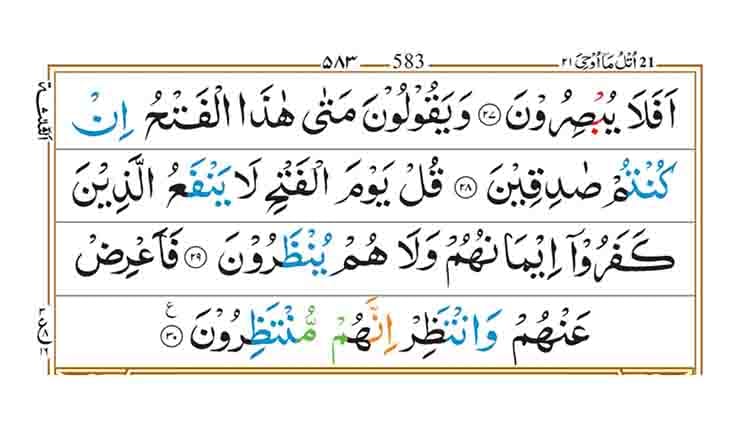
28. وَيَقُولُونَ مَتَىٰ هَٰذَا الْفَتْحُ إِن كُنتُمْ صَادِقِينَ
Wa yaqūlūna matā hādhā l-fatḥu in kuntum ṣādiqīn.
And they say, “When will be this conquest, if you should be truthful?”
29. قُلْ يَوْمَ الْفَتْحِ لَا يَنفَعُ الَّذِينَ كَفَرُوا إِيمَانُهُمْ وَلَا هُمْ يُنظَرُونَ
Qul yawma l-fatḥi lā yanfa’u lladhīna kafarū īmānuhum wa lā hum yunẓarūn.
Say, [O Muhammad], “On the Day of Conquest the belief of those who had disbelieved will not benefit them, nor will they be reprieved.”
30. فَأَعْرِضْ عَنْهُمْ وَانتَظِرْ إِنَّهُم مُّنتَظِرُونَ
Fa-a’riḍ ‘anhum wa intaẓir innahum muntaẓirūn.
So turn away from them and wait. Indeed, they are waiting.
Meaning & Importance of Surah As Sajdah
The name “As-Sajda” reflects the central theme of submission to Allah. It reminds believers that true honor lies in bowing to the Creator, not in pride or rebellion.
Key lessons from the Surah include:
The Quran is a divine revelation, not man-made.
Human beings were created with a purpose, and will be resurrected.
The Day of Judgment is certain, and every soul will be held accountable.
Believers are described as those who respond with humility and worship when reminded of Allah.
Punishment awaits those who deny the truth after clear signs.
Virtues & Benefits of Surah As Sajdah
Reciting this Surah brings reminders of the Hereafter, strengthening accountability.
Encourages sincere prostration and humility before Allah.
The Prophet Muhammad (PBUH) used to recite Surah As-Sajda regularly in Fajr prayer on Friday.
Promotes reflection on divine signs, creation, and the soul’s journey.
Reminds us of the honor and tranquility found in bowing to Allah alone.
Surah As-Sajda connects the intellect with the heart, urging us to reflect on creation and respond in sincere worship. Its teachings lead to submission, awareness of the Hereafter, and inner peace.