
Surah Al Ahzab – Read Online, PDF & Translation | Faiz e Islam
Surah Al Ahzab is the 33rd chapter of the Holy Quran, revealed in Madinah, with 73 verses across 9 rukus, placed in Juz 21-22. Its name, meaning “The Confederates,” refers to the alliance of tribes that besieged Madinah during the Battle of the Trench (Ghazwa al-Khandaq) in 5 AH — an assault the Muslims survived through strategic defense and unwavering trust in Allah. Beyond this historic account, the Surah addresses major social reforms: it abolishes the pre-Islamic custom of adopted sons inheriting a father’s name and status, establishes guidelines for hijab and modesty, and lays out rulings on marriage that shaped family life within the early Muslim community. It also firmly affirms Prophet Muhammad ﷺ as the “Seal of the Prophets” and the ultimate role model (Uswa Hasana) for every believer’s conduct. Read the complete Surah Al-Ahzab online in Arabic on Faiz e Islam, with English translation, audio recitation, and a free PDF download.
Surah Al Ahzab Download Full PDF
Surah Al Ahzab Overview
| Surah Ahzab Ayats | Suratul Ahzab Words | Surah e Ahzab Letter | Surah Al Ahzab Ruku |
| 73 | 375 | 1563 | 9 |
Listen Surah Al Ahzab Online
Colour Coded Tajweed Rules

Surah Al Ahzab Read Online
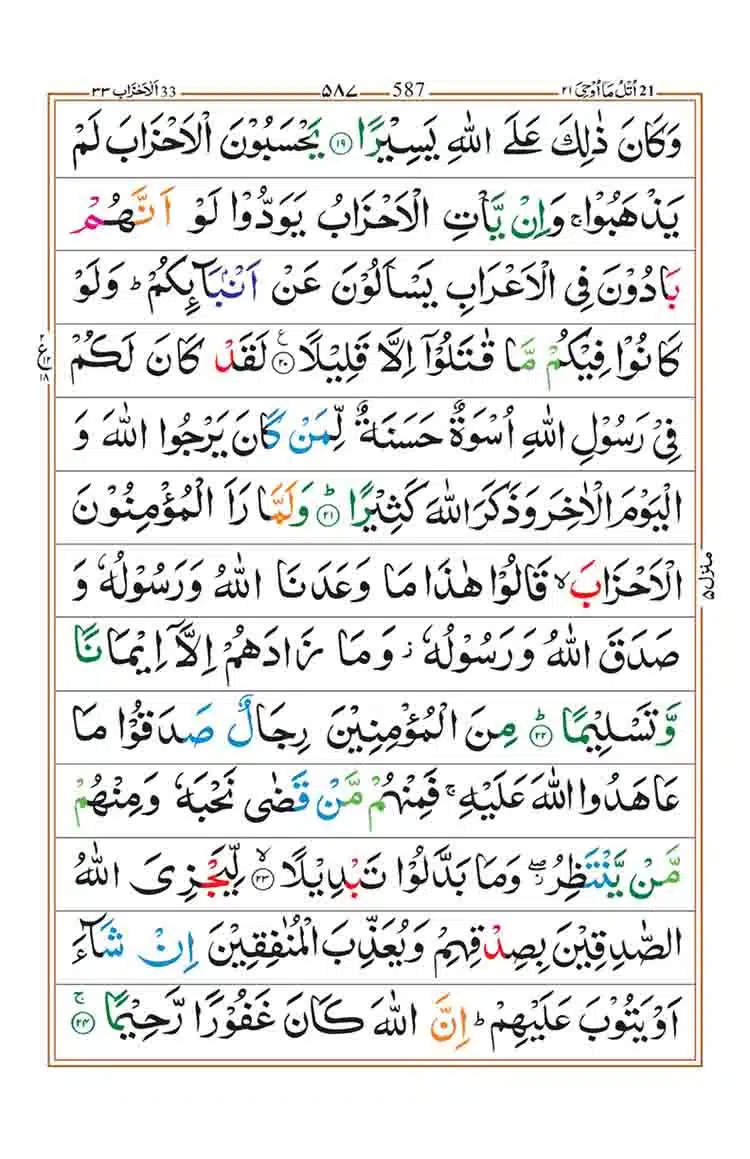
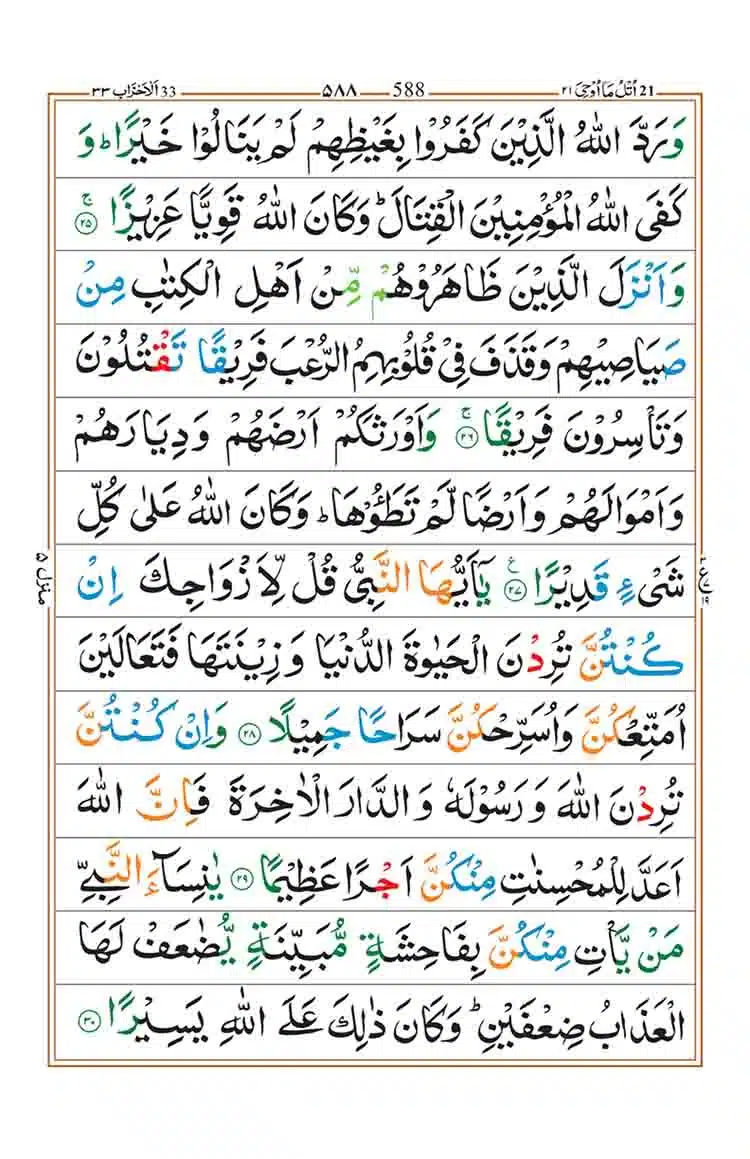
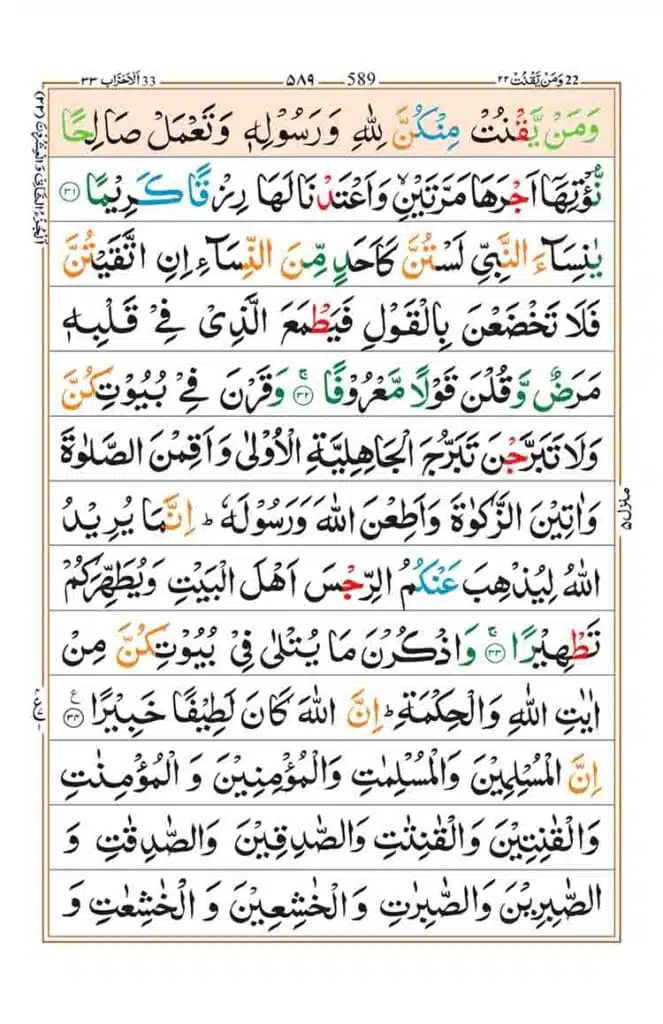
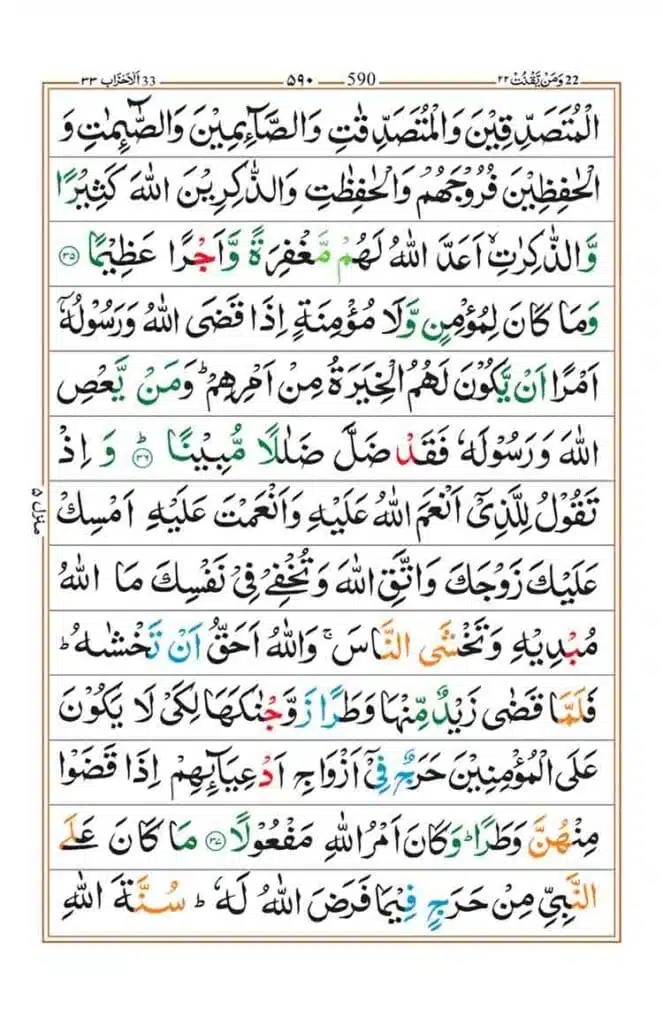
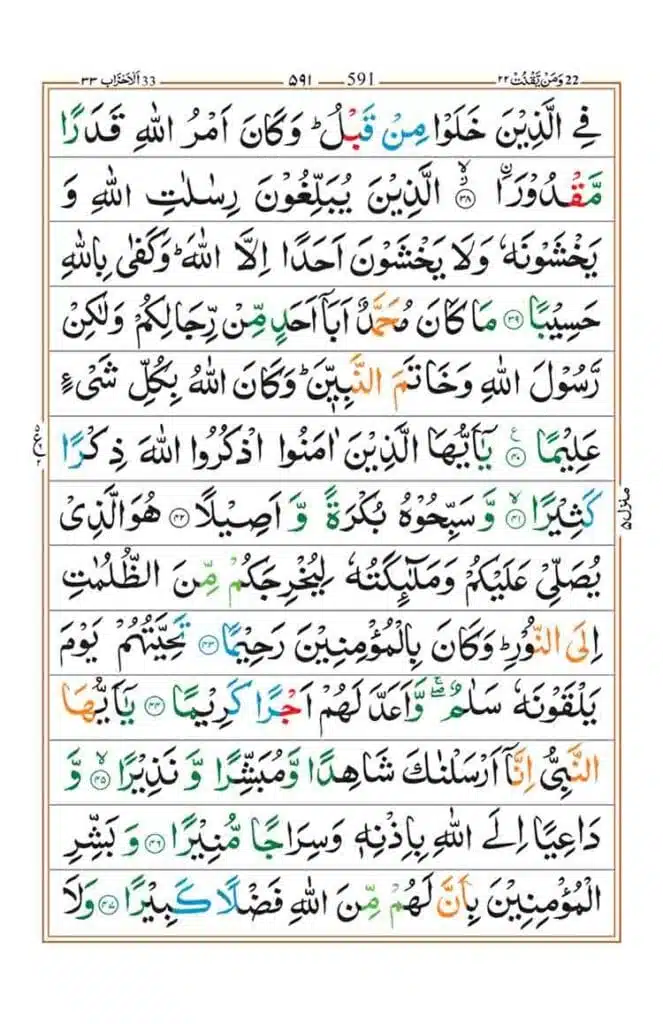
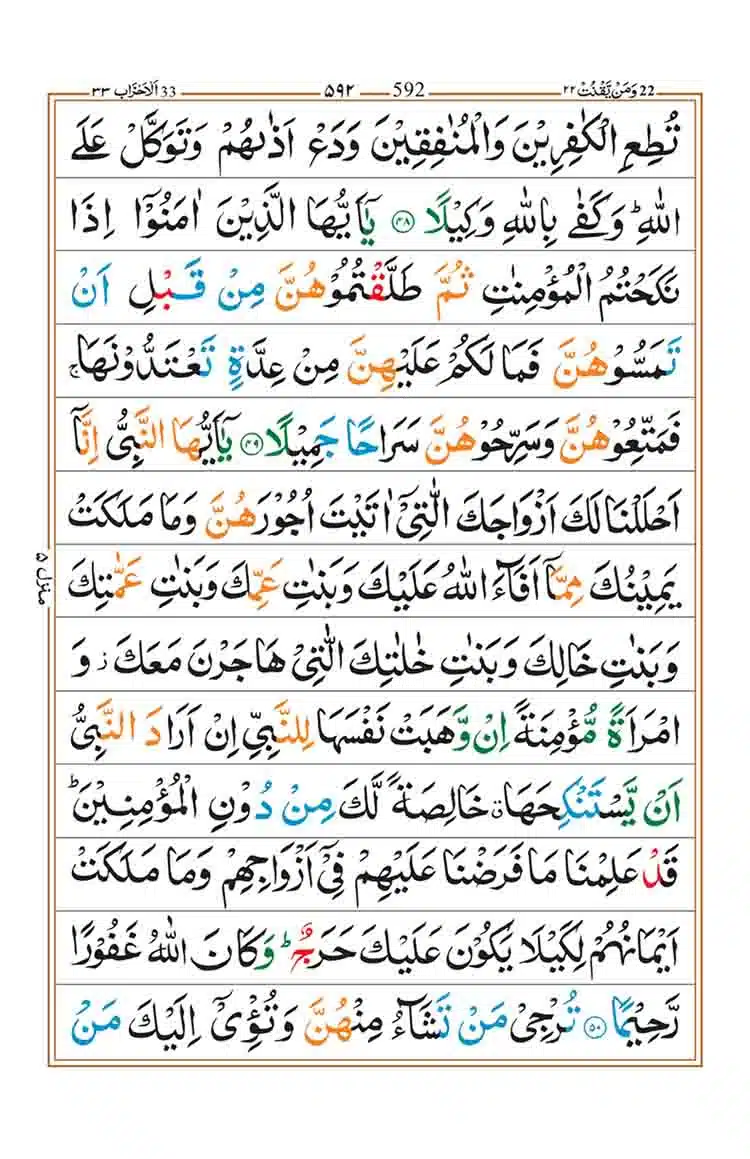
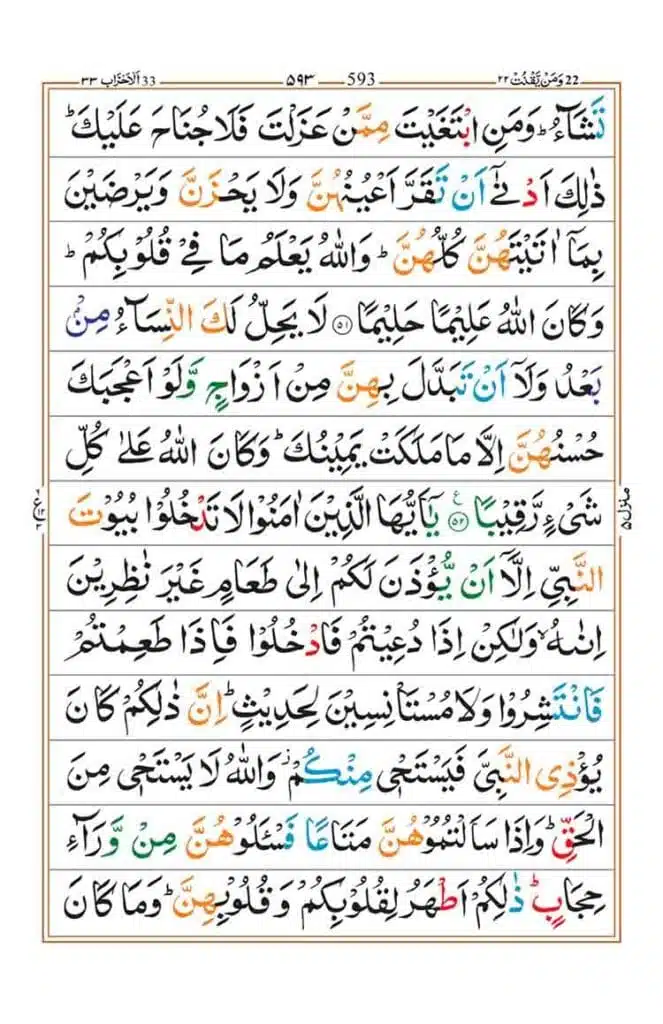
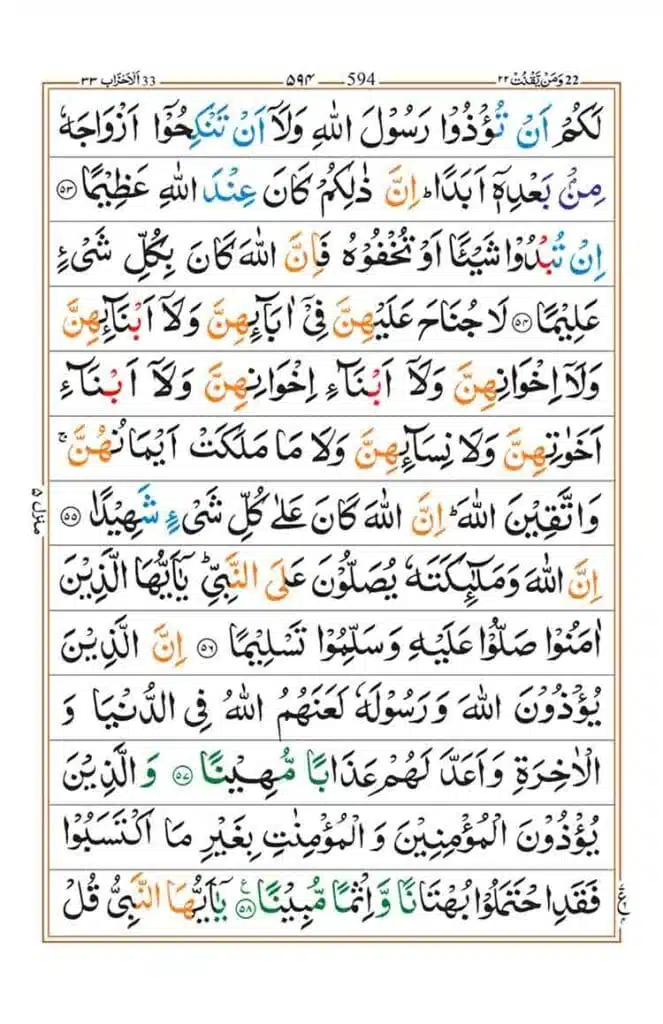
Full Arabic Text, Transliteration, and English Translation of Surah Ahzab
بِسْمِ اللَّهِ الرَّحْمَٰنِ الرَّحِيمِ
Bismillāhi r-raḥmāni r-raḥīm
In the Name of Allah—the Most Compassionate, Most Merciful.
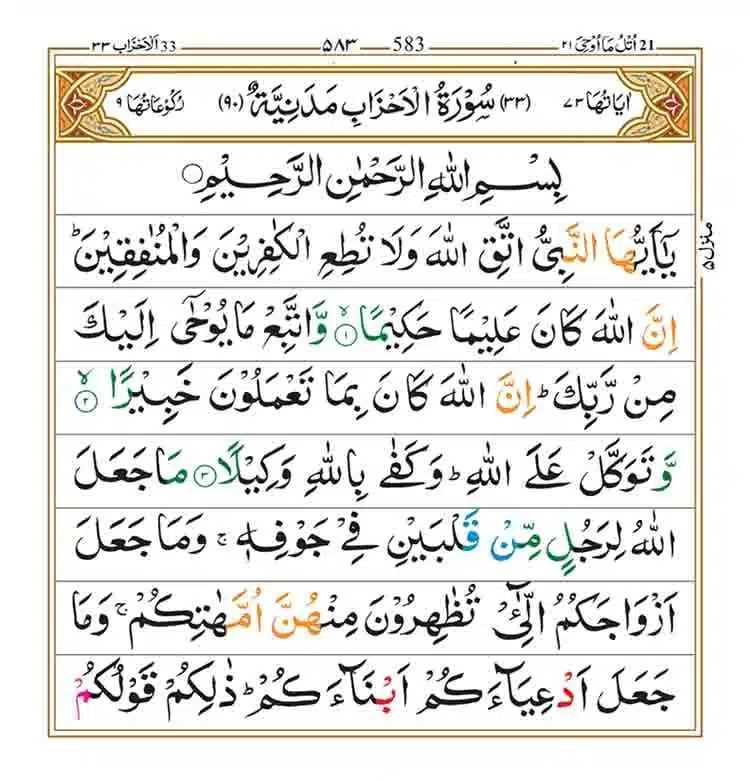
1. يَا أَيُّهَا النَّبِيُّ اتَّقِ اللَّهَ وَلَا تُطِعِ الْكَافِرِينَ وَالْمُنَافِقِينَ ۚ إِنَّ اللَّهَ كَانَ عَلِيمًا حَكِيمًا
Yā ayyuhā n-nabiyyu ittaqi llāha wa lā tuṭi’i l-kāfirīna wa l-munāfiqīn, inna llāha kāna ‘alīman ḥakīmā.
O Prophet, fear Allah and do not obey the disbelievers and the hypocrites. Indeed, Allah is ever Knowing and Wise.
2. وَاتَّبِعْ مَا يُوحَىٰ إِلَيْكَ مِن رَّبِّكَ ۚ إِنَّ اللَّهَ كَانَ بِمَا تَعْمَلُونَ خَبِيرًا
Wa attabi’ mā yūḥā ilayka min rabbik, inna llāha kāna bimā ta’malūna khabīrā.
And follow that which is revealed to you from your Lord. Indeed Allah is ever, with what you do, Acquainted.
3. وَتَوَكَّلْ عَلَى اللَّهِ ۚ وَكَفَىٰ بِاللَّهِ وَكِيلًا
Wa tawakkal ‘alā llāh, wa kafā bi-llāhi wakīlā.
And rely upon Allah; and sufficient is Allah as Disposer of affairs.
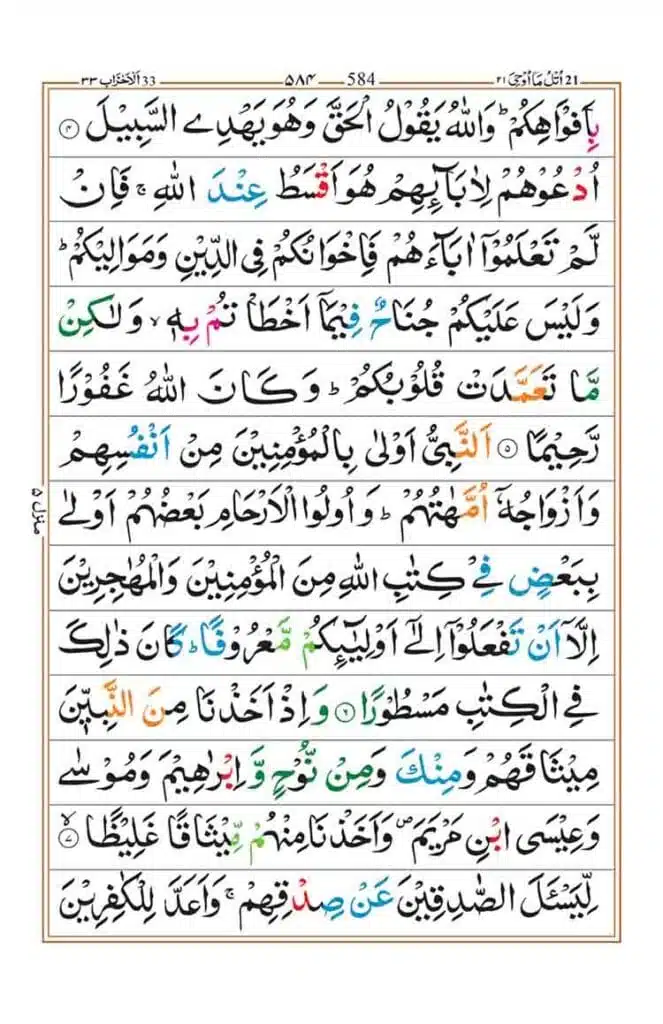
4. مَّا جَعَلَ اللَّهُ لِرَجُلٍ مِّن قَلْبَيْنِ فِي جَوْفِهِ ۚ وَمَا جَعَلَ أَزْوَاجَكُمُ اللَّائِي تُظَاهِرُونَ مِنْهُنَّ أُمَّهَاتِكُمْ ۚ وَمَا جَعَلَ أَدْعِيَاءَكُمْ أَبْنَاءَكُمْ ۚ ذَٰلِكُمْ قَوْلُكُم بِأَفْوَاهِكُمْ ۖ وَاللَّهُ يَقُولُ الْحَقَّ وَهُوَ يَهْدِي السَّبِيلَ
Mā ja’ala llāhu li-rajulin min qalbayni fī jawfih, wa mā ja’ala azwājakumu llā’ī tuẓāhirūna minhunna ummahātikum, wa mā ja’ala ad’iyā’akum abnā’akum, dhālikum qawlukum bi-afwāhikum, wa-llāhu yaqūlu l-ḥaqqa wa huwa yahdī s-sabīl.
Allah has not made for a man two hearts in his interior. And He has not made your wives whom you declare unlawful your mothers. And he has not made your adopted sons your [true] sons. That is [merely] your saying by your mouths, but Allah says the truth, and He guides to the [right] way.
5. ادْعُوهُمْ لِآبَائِهِمْ هُوَ أَقْسَطُ عِندَ اللَّهِ ۚ فَإِن لَّمْ تَعْلَمُوا آبَاءَهُمْ فَإِخْوَانُكُمْ فِي الدِّينِ وَمَوَالِيكُمْ ۚ وَلَيْسَ عَلَيْكُمْ جُنَاحٌ فِيمَا أَخْطَأْتُم بِهِ وَلَٰكِن مَّا تَعَمَّدَتْ قُلُوبُكُمْ ۚ وَكَانَ اللَّهُ غَفُورًا رَّحِيمًا
Ud’ūhum li-ābā’ihim huwa aqsaṭu ‘inda llāh, fa-in lam ta’lamū ābā’ahum fa-ikhwānukum fi d-dīni wa mawālīkum, wa laysa ‘alaykum junāḥun fīmā akhṭa’tum bihi wa lākin mā ta’ammadat qulūbukum, wa kāna llāhu ghafūran raḥīmā.
Call them by [the names of] their fathers; it is more just in the sight of Allah. But if you do not know their fathers – then they are [still] your brothers in religion and those entrusted to you. And there is no blame upon you for that in which you have erred but [only for] what your hearts intended. And ever is Allah Forgiving and Merciful.
6. النَّبِيُّ أَوْلَىٰ بِالْمُؤْمِنِينَ مِنْ أَنفُسِهِمْ ۖ وَأَزْوَاجُهُ أُمَّهَاتُهُمْ ۗ وَأُولُو الْأَرْحَامِ بَعْضُهُمْ أَوْلَىٰ بِبَعْضٍ فِي كِتَابِ اللَّهِ مِنَ الْمُؤْمِنِينَ وَالْمُهَاجِرِينَ إِلَّا أَن تَفْعَلُوا إِلَىٰ أَوْلِيَائِكُم مَّعْرُوفًا ۚ كَانَ ذَٰلِكَ فِي الْكِتَابِ مَسْطُورًا
An-nabiyyu awlā bil-mu’minīna min anfusihim wa azwājuhu ummahātuhum, wa ulū l-arḥāmi ba’ḍuhum awlā biba’ḍin fī kitābi llāhi mina l-mu’minīna wal-muhājirīna illā an taf’alū ilā awliyā’ikum ma’rūfā, kāna dhālika fi l-kitābi masṭūrā.
The Prophet is more worthy of the believers than themselves, and his wives are [in the position of] their mothers. And those of [blood] relationship are more entitled [to inheritance] in the decree of Allah than the [other] believers and the emigrants, except that you may do to your close associates a kindness [through bequest]. That was in the Book inscribed.
7. وَإِذْ أَخَذْنَا مِنَ النَّبِيِّينَ مِيثَاقَهُمْ وَمِنكَ وَمِن نُّوحٍ وَإِبْرَاهِيمَ وَمُوسَىٰ وَعِيسَى ابْنِ مَرْيَمَ ۖ وَأَخَذْنَا مِنْهُم مِّيثَاقًا غَلِيظًا
Wa idh akhadhnā mina n-nabiyyīna mīthāqahum wa minka wa min Nūḥin wa Ibrāhīma wa Mūsā wa ‘Īsā bni Maryam, wa akhadhnā minhum mīthāqan ghalīẓā.
And [mention, O Muhammad], when We took from the prophets their covenant and from you and from Noah and Abraham and Moses and Jesus, the son of Mary; and We took from them a solemn covenant.
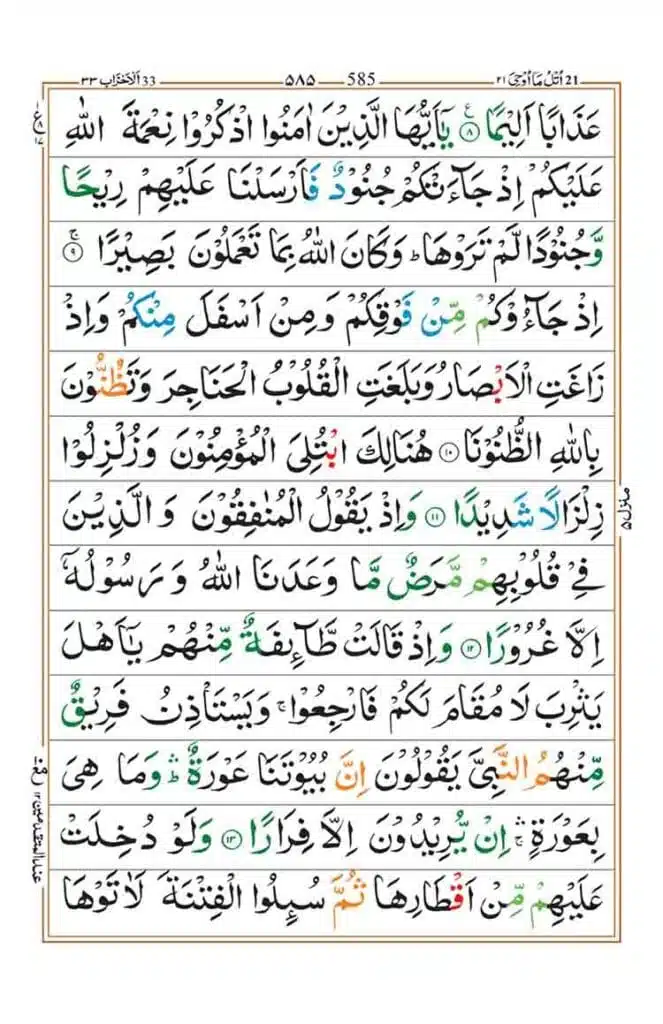
8. لِّيَسْأَلَ الصَّادِقِينَ عَن صِدْقِهِمْ ۚ وَأَعَدَّ لِلْكَافِرِينَ عَذَابًا أَلِيمًا
Li-yas’ala ṣ-ṣādiqīna ‘an ṣidqihim, wa a’adda lil-kāfirīna ‘adhāban alīmā.
That He may question the truthful about their truth. And He has prepared for the disbelievers a painful punishment.
9. يَا أَيُّهَا الَّذِينَ آمَنُوا اذْكُرُوا نِعْمَةَ اللَّهِ عَلَيْكُمْ إِذْ جَاءَتْكُمْ جُنُودٌ فَأَرْسَلْنَا عَلَيْهِمْ رِيحًا وَجُنُودًا لَّمْ تَرَوْهَا ۚ وَكَانَ اللَّهُ بِمَا تَعْمَلُونَ بَصِيرًا
Yā ayyuhā lladhīna āmanū dhkurū ni’mata llāhi ‘alaykum idh jā’atkum junūdun fa-arsalnā ‘alayhim rīḥan wa junūdan lam tarawhā, wa kāna llāhu bimā ta’malūna baṣīrā.
O you who have believed, remember the favor of Allah upon you when armies came to [attack] you and We sent upon them a wind and armies [of angels] you did not see. And ever is Allah, of what you do, Seeing.
10. إِذْ جَاءُوكُم مِّن فَوْقِكُمْ وَمِنْ أَسْفَلَ مِنكُمْ وَإِذْ زَاغَتِ الْأَبْصَارُ وَبَلَغَتِ الْقُلُوبُ الْحَنَاجِرَ وَتَظُنُّونَ بِاللَّهِ الظُّنُونَا
Idh jā’ūkum min fawqikum wa min asfala minkum wa idh zāghati l-abṣāru wa balaghati l-qulūbu l-ḥanājira wa taẓunnūna bi-llāhi ẓ-ẓunūnā.
[Remember] when they came at you from above you and from below you, and when eyes shifted [in fear], and hearts reached the throats, and you assumed about Allah [various] assumptions.
11. هُنَالِكَ ابْتُلِيَ الْمُؤْمِنُونَ وَزُلْزِلُوا زِلْزَالًا شَدِيدًا
Hunālika btuliya l-mu’minūna wa zulzilū zilzālan shadīdā.
There the believers were tested and shaken with a severe shaking.
12. وَإِذْ يَقُولُ الْمُنَافِقُونَ وَالَّذِينَ فِي قُلُوبِهِم مَّرَضٌ مَّا وَعَدَنَا اللَّهُ وَرَسُولُهُ إِلَّا غُرُورًا
Wa idh yaqūlu l-munāfiqūna wa-lladhīna fī qulūbihim maraḍun mā wa’adanā llāhu wa rasūluhu illā ghurūrā.
And [remember] when the hypocrites and those in whose hearts is disease said, “Allah and His Messenger did not promise us except delusion,”
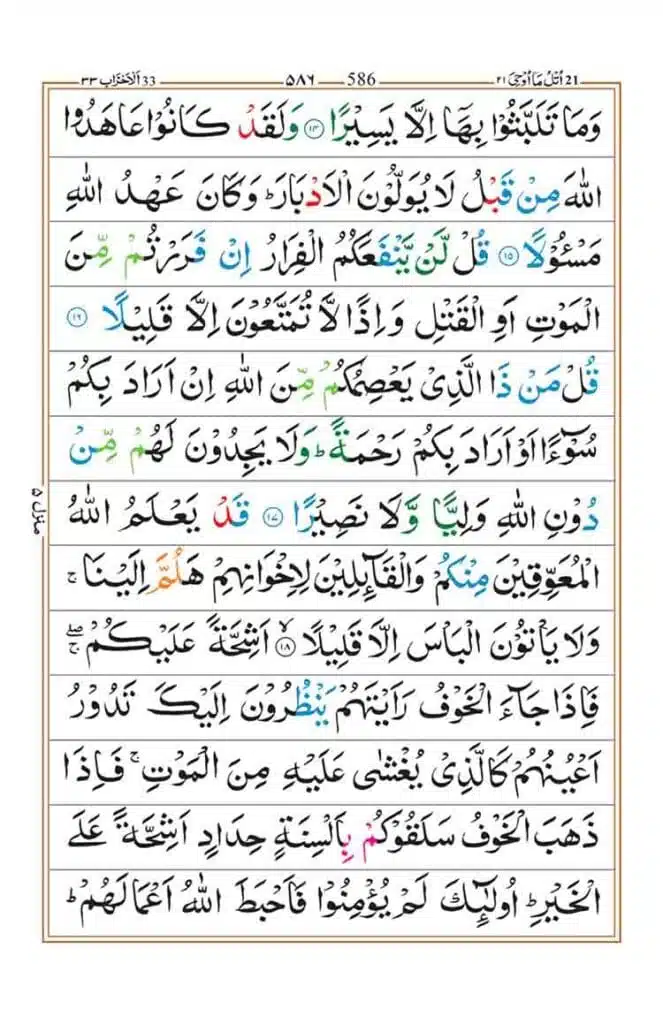
13. وَإِذْ قَالَت طَّائِفَةٌ مِّنْهُمْ يَا أَهْلَ يَثْرِبَ لَا مُقَامَ لَكُمْ فَارْجِعُوا ۚ وَيَسْتَأْذِنُ فَرِيقٌ مِّنْهُمُ النَّبِيَّ يَقُولُونَ إِنَّ بُيُوتَنَا عَوْرَةٌ وَمَا هِيَ بِعَوْرَةٍ ۖ إِن يُرِيدُونَ إِلَّا فِرَارًا
Wa idh qālat ṭā’ifatun minhum yā ahla Yathriba lā muqāma lakum fa-rji’ū, wa yasta’dhinu farīqun minhumu n-nabiyya yaqūlūna inna buyūtanā ‘awratun wa mā hiya bi-‘awrah, in yurīdūna illā firārā.
And when a faction of them said, “O people of Yathrib, there is no stability for you [here], so return [home].” And a party of them asked permission of the Prophet, saying, “Indeed, our houses are unprotected,” while they were not exposed. They did not intend except to flee.
14. وَلَوْ دُخِلَتْ عَلَيْهِم مِّنْ أَقْطَارِهَا ثُمَّ سُئِلُوا الْفِتْنَةَ لَآتَوْهَا وَمَا تَلَبَّثُوا بِهَا إِلَّا يَسِيرًا
Wa law dukhilat ‘alayhim min aqṭārihā thumma su’ilū l-fitnata la-ātawhā wa mā talabbathū bihā illā yasīrā.
And if they had been entered upon from all its [surrounding] regions and fitnah had been demanded of them, they would have done it and not hesitated over it except briefly.
15. وَلَقَدْ كَانُوا عَاهَدُوا اللَّهَ مِن قَبْلُ لَا يُوَلُّونَ الْأَدْبَارَ ۚ وَكَانَ عَهْدُ اللَّهِ مَسْئُولًا
Wa laqad kānū ‘āhadū llāha min qablu lā yuwallūna l-adbār, wa kāna ‘ahdu llāhi mas’ūlā.
And they had already promised Allah before not to turn their backs and flee. And ever is the promise to Allah [that about which one will be] questioned.
16. قُل لَّن يَنفَعَكُمُ الْفِرَارُ إِن فَرَرْتُم مِّنَ الْمَوْتِ أَوِ الْقَتْلِ وَإِذًا لَّا تُمَتَّعُونَ إِلَّا قَلِيلًا
Qul lan yanfa’akumu l-firāru in farartum mina l-mawti awi l-qatli wa idhan lā tumatta’ūna illā qalīlā.
Say, [O Muhammad], “Never will fleeing benefit you if you should flee from death or killing; and then [if you did], you would not be given enjoyment [of life] except for a little.”
17. قُلْ مَن ذَا الَّذِي يَعْصِمُكُم مِّنَ اللَّهِ إِنْ أَرَادَ بِكُمْ سُوءًا أَوْ أَرَادَ بِكُمْ رَحْمَةً ۚ وَلَا يَجِدُونَ لَهُم مِّن دُونِ اللَّهِ وَلِيًّا وَلَا نَصِيرًا
Qul man dhā lladhī ya’ṣimukum mina llāhi in arāda bikum sū’an aw arāda bikum raḥmah, wa lā yajidūna lahum min dūni llāhi waliyyan wa lā naṣīrā.
Say, “Who is it that can protect you from Allah if He intends for you an ill or intends for you a mercy?” And they will not find for themselves besides Allah any protector or any helper.
18. ۞ قَدْ يَعْلَمُ اللَّهُ الْمُعَوِّقِينَ مِنكُمْ وَالْقَائِلِينَ لِإِخْوَانِهِمْ هَلُمَّ إِلَيْنَا ۖ وَلَا يَأْتُونَ الْبَأْسَ إِلَّا قَلِيلًا
Qad ya’lamu llāhu l-mu’awwiqīna minkum wa-l-qā’ilīna li-ikhwānihim halumma ilaynā, wa lā ya’tūna l-ba’sa illā qalīlā.
Already Allah knows the hinderers among you and those [hypocrites] who say to their brothers, “Come to us,” and do not go to battle, except for a few,
19. أَشِحَّةً عَلَيْكُمْ ۖ فَإِذَا جَاءَ الْخَوْفُ رَأَيْتَهُمْ يَنظُرُونَ إِلَيْكَ تَدُورُ أَعْيُنُهُمْ كَالَّذِي يُغْشَىٰ عَلَيْهِ مِنَ الْمَوْتِ ۖ فَإِذَا ذَهَبَ الْخَوْفُ سَلَقُوكُم بِأَلْسِنَةٍ حِدَادٍ أَشِحَّةً عَلَى الْخَيْرِ ۚ أُولَٰئِكَ لَمْ يُؤْمِنُوا فَأَحْبَطَ اللَّهُ أَعْمَالَهُمْ ۚ وَكَانَ ذَٰلِكَ عَلَى اللَّهِ يَسِيرًا
Ashiḥḥatan ‘alaykum, fa-idhā jā’a l-khawfu ra’aytahum yanẓurūna ilayka tadūru a’yunuhum ka-lladhī yughshā ‘alayhi mina l-mawt, fa-idhā dhahaba l-khawfu salaqūkum bi-alsinatin ḥidādin ashiḥḥatan ‘alā l-khayr, ulā’ika lam yu’minū fa-aḥbaṭa llāhu a’mālahum, wa kāna dhālika ‘alā llāhi yasīrā.
Indisposed toward you. And when fear comes, you see them looking at you, their eyes revolving like one being overcome by death. But when fear departs, they lash you with sharp tongues, indisposed toward [any] good. Those have not believed, so Allah has rendered their deeds worthless, and ever is that, for Allah, easy.
20. يَحْسَبُونَ الْأَحْزَابَ لَمْ يَذْهَبُوا ۖ وَإِن يَأْتِ الْأَحْزَابُ يَوَدُّوا لَوْ أَنَّهُم بَادُونَ فِي الْأَعْرَابِ يَسْأَلُونَ عَنْ أَنبَائِكُمْ ۖ وَلَوْ كَانُوا فِيكُم مَّا قَاتَلُوا إِلَّا قَلِيلًا
Yaḥsabūna l-aḥzāba lam yadhhabū, wa in ya’ti l-aḥzābu yawaddū law annahum bādūna fi l-a’rābi yas’alūna ‘an anbā’ikum, wa law kānū fīkum mā qātalū illā qalīlā.
They think the companies have not [yet] withdrawn. And if the companies should come [again], they would wish they were in the desert among the bedouins, inquiring [from afar] about your news. And if they should be among you, they would not fight except for a little.
21. لَّقَدْ كَانَ لَكُمْ فِي رَسُولِ اللَّهِ أُسْوَةٌ حَسَنَةٌ لِّمَن كَانَ يَرْجُو اللَّهَ وَالْيَوْمَ الْآخِرَ وَذَكَرَ اللَّهَ كَثِيرًا
Laqad kāna lakum fī rasūli llāhi uswatun ḥasanatun li-man kāna yarjū llāha wal-yawma l-ākhira wa dhakara llāha kathīrā.
There has certainly been for you in the Messenger of Allah an excellent pattern for anyone whose hope is in Allah and the Last Day and [who] remembers Allah often.
22. وَلَمَّا رَأَى الْمُؤْمِنُونَ الْأَحْزَابَ قَالُوا هَٰذَا مَا وَعَدَنَا اللَّهُ وَرَسُولُهُ وَصَدَقَ اللَّهُ وَرَسُولُهُ ۚ وَمَا زَادَهُمْ إِلَّا إِيمَانًا وَتَسْلِيمًا
Wa lammā ra’ā l-mu’minūna l-aḥzāba qālū hādhā mā wa’adanā llāhu wa rasūluhu wa ṣadaqa llāhu wa rasūluh, wa mā zādahum illā īmānan wa taslīmā.
And when the believers saw the companies, they said, “This is what Allah and His Messenger had promised us, and Allah and His Messenger spoke the truth.” And it increased them only in faith and acceptance.
23. مِّنَ الْمُؤْمِنِينَ رِجَالٌ صَدَقُوا مَا عَاهَدُوا اللَّهَ عَلَيْهِ ۖ فَمِنْهُم مَّن قَضَىٰ نَحْبَهُ وَمِنْهُم مَّن يَنتَظِرُ ۖ وَمَا بَدَّلُوا تَبْدِيلًا
Mina l-mu’minīna rijālun ṣadaqū mā ‘āhadū llāha ‘alayh, fa-minhum man qaḍā naḥbahu wa minhum man yantaẓir, wa mā baddalū tabdīlā.
Among the believers are men true to what they promised Allah. Among them is he who has fulfilled his vow [to the death], and among them is he who awaits [his chance]. And they did not alter [the terms of their commitment] by any alteration –
24. لِّيَجْزِيَ اللَّهُ الصَّادِقِينَ بِصِدْقِهِمْ وَيُعَذِّبَ الْمُنَافِقِينَ إِن شَاءَ أَوْ يَتُوبَ عَلَيْهِمْ ۚ إِنَّ اللَّهَ كَانَ غَفُورًا رَّحِيمًا
Li-yajziya llāhu ṣ-ṣādiqīna bi-ṣidqihim wa yu’adhdhiba l-munāfiqīna in shā’a aw yatūba ‘alayhim, inna llāha kāna ghafūran raḥīmā.
That Allah may reward the truthful for their truth and punish the hypocrites if He wills or accept their repentance. Indeed, Allah is ever Forgiving and Merciful.
25. وَرَدَّ اللَّهُ الَّذِينَ كَفَرُوا بِغَيْظِهِمْ لَمْ يَنَالُوا خَيْرًا ۚ وَكَفَى اللَّهُ الْمُؤْمِنِينَ الْقِتَالَ ۚ وَكَانَ اللَّهُ قَوِيًّا عَزِيزًا
Wa radda llāhu lladhīna kafarū bi-ghayẓihim lam yanālū khayrā, wa kafā llāhu l-mu’minīna l-qitāl, wa kāna llāhu qawiyyan ‘azīzā.
And Allah repelled those who disbelieved, in their rage, not having obtained any good. And sufficient was Allah for the believers in battle, and ever is Allah Powerful and Exalted in Might.
26. وَأَنزَلَ الَّذِينَ ظَاهَرُوهُم مِّنْ أَهْلِ الْكِتَابِ مِن صَيَاصِيهِمْ وَقَذَفَ فِي قُلُوبِهِمُ الرُّعْبَ فَرِيقًا تَقْتُلُونَ وَتَأْسِرُونَ فَرِيقًا
Wa anzala lladhīna ẓāharūhum min ahli l-kitābi min ṣayāṣīhim wa qadhafa fī qulūbihimu r-ru’ba farīqan taqtulūna wa ta’sirūna farīqā.
And He brought down those who supported them among the People of the Scripture from their fortresses and cast terror into their hearts [so that] a party you killed, and you took captive a party.
27. وَأَوْرَثَكُمْ أَرْضَهُمْ وَدِيَارَهُمْ وَأَمْوَالَهُمْ وَأَرْضًا لَّمْ تَطَئُوهَا ۚ وَكَانَ اللَّهُ عَلَىٰ كُلِّ شَيْءٍ قَدِيرًا
Wa awrathakum arḍahum wa diyārahum wa amwālahum wa arḍan lam taṭa’ūhā, wa kāna llāhu ‘alā kulli shay’in qadīrā.
And He caused you to inherit their land and their homes and their properties and a land which you have not trodden. And ever is Allah, over all things, competent.
28. يَا أَيُّهَا النَّبِيُّ قُل لِّأَزْوَاجِكَ إِن كُنتُنَّ تُرِدْنَ الْحَيَاةَ الدُّنْيَا وَزِينَتَهَا فَتَعَالَيْنَ أُمَتِّعْكُنَّ وَأُسَرِّحْكُنَّ سَرَاحًا جَمِيلًا
Yā ayyuhā n-nabiyyu qul li-azwājika in kuntunna turidna l-ḥayāta d-dunyā wa zīnatahā fa-ta’ālina umatti’kunna wa usarriḥkunna sarāḥan jamīlā.
O Prophet, say to your wives, “If you should desire the worldly life and its adornment, then come, I will provide for you and give you a gracious release.”
29. وَإِن كُنتُنَّ تُرِدْنَ اللَّهَ وَرَسُولَهُ وَالدَّارَ الْآخِرَةَ فَإِنَّ اللَّهَ أَعَدَّ لِلْمُحْسِنَاتِ مِنكُنَّ أَجْرًا عَظِيمًا
Wa in kuntunna turidna llāha wa rasūlahu wa d-dāra l-ākhirata fa-inna llāha a’adda lil-muḥsināti minkunna ajran ‘aẓīmā.
But if you should desire Allah and His Messenger and the home of the Hereafter – then indeed, Allah has prepared for the doers of good among you a great reward.”
30. يَا نِسَاءَ النَّبِيِّ مَن يَأْتِ مِنكُنَّ بِفَاحِشَةٍ مُّبَيِّنَةٍ يُضَاعَفْ لَهَا الْعَذَابُ ضِعْفَيْنِ ۚ وَكَانَ ذَٰلِكَ عَلَى اللَّهِ يَسِيرًا
Yā nisā’a n-nabiyyi man ya’ti minkunna bi-fāḥishatin mubayyinatin yuḍā’af lahā l-‘adhābu ḍi’fayni, wa kāna dhālika ‘alā llāhi yasīrā.
O wives of the Prophet, whoever of you should commit a clear immorality – for her the punishment would be doubled two fold, and ever is that, for Allah, easy.
31. وَمَن يَقْنُتْ مِنكُنَّ لِلَّهِ وَرَسُولِهِ وَتَعْمَلْ صَالِحًا نُّؤْتِهَا أَجْرَهَا مَرَّتَيْنِ وَأَعْتَدْنَا لَهَا رِزْقًا كَرِيمًا
Wa man yaqnut minkunna li-llāhi wa rasūlihi wa ta’mal ṣāliḥan nu’tihā ajrahā marratayni wa a’tadnā lahā rizqan karīmā.
And whoever of you devoutly obeys Allah and His Messenger and does righteousness – We will give her her reward twice; and We have prepared for her a noble provision.
32. يَا نِسَاءَ النَّبِيِّ لَسْتُنَّ كَأَحَدٍ مِّنَ النِّسَاءِ ۚ إِنِ اتَّقَيْتُنَّ فَلَا تَخْضَعْنَ بِالْقَوْلِ فَيَطْمَعَ الَّذِي فِي قَلْبِهِ مَرَضٌ وَقُلْنَ قَوْلًا مَّعْرُوفًا
Yā nisā’a n-nabiyyi lastunna ka-aḥadin mina n-nisā’i ini ttaqaytunna fa-lā takhḍa’na bil-qawli fa-yaṭma’a lladhī fī qalbihi maraḍun wa qulna qawlan ma’rūfā.
O wives of the Prophet, you are not like anyone among women. If you fear Allah, then do not be soft in speech [to men], lest he in whose heart is disease should covet, but speak with appropriate speech.
33. وَقَرْنَ فِي بُيُوتِكُنَّ وَلَا تَبَرَّجْنَ تَبَرُّجَ الْجَاهِلِيَّةِ الْأُولَىٰ ۖ وَأَقِمْنَ الصَّلَاةَ وَآتِينَ الزَّكَاةَ وَأَطِعْنَ اللَّهَ وَرَسُولَهُ ۚ إِنَّمَا يُرِيدُ اللَّهُ لِيُذْهِبَ عَنكُمُ الرِّجْسَ أَهْلَ الْبَيْتِ وَيُطَهِّرَكُمْ تَطْهِيرًا
Wa qarna fī buyūtikunna wa lā tabarrajna tabarruja l-jāhiliyyati l-ūlā, wa aqimna ṣ-ṣalāta wa ātīna z-zakāta wa aṭi’na llāha wa rasūlah, innamā yurīdu llāhu li-yudhhiba ‘ankumu r-rijsa ahla l-bayti wa yuṭahhirakum taṭhīrā.
And abide in your houses and do not display yourselves as [was] the display of the former times of ignorance. And establish prayer and give zakah and obey Allah and His Messenger. Allah intends only to remove from you the impurity [of sin], O people of the [Prophet’s] household, and to purify you with [extensive] purification.
34. وَاذْكُرْنَ مَا يُتْلَىٰ فِي بُيُوتِكُنَّ مِنْ آيَاتِ اللَّهِ وَالْحِكْمَةِ ۚ إِنَّ اللَّهَ كَانَ لَطِيفًا خَبِيرًا
Wa dhkurna mā yutlā fī buyūtikunna min āyāti llāhi wal-ḥikmah, inna llāha kāna laṭīfan khabīrā.
And remember what is recited in your houses of the verses of Allah and wisdom. Indeed, Allah is ever Subtle and Acquainted [with all things].
35. إِنَّ الْمُسْلِمِينَ وَالْمُسْلِمَاتِ وَالْمُؤْمِنِينَ وَالْمُؤْمِنَاتِ وَالْقَانِتِينَ وَالْقَانِتَاتِ وَالصَّادِقِينَ وَالصَّادِقَاتِ وَالصَّابِرِينَ وَالصَّابِرَاتِ وَالْخَاشِعِينَ وَالْخَاشِعَاتِ وَالْمُتَصَدِّقِينَ وَالْمُتَصَدِّقَاتِ وَالصَّائِمِينَ وَالصَّائِمَاتِ وَالْحَافِظِينَ فُرُوجَهُمْ وَالْحَافِظَاتِ وَالذَّاكِرِينَ اللَّهَ كَثِيرًا وَالذَّاكِرَاتِ أَعَدَّ اللَّهُ لَهُم مَّغْفِرَةً وَأَجْرًا عَظِيمًا
Inna l-muslimīna wal-muslimāti wal-mu’minīna wal-mu’mināti wal-qānitīna wal-qānitāti waṣ-ṣādiqīna waṣ-ṣādiqāti waṣ-ṣābirīna waṣ-ṣābirāti wal-khāshi’īna wal-khāshi’āti wal-mutaṣaddiqīna wal-mutaṣaddiqāti waṣ-ṣā’imīna waṣ-ṣā’imāti wal-ḥāfiẓīna furūjahum wal-ḥāfiẓāti wa-dh-dhākirīna llāha kathīran wa-dh-dhākirāti a’adda llāhu lahum maghfiratan wa ajran ‘aẓīmā.
Indeed, the Muslim men and Muslim women, the believing men and believing women, the obedient men and obedient women, the truthful men and truthful women, the patient men and patient women, the humble men and humble women, the charitable men and charitable women, the fasting men and fasting women, the men who guard their private parts and the women who do so, and the men who remember Allah often and the women who do so – for them Allah has prepared forgiveness and a great reward.
36. وَمَا كَانَ لِمُؤْمِنٍ وَلَا مُؤْمِنَةٍ إِذَا قَضَى اللَّهُ وَرَسُولُهُ أَمْرًا أَن يَكُونَ لَهُمُ الْخِيَرَةُ مِنْ أَمْرِهِمْ ۗ وَمَن يَعْصِ اللَّهَ وَرَسُولَهُ فَقَدْ ضَلَّ ضَلَالًا مُّبِينًا
Wa mā kāna li-mu’minin wa lā mu’minatin idhā qaḍā llāhu wa rasūluhu amran an yakūna lahumu l-khiyaratu min amrihim, wa man ya’ṣi llāha wa rasūlahu fa-qad ḍalla ḍalālan mubīnā.
It is not for a believing man or a believing woman, when Allah and His Messenger have decided a matter, that they should [thereafter] have any choice about their affair. And whoever disobeys Allah and His Messenger has certainly strayed into clear error.
37. وَإِذْ تَقُولُ لِلَّذِي أَنْعَمَ اللَّهُ عَلَيْهِ وَأَنْعَمْتَ عَلَيْهِ أَمْسِكْ عَلَيْكَ زَوْجَكَ وَاتَّقِ اللَّهَ وَتُخْفِي فِي نَفْسِكَ مَا اللَّهُ مُبْدِيهِ وَتَخْشَى النَّاسَ وَاللَّهُ أَحَقُّ أَن تَخْشَاهُ ۖ فَلَمَّا قَضَىٰ زَيْدٌ مِّنْهَا وَطَرًا زَوَّجْنَاكَهَا لِكَيْ لَا يَكُونَ عَلَى الْمُؤْمِنِينَ حَرَجٌ فِي أَزْوَاجِ أَدْعِيَائِهِمْ إِذَا قَضَوْا مِنْهُنَّ وَطَرًا ۚ وَكَانَ أَمْرُ اللَّهِ مَفْعُولًا
Wa idh taqūlu li-lladhī an’ama llāhu ‘alayhi wa an’amta ‘alayhi amsik ‘alayka zawjaka wa-ttaqi llāha wa tukhfī fī nafsika mā llāhu mubdīhi wa takhsha n-nāsa wa-llāhu aḥaqqu an takhshāh, fa-lammā qaḍā Zaydun minhā waṭaran zawwajnākahā li-kay lā yakūna ‘alā l-mu’minīna ḥarajun fī azwāji ad’iyā’ihim idhā qaḍaw minhunna waṭarā, wa kāna amru llāhi maf’ūlā.
And [remember, O Muhammad], when you said to the one on whom Allah bestowed favor and you bestowed favor, “Keep your wife and fear Allah,” while you concealed within yourself that which Allah is to disclose. And you feared the people, while Allah has more right that you fear Him. So when Zayd had no longer any need for her, We married her to you in order that there not be upon the believers any discomfort concerning the wives of their adopted sons when they no longer have need of them. And ever is the command of Allah accomplished.
38. مَّا كَانَ عَلَى النَّبِيِّ مِنْ حَرَجٍ فِيمَا فَرَضَ اللَّهُ لَهُ ۖ سُنَّةَ اللَّهِ فِي الَّذِينَ خَلَوْا مِن قَبْلُ ۚ وَكَانَ أَمْرُ اللَّهِ قَدَرًا مَّقْدُورًا
Mā kāna ‘alā n-nabiyyi min ḥarajin fīmā faraḍa llāhu lah, sunnata llāhi fi lladhīna khalaw min qabl, wa kāna amru llāhi qadaran maqdūrā.
There is not to be upon the Prophet any discomfort concerning that which Allah has imposed upon him. [This is] the established way of Allah with those [prophets] who have passed on before. And ever is the command of Allah a destiny decreed.
39. الَّذِينَ يُبَلِّغُونَ رِسَالَاتِ اللَّهِ وَيَخْشَوْنَهُ وَلَا يَخْشَوْنَ أَحَدًا إِلَّا اللَّهَ ۗ وَكَفَىٰ بِاللَّهِ حَسِيبًا
Al-ladhīna yuballighūna risālāti llāhi wa yakhshawnahu wa lā yakhshawna aḥadan illā llāh, wa kafā bi-llāhi ḥasībā.
[ Allah praises] those who convey the messages of Allah and fear Him and do not fear anyone but Allah. And sufficient is Allah as Accountant.
40. مَّا كَانَ مُحَمَّدٌ أَبَا أَحَدٍ مِّن رِّجَالِكُمْ وَلَٰكِن رَّسُولَ اللَّهِ وَخَاتَمَ النَّبِيِّينَ ۗ وَكَانَ اللَّهُ بِكُلِّ شَيْءٍ عَلِيمًا
Mā kāna Muḥammadun abā aḥadin min rijālikum wa lākin rasūla llāhi wa khātama n-nabiyyīn, wa kāna llāhu bi-kulli shay’in ‘alīmā.
Muhammad is not the father of [any] one of your men, but [he is] the Messenger of Allah and last of the prophets. And ever is Allah, of all things, Knowing.
41. يَا أَيُّهَا الَّذِينَ آمَنُوا اذْكُرُوا اللَّهَ ذِكْرًا كَثِيرًا
Yā ayyuhā lladhīna āmanū dhkurū llāha dhikran kathīrā.
O you who have believed, remember Allah with much remembrance
42. وَسَبِّحُوهُ بُكْرَةً وَأَصِيلًا
Wa sabbiḥūhu bukratan wa aṣīlā.
And exalt Him morning and afternoon.
43. هُوَ الَّذِي يُصَلِّي عَلَيْكُمْ وَمَلَائِكَتُهُ لِيُخْرِجَكُم مِّنَ الظُّلُمَاتِ إِلَى النُّورِ ۚ وَكَانَ بِالْمُؤْمِنِينَ رَحِيمًا
Huwa lladhī yuṣallī ‘alaykum wa malā’ikatuhu li-yukhrijakum mina ẓ-ẓulumāti ilā n-nūr, wa kāna bil-mu’minīna raḥīmā.
It is He who confers blessing upon you, and His angels [ask Him to do so] that He may bring you out from darknesses into the light. And ever is He, to the believers, Merciful.
44. تَحِيَّتُهُمْ يَوْمَ يَلْقَوْنَهُ سَلَامٌ ۚ وَأَعَدَّ لَهُمْ أَجْرًا كَرِيمًا
Taḥiyyatuhum yawma yalqawnahu salām, wa a’adda lahum ajran karīmā.
Their greeting the Day they meet Him will be, “Peace.” And He has prepared for them a noble reward.
45. يَا أَيُّهَا النَّبِيُّ إِنَّا أَرْسَلْنَاكَ شَاهِدًا وَمُبَشِّرًا وَنَذِيرًا
Yā ayyuhā n-nabiyyu innā arsalnāka shāhidan wa mubashshiran wa nadhīrā.
O Prophet, indeed We have sent you as a witness and a bringer of good tidings and a warner.
46. وَدَاعِيًا إِلَى اللَّهِ بِإِذْنِهِ وَسِرَاجًا مُّنِيرًا
Wa dā’īyan ilā llāhi bi-idhnihi wa sirājan munīrā.
And one who invites to Allah, by His permission, and an illuminating lamp.
47. وَبَشِّرِ الْمُؤْمِنِينَ بِأَنَّ لَهُم مِّنَ اللَّهِ فَضْلًا كَبِيرًا
Wa bashshiri l-mu’minīna bi-anna lahum mina llāhi faḍlan kabīrā.
And give good tidings to the believers that they will have from Allah great bounty.
48. وَلَا تُطِعِ الْكَافِرِينَ وَالْمُنَافِقِينَ وَدَعْ أَذَاهُمْ وَتَوَكَّلْ عَلَى اللَّهِ ۚ وَكَفَىٰ بِاللَّهِ وَكِيلًا
Wa lā tuṭi’i l-kāfirīna wa l-munāfiqīna wa da’ adhāhum wa tawakkal ‘alā llāh, wa kafā bi-llāhi wakīlā.
And do not obey the disbelievers and the hypocrites but do not harm them, and rely upon Allah. And sufficient is Allah as Disposer of affairs.
49. يَا أَيُّهَا الَّذِينَ آمَنُوا إِذَا نَكَحْتُمُ الْمُؤْمِنَاتِ ثُمَّ طَلَّقْتُمُوهُنَّ مِن قَبْلِ أَن تَمَسُّوهُنَّ فَمَا لَكُمْ عَلَيْهِنَّ مِنْ عِدَّةٍ تَعْتَدُّونَهَا ۖ فَمَتِّعُوهُنَّ وَسَرِّحُوهُنَّ سَرَاحًا جَمِيلًا
Yā ayyuhā lladhīna āmanū idhā nakaḥtumu l-mu’mināti thumma ṭallaqtumūhunna min qabli an tamassūhunna fa-mā lakum ‘alayhinna min ‘iddatin ta’taddūnahā, fa-matti’ūhunna wa sarriḥūhunna sarāḥan jamīlā.
O You who have believed, when you marry believing women and then divorce them before you have touched them, then there is not for you any waiting period to count concerning them. So provide for them and give them a gracious release.
50. يَا أَيُّهَا النَّبِيُّ إِنَّا أَحْلَلْنَا لَكَ أَزْوَاجَكَ اللَّاتِي آتَيْتَ أُجُورَهُنَّ وَمَا مَلَكَتْ يَمِينُكَ مِمَّا أَفَاءَ اللَّهُ عَلَيْكَ وَبَنَاتِ عَمِّكَ وَبَنَاتِ عَمَّاتِكَ وَبَنَاتِ خَالِكَ وَبَنَاتِ خَالَاتِكَ اللَّاتِي هَاجَرْنَ مَعَكَ وَامْرَأَةً مُّؤْمِنَةً إِن وَهَبَتْ نَفْسَهَا لِلنَّبِيِّ إِنْ أَرَادَ النَّبِيُّ أَن يَسْتَنكِحَهَا خَالِصَةً لَّكَ مِن دُونِ الْمُؤْمِنِينَ ۗ قَدْ عَلِمْنَا مَا فَرَضْنَا عَلَيْهِمْ فِي أَزْوَاجِهِمْ وَمَا مَلَكَتْ أَيْمَانُهُمْ لِكَيْلَا يَكُونَ عَلَيْكَ حَرَجٌ ۗ وَكَانَ اللَّهُ غَفُورًا رَّحِيمًا
Yā ayyuhā n-nabiyyu innā aḥlalnā laka azwājaka llātī ātayta ujūrahunna wa mā malakat yamīnuka mimmā afā’a llāhu ‘alayka wa banāti ‘ammika wa banāti ‘ammātika wa banāti khālika wa banāti khālātika llātī hājarna ma’aka wa mra’atan mu’minatan in wahabat nafsahā lin-nabiyyi in arāda n-nabiyyu an yastankiḥahā khāliṣatan laka min dūni l-mu’minīn, qad ‘alimnā mā faraḍnā ‘alayhim fī azwājihim wa mā malakat aymānuhum li-kay lā yakūna ‘alayka ḥaraj, wa kāna llāhu ghafūran raḥīmā.
O Prophet, indeed We have made lawful to you your wives to whom you have given their due compensation and those your right hand possesses from what Allah has returned to you [of captives] and the daughters of your paternal uncles and the daughters of your paternal aunts and the daughters of your maternal uncles and the daughters of your maternal aunts who emigrated with you and a believing woman if she gives herself to the Prophet [and] if the Prophet wishes to marry her, [this is] only for you, excluding the [other] believers. We certainly know what We have made obligatory upon them concerning their wives and those their right hands possess, [but this is for you] in order that there will be upon you no discomfort. And ever is Allah Forgiving and Merciful.
51. ۞ تُرْجِي مَن تَشَاءُ مِنْهُنَّ وَتُؤْوِي إِلَيْكَ مَن تَشَاءُ ۖ وَمَنِ ابْتَغَيْتَ مِمَّنْ عَزَلْتَ فَلَا جُنَاحَ عَلَيْكَ ۚ ذَٰلِكَ أَدْنَىٰ أَن تَقَرَّ أَعْيُنُهُنَّ وَلَا يَحْزَنَّ وَيَرْضَيْنَ بِمَا آتَيْتَهُنَّ كُلُّهُنَّ ۚ وَاللَّهُ يَعْلَمُ مَا فِي قُلُوبِكُمْ ۚ وَكَانَ اللَّهُ عَلِيمًا حَلِيمًا
Turjī man tashā’u minhunna wa tu’wī ilayka man tashā’u wa mani btaghayta mimman ‘azalta fa-lā junāḥa ‘alayk, dhālika adnā an taqarra a’yunuhunna wa lā yaḥzanna wa yarḍayna bimā ātaytahunna kulluhunn, wa-llāhu ya’lamu mā fī qulūbikum, wa kāna llāhu ‘alīman ḥalīmā.
You, [O Muhammad], may put aside whom you will of them or take to yourself whom you will. And any that you desire of those [wives] from whom you had [temporarily] separated – there is no blame upon you [in returning her]. That is more suitable that they should be content and not grieve and that they should be satisfied with what you have given them – all of them. And Allah knows what is in your hearts. And ever is Allah Knowing and Forbearing.
52. لَّا يَحِلُّ لَكَ النِّسَاءُ مِن بَعْدُ وَلَا أَن تَبَدَّلَ بِهِنَّ مِنْ أَزْوَاجٍ وَلَوْ أَعْجَبَكَ حُسْنُهُنَّ إِلَّا مَا مَلَكَتْ يَمِينُكَ ۗ وَكَانَ اللَّهُ عَلَىٰ كُلِّ شَيْءٍ رَّقِيبًا
Lā yaḥillu laka n-nisā’u min ba’du wa lā an tabaddala bihinna min azwājin wa law a’jabaka ḥusnuhunna illā mā malakat yamīnuk, wa kāna llāhu ‘alā kulli shay’in raqībā.
Not lawful to you, [O Muhammad], are [any additional] women after [this], nor [is it] for you to exchange them for [other] wives, even if their beauty should please you, except what your right hand possesses. And ever is Allah, over all things, an Observer.
53. يَا أَيُّهَا الَّذِينَ آمَنُوا لَا تَدْخُلُوا بُيُوتَ النَّبِيِّ إِلَّا أَن يُؤْذَنَ لَكُمْ إِلَىٰ طَعَامٍ غَيْرَ نَاظِرِينَ إِنَاهُ وَلَٰكِنْ إِذَا دُعِيتُمْ فَادْخُلُوا فَإِذَا طَعِمْتُمْ فَانتَشِرُوا وَلَا مُسْتَأْنِسِينَ لِحَدِيثٍ ۚ إِنَّ ذَٰلِكُمْ كَانَ يُؤْذِي النَّبِيَّ فَيَسْتَحْيِي مِنكُمْ ۖ وَاللَّهُ لَا يَسْتَحْيِي مِنَ الْحَقِّ ۚ وَإِذَا سَأَلْتُمُوهُنَّ مَتَاعًا فَاسْأَلُوهُنَّ مِن وَرَاءِ حِجَابٍ ۚ ذَٰلِكُمْ أَطْهَرُ لِقُلُوبِكُمْ وَقُلُوبِهِنَّ ۚ وَمَا كَانَ لَكُمْ أَن تُؤْذُوا رَسُولَ اللَّهِ وَلَا أَن تَنكِحُوا أَزْوَاجَهُ مِن بَعْدِهِ أَبَدًا ۚ إِنَّ ذَٰلِكُمْ كَانَ عِندَ اللَّهِ عَظِيمًا
Yā ayyuhā lladhīna āmanū lā tadkhulū buyūta n-nabiyyi illā an yu’dhana lakum ilā ṭa’āmin ghayra nāẓirīna ināhu wa lākin idhā du’ītum fa-dkhulū fa-idhā ṭa’imtum fa-ntashirū wa lā musta’nisīna li-ḥadīth, inna dhālikum kāna yu’dhī n-nabiyya fa-yastaḥyī minkum wa-llāhu lā yastaḥyī mina l-ḥaqq, wa idhā sa’altumūhunna matā’an fa-s’alūhunna min warā’i ḥijāb, dhālikum aṭharu li-qulūbikum wa qulūbihinna, wa mā kāna lakum an tu’dhū rasūla llāhi wa lā an tankiḥū azwājahū min ba’dihi abadā, inna dhālikum kāna ‘inda llāhi ‘aẓīmā.
O you who have believed, do not enter the houses of the Prophet except when you are permitted for a meal, without awaiting its readiness. But when you are invited, then enter; and when you have eaten, disperse, not seeking to remain for conversation. Indeed, that [behavior] was troubling the Prophet, and he is shy of [dismissing] you. But Allah is not shy of the truth. And when you ask [his wives] for something, ask them from behind a partition. That is purer for your hearts and their hearts. And it is not [conceivable or lawful] for you to harm the Messenger of Allah or to marry his wives after him, ever. Indeed, that would be in the sight of Allah an enormity.
54. إِن تُبْدُوا شَيْئًا أَوْ تُخْفُوهُ فَإِنَّ اللَّهَ كَانَ بِكُلِّ شَيْءٍ عَلِيمًا
In tubdū shay’an aw tukhfūhu fa-inna llāha kāna bi-kulli shay’in ‘alīmā.
Whether you reveal a thing or conceal it, indeed Allah is ever, of all things, Knowing.
55. لَّا جُنَاحَ عَلَيْهِنَّ فِي آبَائِهِنَّ وَلَا أَبْنَائِهِنَّ وَلَا إِخْوَانِهِنَّ وَلَا أَبْنَاءِ إِخْوَانِهِنَّ وَلَا أَبْنَاءِ أَخَوَاتِهِنَّ وَلَا نِسَائِهِنَّ وَلَا مَا مَلَكَتْ أَيْمَانُهُنَّ ۗ وَاتَّقِينَ اللَّهَ ۚ إِنَّ اللَّهَ كَانَ عَلَىٰ كُلِّ شَيْءٍ شَهِيدًا
Lā junāḥa ‘alayhinna fī ābā’ihinna wa lā abnā’ihinna wa lā ikhwānihinna wa lā abnā’i ikhwānihinna wa lā abnā’i akhawātihinna wa lā nisā’ihinna wa lā mā malakat aymānuhunn, wa-ttaqīna llāh, inna llāha kāna ‘alā kulli shay’in shahīdā.
There is no blame upon women concerning their fathers or their sons or their brothers or their brothers’ sons or their sisters’ sons or their women or those their right hands possess. And fear Allah. Indeed Allah is ever, over all things, a Witness.
56. إِنَّ اللَّهَ وَمَلَائِكَتَهُ يُصَلُّونَ عَلَى النَّبِيِّ ۚ يَا أَيُّهَا الَّذِينَ آمَنُوا صَلُّوا عَلَيْهِ وَسَلِّمُوا تَسْلِيمًا
Inna llāha wa malā’ikatahu yuṣallūna ‘alā n-nabiyy, yā ayyuhā lladhīna āmanū ṣallū ‘alayhi wa sallimū taslīmā.
Indeed, Allah confers blessing upon the Prophet, and His angels [ask Him to do so]. O you who have believed, ask [Allah to confer] blessing upon him and ask [Allah to grant him] peace.
57. إِنَّ الَّذِينَ يُؤْذُونَ اللَّهَ وَرَسُولَهُ لَعَنَهُمُ اللَّهُ فِي الدُّنْيَا وَالْآخِرَةِ وَأَعَدَّ لَهُمْ عَذَابًا مُّهِينًا
Inna lladhīna yu’dhūna llāha wa rasūlahu la’anahumu llāhu fi d-dunyā wa l-ākhirah wa a’adda lahum ‘adhāban muhīnā.
Indeed, those who abuse Allah and His Messenger – Allah has cursed them in this world and the Hereafter and prepared for them a humiliating punishment.
58. وَالَّذِينَ يُؤْذُونَ الْمُؤْمِنِينَ وَالْمُؤْمِنَاتِ بِغَيْرِ مَا اكْتَسَبُوا فَقَدِ احْتَمَلُوا بُهْتَانًا وَإِثْمًا مُّبِينًا
Wa-lladhīna yu’dhūna l-mu’minīna wal-mu’mināti bi-ghayri mā ktasabū fa-qadi ḥtamalū buhtānan wa ithmān mubīnā.
And those who harm believing men and believing women for [something] other than what they have earned have certainly born upon themselves a slander and manifest sin.
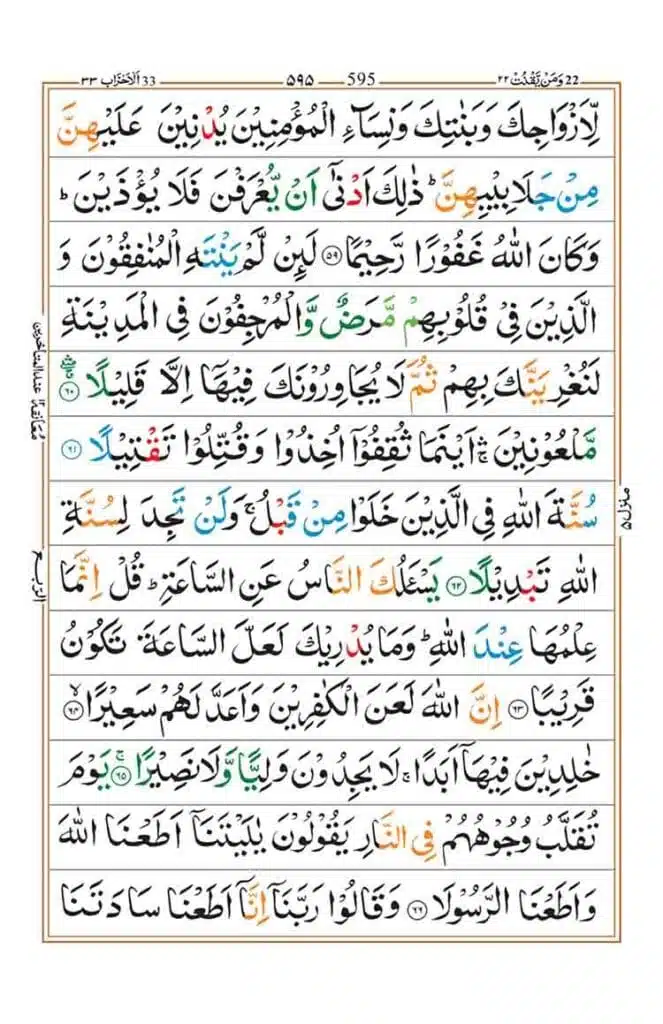
59. يَا أَيُّهَا النَّبِيُّ قُل لِّأَزْوَاجِكَ وَبَنَاتِكَ وَنِسَاءِ الْمُؤْمِنِينَ يُدْنِينَ عَلَيْهِنَّ مِن جَلَابِيبِهِنَّ ۚ ذَٰلِكَ أَدْنَىٰ أَن يُعْرَفْنَ فَلَا يُؤْذَيْنَ ۗ وَكَانَ اللَّهُ غَفُورًا رَّحِيمًا
Yā ayyuhā n-nabiyyu qul li-azwājika wa banātika wa nisā’i l-mu’minīna yudnīna ‘alayhinna min jalābībihinn, dhālika adnā an yu’rafna fa-lā yu’dhayn, wa kāna llāhu ghafūran raḥīmā.
O Prophet, tell your wives and your daughters and the women of the believers to bring down over themselves [part] of their outer garments. That is more suitable that they will be known and not be abused. And ever is Allah Forgiving and Merciful.
60. ۞ لَّئِن لَّمْ يَنتَهِ الْمُنَافِقُونَ وَالَّذِينَ فِي قُلُوبِهِم مَّرَضٌ وَالْمُرْجِفُونَ فِي الْمَدِينَةِ لَنُغْرِيَنَّكَ بِهِمْ ثُمَّ لَا يُجَاوِرُونَكَ فِيهَا إِلَّا قَلِيلًا
La-in lam yantahi l-munāfiqūna wa-lladhīna fī qulūbihim maraḍun wal-murjifūna fi l-madīnati la-nughriyannaka bihim thumma lā yujāwirūnaka fīhā illā qalīlā.
If the hypocrites and those in whose hearts is disease and those who spread rumors in al-Madinah do not cease, We will surely incite you against them; then they will not remain your neighbors therein except for a little.
61. مَّلْعُونِينَ ۖ أَيْنَمَا ثُقِفُوا أُخِذُوا وَقُتِّلُوا تَقْتِيلًا
Mal’ūnīna aynamā thuqifū ukhidhū wa quttilū taqtīlā.
Accursed wherever they are found, [they shall be] seized and killed with a [fierce] slaughter.
62. سُنَّةَ اللَّهِ فِي الَّذِينَ خَلَوْا مِن قَبْلُ ۖ وَلَن تَجِدَ لِسُنَّةِ اللَّهِ تَبْدِيلًا
Sunnata llāhi fi lladhīna khalaw min qabl, wa lan tajida li-sunnati llāhi tabdīlā.
[This is] the established way of Allah with those who passed on before; and you will not find in the way of Allah any change.
63. يَسْأَلُكَ النَّاسُ عَنِ السَّاعَةِ ۖ قُلْ إِنَّمَا عِلْمُهَا عِندَ اللَّهِ ۚ وَمَا يُدْرِيكَ لَعَلَّ السَّاعَةَ تَكُونُ قَرِيبًا
Yas’aluka n-nāsu ‘ani s-sā’ah, qul innamā ‘ilmuhā ‘inda llāh, wa mā yudrīka la’alla s-sā’ata takūnu qarībā.
People ask you concerning the Hour. Say, “Knowledge of it is only with Allah. And what may make you perceive? Perhaps the Hour is near.”
64. إِنَّ اللَّهَ لَعَنَ الْكَافِرِينَ وَأَعَدَّ لَهُمْ سَعِيرًا
Inna llāha la’ana l-kāfirīna wa a’adda lahum sa’īrā.
Indeed, Allah has cursed the disbelievers and prepared for them a Blaze.
65. خَالِدِينَ فِيهَا أَبَدًا ۖ لَّا يَجِدُونَ وَلِيًّا وَلَا نَصِيرًا
Khālidīna fīhā abadā, lā yajidūna waliyyan wa lā naṣīrā.
Abiding therein forever, they will not find a protector or a helper.
66. يَوْمَ تُقَلَّبُ وُجُوهُهُمْ فِي النَّارِ يَقُولُونَ يَا لَيْتَنَا أَطَعْنَا اللَّهَ وَأَطَعْنَا الرَّسُولَا
Yawma tuqallabu wujūhuhum fi n-nāri yaqūlūna yā laytanā aṭa’nā llāha wa aṭa’nā r-rasūlā.
The Day their faces will be turned about in the Fire, they will say, “Oh, would that we had obeyed Allah and obeyed the Messenger.”
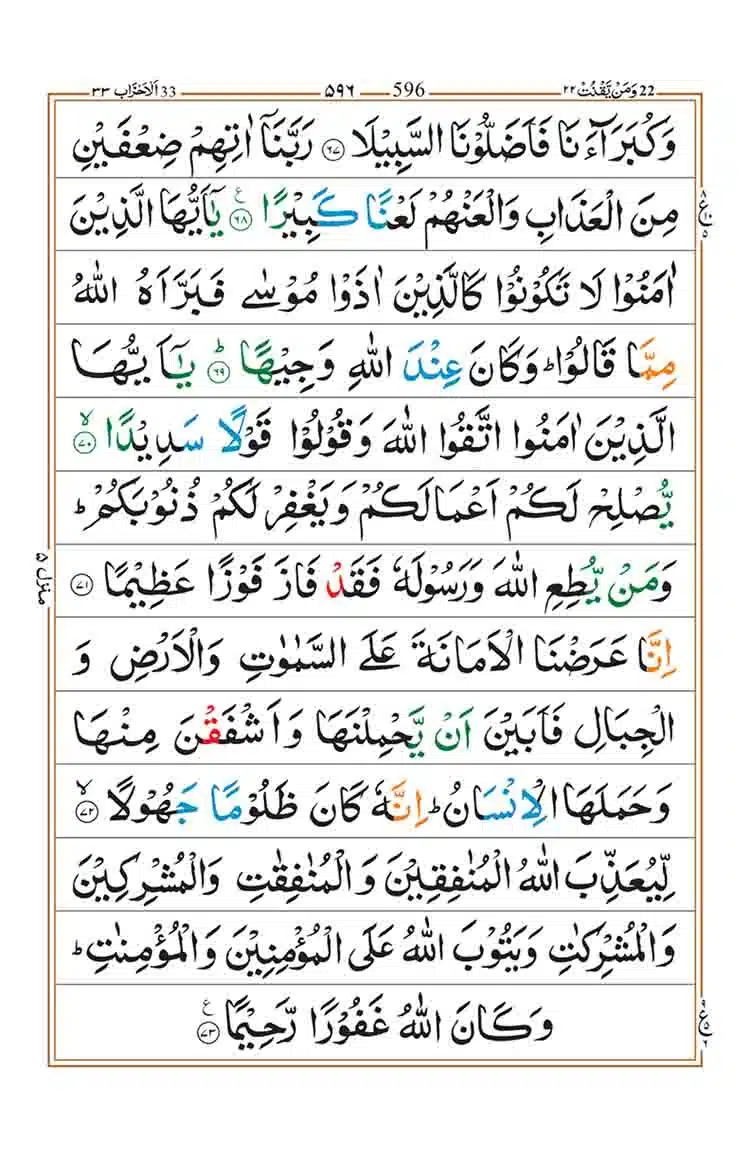
67. وَقَالُوا رَبَّنَا إِنَّا أَطَعْنَا سَادَتَنَا وَكُبَرَاءَنَا فَأَضَلُّونَا السَّبِيلَا
Wa qālū rabbanā innā aṭa’nā sādatana wa kubarā’ana fa-aḍallūnā s-sabīlā.
And they will say, “Our Lord, indeed we obeyed our masters and our dignitaries, and they led us astray from the [right] way.
68. رَبَّنَا آتِهِمْ ضِعْفَيْنِ مِنَ الْعَذَابِ وَالْعَنْهُمْ لَعْنًا كَبِيرًا
Rabbanā ātihim ḍi’fayni mina l-‘adhābi wa-l’anhum la’nan kabīrā.
Our Lord, give them double the punishment and curse them with a great curse.”
69. يَا أَيُّهَا الَّذِينَ آمَنُوا لَا تَكُونُوا كَالَّذِينَ آذَوْا مُوسَىٰ فَبَرَّأَهُ اللَّهُ مِمَّا قَالُوا ۚ وَكَانَ عِندَ اللَّهِ وَجِيهًا
Yā ayyuhā lladhīna āmanū lā takūnū ka-lladhīna ādhaw Mūsā fa-barra’ahu llāhu mimmā qālū, wa kāna ‘inda llāhi wajīhā.
O you who have believed, be not like those who abused Moses; then Allah cleared him of what they said. And he, in the sight of Allah, was distinguished.
70. يَا أَيُّهَا الَّذِينَ آمَنُوا اتَّقُوا اللَّهَ وَقُولُوا قَوْلًا سَدِيدًا
Yā ayyuhā lladhīna āmanū ittaqū llāha wa qūlū qawlan sadīdā.
O you who have believed, fear Allah and speak words of appropriate justice.
71. يُصْلِحْ لَكُمْ أَعْمَالَكُمْ وَيَغْفِرْ لَكُمْ ذُنُوبَكُمْ ۗ وَمَن يُطِعِ اللَّهَ وَرَسُولَهُ فَقَدْ فَازَ فَوْزًا عَظِيمًا
Yuṣliḥ lakum a’mālakum wa yaghfir lakum dhunūbakum, wa man yuṭi’i llāha wa rasūlahu fa-qad fāza fawzan ‘aẓīmā.
He will [then] amend for you your deeds and forgive you your sins. And whoever obeys Allah and His Messenger has certainly attained a great attainment.
72. إِنَّا عَرَضْنَا الْأَمَانَةَ عَلَى السَّمَاوَاتِ وَالْأَرْضِ وَالْجِبَالِ فَأَبَيْنَ أَن يَحْمِلْنَهَا وَأَشْفَقْنَ مِنْهَا وَحَمَلَهَا الْإِنسَانُ ۖ إِنَّهُ كَانَ ظَلُومًا جَهُولًا
Innā ‘araḍnā l-amānata ‘alā s-samāwāti wa l-arḍi wa l-jibāli fa-abayna an yaḥmilnahā wa ashfaqna minhā wa ḥamalahā l-insān, innahu kāna ẓalūman jahūlā.
Indeed, We offered the Trust to the heavens and the earth and the mountains, and they declined to bear it and feared it; but man [undertook to] bear it. Indeed, he was unjust and ignorant.
73. لِّيُعَذِّبَ اللَّهُ الْمُنَافِقِينَ وَالْمُنَافِقَاتِ وَالْمُشْرِكِينَ وَالْمُشْرِكَاتِ وَيَتُوبَ اللَّهُ عَلَى الْمُؤْمِنِينَ وَالْمُؤْمِنَاتِ ۗ وَكَانَ اللَّهُ غَفُورًا رَّحِيمًا
Li-yu’adhdhiba llāhu l-munāfiqīna wal-munāfiqāti wal-mushrikīna wal-mushrikāti wa yatūba llāhu ‘alā l-mu’minīna wal-mu’mināt, wa kāna llāhu ghafūran raḥīmā.
[It was] so that Allah may punish the hypocrite men and hypocrite women and the men and women who associate others with Him and that Allah may accept repentance from the believing men and believing women. And ever
Meaning & Importance of Surah Al Ahzab
The word “Ahzab” refers to the coalition of enemies that came to destroy Islam, but were defeated by Allah’s will. The Surah reflects on that incident to remind believers of the importance of unity, obedience, and trust in Allah during trials.
Key highlights of its importance:
Defends the honor and position of the Prophet (PBUH).
Reinforces that men and women alike are accountable to Allah.
Establishes modesty, hijab, and marriage rules for social purity.
Declares that no one has authority above the Prophet’s decisions.
Teaches believers to submit to divine guidance in public and private life.
Virtues & Benefits of Surah Al Ahzab
Builds respect for the Prophet (PBUH) and love for his household.
Encourages courage, trust in Allah, and unity in the face of opposition.
Guides on personal conduct, dress, marriage, and social behavior.
Reminds believers that Allah’s decree must be accepted without hesitation.
Emphasizes that obedience to Allah and His Messenger leads to ultimate success.
Surah Al Ahzab shapes the identity of the Muslim Ummah—by teaching faith, discipline, modesty, loyalty, and unwavering respect for the Prophet (PBUH) and the divine system.