
Surah Abasa – Read Online, PDF & Translation | Faiz e Islam
Surah Abasa (“He Frowned”) is the 80th chapter of the Holy Quran, revealed in Makkah, with 42 verses in a single ruku, placed in Juz 30. It takes its name from the opening word, describing an incident in which the Prophet Muhammad ﷺ frowned and turned away from a blind companion, Abdullah ibn Umm Maktum, who had come sincerely seeking guidance while the Prophet was engaged with the chiefs of Makkah. Allah revealed this Surah as a gentle correction, establishing that sincerity in seeking truth matters more than worldly status or influence. The Surah then moves from this personal lesson to broader themes — human ingratitude toward Allah’s countless blessings, the signs of His creation, and the certainty of the Day of Judgment, when even the closest of relatives will be too concerned with themselves to help one another. Read the complete Surah Abasa online in Arabic on Faiz e Islam, with English translation, audio recitation, and a full PDF download.
Download Surah Abasa in PDF
Surah Abasa Overview
| Surah Abasa Ayats | Surah Abasa Words | Surah Al Abasa Letter | Surah e Abasa Ruku |
| 42 | 133 | 539 | 1 |
Listen Surah Abasa Online
Colour Coded Tajweed Rules

Surah Abasa Read Online
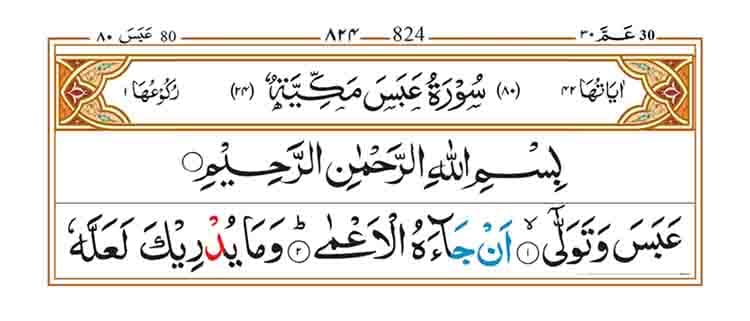
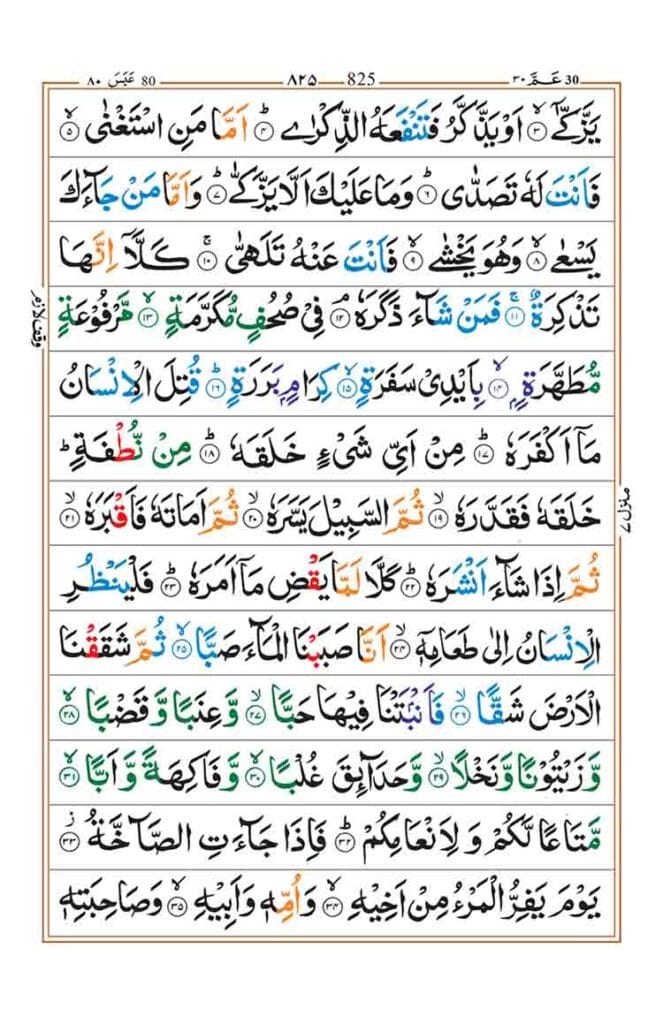
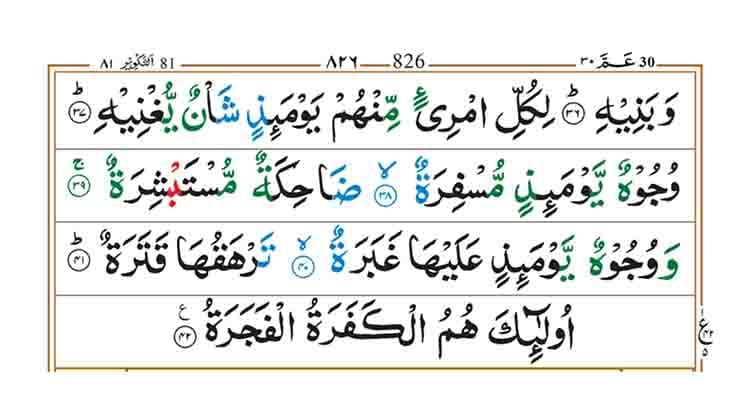
Full Arabic Text, Transliteration, and English Translation
بِسْمِ اللَّهِ الرَّحْمَٰنِ الرَّحِيمِ
Bismillāhi r-raḥmāni r-raḥīm
In the Name of Allah—the Most Compassionate, Most Merciful.
1. عَبَسَ وَتَوَلَّىٰ
‘Abasa wa tawallā
He frowned and turned [his attention] away .
2. أَنْ جَاءَهُ الْأَعْمَىٰ
An jā’ahu l-a’mā
Because the blind man came to him [interrupting] .
3. وَمَا يُدْرِيكَ لَعَلَّهُ يَزَّكَّىٰ
Wa mā yudrīka la’allahu yazzakkā
But what would make you perceive, [O Muhammad], that perhaps he might be purified ?
4. أَوْ يَذَّكَّرُ فَتَنْفَعَهُ الذِّكْرَىٰ
Aw yadh-dhakkaru fa tanfa’ahu dh-dhikrā
Or be reminded and the remembrance would benefit him ?
5. أَمَّا مَنِ اسْتَغْنَىٰ
Ammā mani staghna
As for he who thinks himself without need ,
6. فَأَنْتَ لَهُ تَصَدَّىٰ
Fa anta lahu taṣaddā
To him you give attention .
7. وَمَا عَلَيْكَ أَلَّا يَزَّكَّىٰ
Wa mā ‘alayka allā yazzakkā
And not upon you [is any blame] if he will not be purified .
8. وَأَمَّا مَنْ جَاءَكَ يَسْعَىٰ
Wa ammā man jā’aka yas’ā
But as for he who came to you striving [for knowledge] ,
9. وَهُوَ يَخْشَىٰ
Wa huwa yakhshā
While he fears [Allah] ,
10. فَأَنْتَ عَنْهُ تَلَهَّىٰ
Fa anta ‘anhu talahhā
From him you are distracted .
11. كَلَّا إِنَّهَا تَذْكِرَةٌ
Kallā innahā tadhkirah
No! Indeed, this [revelation] is a reminder .
12. فَمَنْ شَاءَ ذَكَرَهُ
Fa man shā’a dhakarahu
So whoever wills may be mindful of it .
13. فِي صُحُفٍ مُّكَرَّمَةٍ
Fī ṣuḥufim mukarramah
[It is recorded] in honored sheets ,
14. مَّرْفُوعَةٍ مُّطَهَّرَةٍ
Marfū’atim muṭahharah
Exalted and purified ,
15. بِأَيْدِي سَفَرَةٍ
Bi ‘aydī safarah
[Carried] by the hands of scribes ,
16. كِرَامٍ بَرَرَةٍ
Kirāmin bararah
Honorable and virtuous .
17. قُتِلَ الْإِنْسَانُ مَا أَكْفَرَهُ
Qutila l-insānu mā akfarah
Destroyed [cursed] is man; how ungrateful is he !
18. مِنْ أَيِّ شَيْءٍ خَلَقَهُ
Min ayyi shay’in khalaqah
From what substance did He create him ?
19. مِنْ نُّطْفَةٍ خَلَقَهُ فَقَدَّرَهُ
Min nuṭfatin khalaqahu fa qaddarah
From a sperm-drop He created him and destined for him .
20. ثُمَّ السَّبِيلَ يَسَّرَهُ
Thumma s-sabīla yassarah
Then He made the way easy for him .
21. ثُمَّ أَمَاتَهُ فَأَقْبَرَهُ
Thumma amātahu fa aqbarah
Then He causes his death and provides a grave for him .
22. ثُمَّ إِذَا شَاءَ أَنْشَرَهُ
Thumma idhā shā’a ansharah
Then when He wills, He will resurrect him .
23. كَلَّا لَمَّا يَقْضِ مَا أَمَرَهُ
Kallā lammā yaqḍi mā amarah
But no! He has not yet accomplished what He commanded him .
24. فَلْيَنْظُرِ الْإِنْسَانُ إِلَىٰ طَعَامِهِ
Fal yanẓuri l-insānu ilā ṭa’āmih
Then let mankind look at his food —
25. أَنَّا صَبَبْنَا الْمَاءَ صَبًّا
Annā ṣababnā l-mā’a ṣabbā
How We poured down water in torrents ,
26. ثُمَّ شَقَقْنَا الْأَرْضَ شَقًّا
Thumma shaqaqnā l-arḍa shaqqā
Then We broke open the earth, splitting [it with sprouts] ,
27. فَأَنْبَتْنَا فِيهَا حَبًّا
Fa anbatnā fīhā ḥabbā
And caused grain to grow in it ,
28. وَعِنَبًا وَقَضْبًا
Wa ‘inabā wa qaḍbā
And grapes and greens ,
29. وَزَيْتُونًا وَنَخْلًا
Wa zaytūnā wa nakhla
And olives and palm trees ,
30. وَحَدَائِقَ غُلْبًا
Wa ḥadā’iqa ghulbā
And dense orchards ,
31. وَفَاكِهَةً وَأَبًّا
Wa fākihatan wa abbā
And fruit and fodder —
32. مَّتَاعًا لَّكُمْ وَلِأَنْعَامِكُمْ
Matā’an lakum wa li an’āmikum
[As] sustenance for you and your cattle .
33. فَإِذَا جَاءَتِ الصَّاخَّةُ
Fa idhā jā’ati ṣ-ṣākhkhah
Then when the Deafening Blast comes ,
34. يَوْمَ يَفِرُّ الْمَرْءُ مِنْ أَخِيهِ
Yawma yafirru l-mar’u min akhīh
On that Day a man will flee from his brother ,
35. وَأُمِّهِ وَأَبِيهِ
Wa ummihi wa abīh
And his mother and his father ,
36. وَصَاحِبَتِهِ وَبَنِيهِ
Wa ṣāḥibatihi wa banīh
And his wife and his children .
37. لِكُلِّ امْرِئٍ مِّنْهُمْ يَوْمَئِذٍ شَأْنٌ يُغْنِيهِ
Li kulli mri’in minhum yawma’idhin sha’nun yughnīh
For every man, that Day, will be a matter adequate for him .
38. وُجُوهٌ يَوْمَئِذٍ مُّسْفِرَةٌ
Wujūhun yawma’idhim musfirah
[Some] faces that Day will be bright ,
39. ضَاحِكَةٌ مُّسْتَبْشِرَةٌ
Ḍāḥikatun mustabshirah
Laughing, rejoicing .
40. وَوُجُوهٌ يَوْمَئِذٍ عَلَيْهَا غَبَرَةٌ
Wa wujūhun yawma’idhin ‘alayhā ghabarah
And [other] faces that Day will have upon them dust ,
41. تَرْهَقُهَا قَتَرَةٌ
Tarhaquhā qatarah
Blackness will cover them .
42. أُولَٰئِكَ هُمُ الْكَفَرَةُ الْفَجَرَةُ
Ulā’ika humu l-kafaratu l-fajarah
Those are the disbelievers, the wicked sinners
Meaning & Importance of Surah Abasa
Surah Abasa teaches one of the most profound lessons in Islamic ethics and leadership: no one should be judged or prioritized based on their worldly status. Every seeker of truth deserves time and respect.
Key themes of the Surah include:
Sincerity matters more than social status.
Islam uplifts the humble and honors those who seek knowledge.
Human life is a sign of divine design and mercy.
The Day of Judgment is real, and people will flee even from their closest relations.
Everyone will be concerned only with themselves on that Day.
Virtues & Benefits of Surah Abasa
A powerful reminder of humility, compassion, and fairness in da’wah (inviting others to Islam).
Encourages believers to value sincerity over influence.
Highlights Allah’s mercy and justice, even toward His Prophet ﷺ.
Inspires reflection on human creation, dependence on Allah, and the temporary nature of worldly life.
Enhances awareness of the reality and seriousness of the Hereafter.
“Indeed, this is a reminder, so whoever wills may remember it.”
(Surah Abasa, 80:11–12)
This verse emphasizes the Quran’s role as a universal reminder, open to all who seek guidance sincerely. Surah Abasa is not only a lesson in personal character but also a beautiful reminder that every soul matters. It balances personal reflection, social awareness, and ultimate accountability, making it timeless in relevance and power.