
Surah Taghabun (سورۃ التغابن) – Full Arabic Text, Translation, Transliteration & Tafseer | Faiz e Islam
Surah Taghabun (At-Taghabun) is the 64th chapter of the Holy Quran. It contains 18 verses and was revealed in Madinah. This Surah is also known as “The Mutual Disillusion” or “The Mutual Loss and Gain.” It powerfully reminds believers that this worldly life is a test and that true success or loss will be revealed on the Day of Judgment.
On this page, you can read the complete Surah At-Taghabun with Arabic text, easy Roman transliteration, accurate English translation, and clear explanation (Tafseer). Whether you are looking for spiritual guidance, better understanding of the Quran, or practical lessons for daily life, this complete guide on Faiz e Islam will help you.
Surah Taghabun Overview
| Surah Taghabun Ayats | Surah At Taghabun Words | Surah Tagabun Letter | Surah Taghabun Ruku |
| 18 | 242 | 1052 | 2 |
Listen Surah Taghabun Online
Color Coded Tajweed Rules

Read Surah Taghabun Online
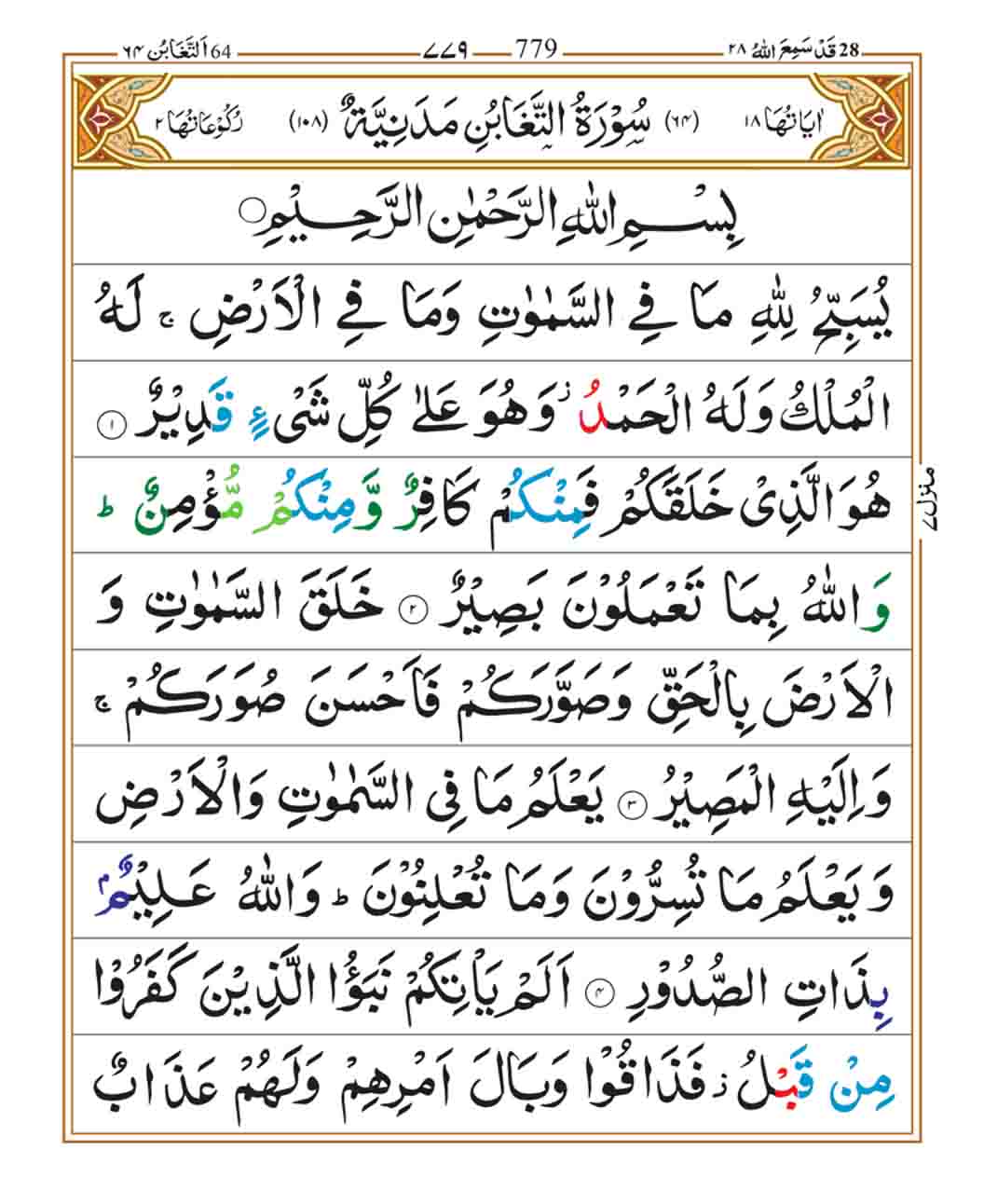
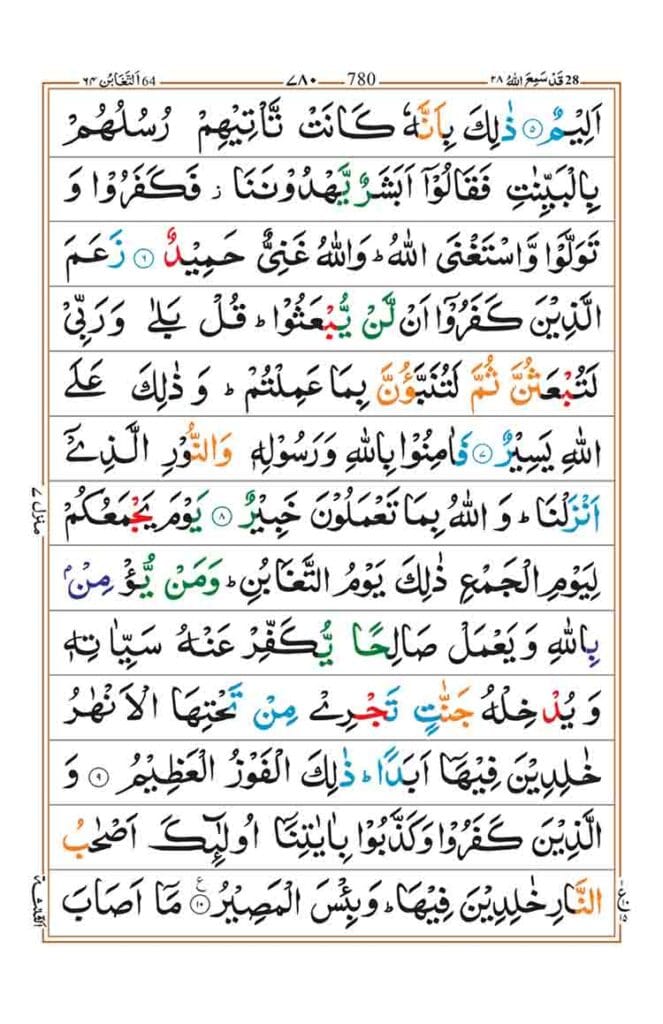
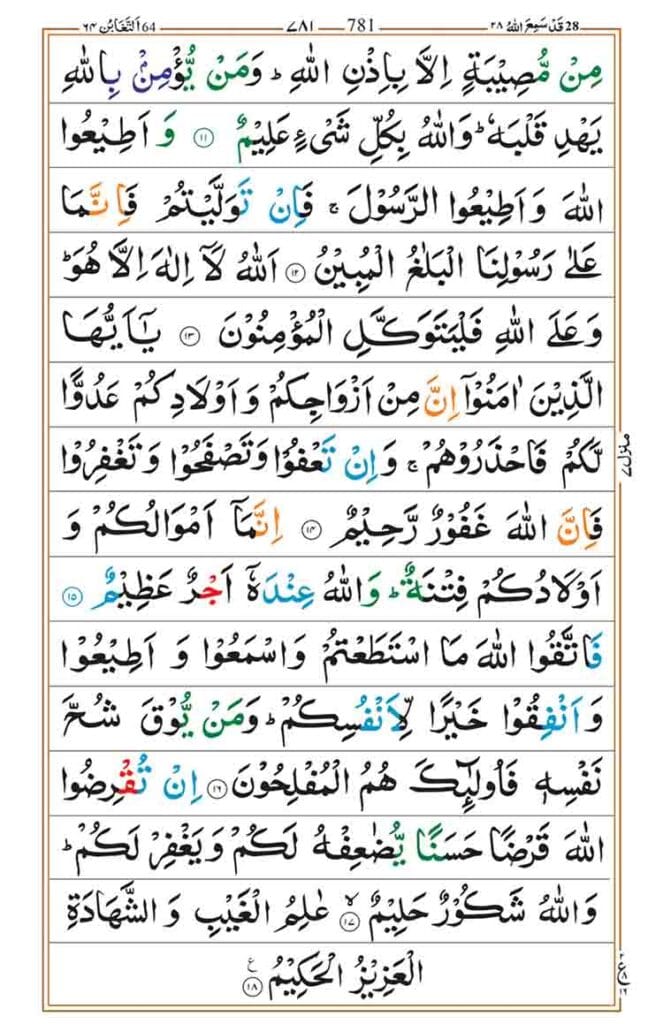
Full Verse-by-Verse Arabic + Transliteration + English Translation
Ayah 1 Arabic: يُسَبِّحُ لِلَّهِ مَا فِي السَّمَاوَاتِ وَمَا فِي الْأَرْضِ ۖ لَهُ الْمُلْكُ وَلَهُ الْحَمْدُ ۖ وَهُوَ عَلَىٰ كُلِّ شَيْءٍ قَدِيرٌ
Transliteration: Yusabbihu lillahi ma fis-samawati wa ma fil-ardi. Lahul-mulku wa lahul-hamdu wa Huwa ‘ala kulli shay’in Qadeer.
English Translation: Whatever is in the heavens and whatever is on the earth is exalting Allah. To Him belongs dominion, and to Him belongs all praise, and He is over all things competent.
Ayah 2 Arabic: هُوَ الَّذِي خَلَقَكُمْ فَمِنكُمْ كَافِرٌ وَمِنكُم مُّؤْمِنٌ ۚ وَاللَّهُ بِمَا تَعْمَلُونَ بَصِيرٌ
Transliteration: Huwal-ladhi khalaqakum faminkum kafirun wa minkum mu’minun. Wallahu bima ta’maluna Baseer.
English Translation: It is He who created you, and among you is the disbeliever, and among you is the believer. And Allah, of what you do, is Seeing.
Ayah 3 Arabic: خَلَقَ السَّمَاوَاتِ وَالْأَرْضَ بِالْحَقِّ وَصَوَّرَكُمْ فَأَحْسَنَ صُوَرَكُمْ ۖ وَإِلَيْهِ الْمَصِيرُ
Transliteration: Khalaqas-samawati wal-arda bil-haqqi wa sawwarakum fa ahsana suwarakum wa ilayhil-maseer.
English Translation: He created the heavens and earth in truth and formed you and perfected your forms; and to Him is the final destination.
Ayah 4 Arabic: يَعْلَمُ مَا فِي السَّمَاوَاتِ وَالْأَرْضِ وَيَعْلَمُ مَا تُسِرُّونَ وَمَا تُعْلِنُونَ ۚ وَاللَّهُ عَلِيمٌ بِذَاتِ الصُّدُورِ
Transliteration: Ya’lamu ma fis-samawati wal-ardi wa ya’lamu ma tusirrona wa ma tu’linun. Wallahu Aleemun bidhatis-sudur.
English Translation: He knows what is within the heavens and earth and knows what you conceal and what you declare. And Allah is Knowing of that within the breasts.
Ayah 5 Arabic: أَلَمْ يَأْتِكُمْ نَبَأُ الَّذِينَ كَفَرُوا مِن قَبْلُ فَذَاقُوا وَبَالَ أَمْرِهِمْ وَلَهُمْ عَذَابٌ أَلِيمٌ
Transliteration: Alam ya’tikum naba’ul-ladheena kafaroo min qablu fadhaku wabala amrihim wa lahum ‘adhabun aleem.
English Translation: Has there not come to you the news of those who disbelieved before? They tasted the bad consequence of their affair, and they will have a painful punishment.
Ayah 6 Arabic: ذَٰلِكَ بِأَنَّهُ كَانَت تَّأْتِيهِمْ رُسُلُهُم بِالْبَيِّنَاتِ فَقَالُوا أَبَشَرٌ يَهْدُونَنَا فَكَفَرُوا وَتَوَلَّوا ۚ وَاسْتَغْنَى اللَّهُ ۚ وَاللَّهُ غَنِيٌّ حَمِيدٌ
Transliteration: Dhalika bi-annahu kanat ta’tihim rusuluhum bil-bayyinati faqalu abasharun yahdoonana fakafaroo wa tawallaw wastaghnallahu wallahu Ghaniyyun Hameed.
English Translation: That is because their messengers used to come to them with clear evidences, but they said, “Shall human beings guide us?” So they disbelieved and turned away. And Allah was in no need. And Allah is Free of need and Praiseworthy.
Ayah 7 Arabic: زَعَمَ الَّذِينَ كَفَرُوا أَن لَّن يُبْعَثُوا ۚ قُلْ بَلَىٰ وَرَبِّي لَتُبْعَثُنَّ ثُمَّ لَتُنَبَّؤُنَّ بِمَا عَمِلْتُمْ ۚ وَذَٰلِكَ عَلَى اللَّهِ يَسِيرٌ
Transliteration: Za’amal-ladheena kafaroo al-lan yub’athoo. Qul bala wa Rabbi latub’athunna thumma latunabba’unna bima ‘amiltum wa dhalika ‘alallahi yaseer.
English Translation: Those who disbelieve claim that they will never be resurrected. Say, “Yes, by my Lord, you will surely be resurrected; then you will surely be informed of what you did. And that is easy for Allah.”
Ayah 8 Arabic: فَآمِنُوا بِاللَّهِ وَرَسُولِهِ وَالنُّورِ الَّذِي أَنزَلْنَا ۚ وَاللَّهُ بِمَا تَعْمَلُونَ خَبِيرٌ
Transliteration: Fa amino billahi wa Rasoolihi wan-nooril-ladhi anzalna wallahu bima ta’maluna Khabir.
English Translation: So believe in Allah and His Messenger and the light which We have sent down. And Allah is Acquainted with what you do.
Ayah 9 Arabic: يَوْمَ يَجْمَعُكُمْ لِيَوْمِ الْجَمْعِ ۖ ذَٰلِكَ يَوْمُ التَّغَابُنِ ۗ وَمَن يُؤْمِن بِاللَّهِ وَيَعْمَلْ صَالِحًا يُكَفِّرْ عَنْهُ سَيِّئَاتِهِ وَيُدْخِلْهُ جَنَّاتٍ تَجْرِي مِن تَحْتِهَا الْأَنْهَارُ خَالِدِينَ فِيهَا أَبَدًا ۚ ذَٰلِكَ الْفَوْزُ الْعَظِيمُ
Transliteration: Yawma yajma’ukum li yawmil-jam’i dhalika yawmut-taghabun. Wa man yu’min billahi wa ya’mal salihan yukaffir ‘anhu sayyi’atihi wa yudkhilhu jannatin tajri min tahtihal-anharu khalideena feeha abada. Dhalikal-fawzul-‘azim.
English Translation: The Day He will assemble you for the Day of Assembly – that is the Day of Mutual Disillusion. And whoever believes in Allah and does righteousness – He will remove from him his misdeeds and admit him to gardens beneath which rivers flow, wherein they will abide forever. That is the great attainment.
Ayah 10 Arabic: وَالَّذِينَ كَفَرُوا وَكَذَّبُوا بِآيَاتِنَا أُولَٰئِكَ أَصْحَابُ النَّارِ خَالِدِينَ فِيهَا ۖ وَبِئْسَ الْمَصِيرُ
Transliteration: Walladheena kafaroo wa kadhdhaboo bi ayatina ula’ika as-habun-nari khalideena feeha wa bi’sal-maseer.
English Translation: But those who disbelieved and denied Our signs – those are the companions of the Fire, abiding eternally therein; and wretched is the destination.
Ayah 11 Arabic: مَا أَصَابَ مِن مُّصِيبَةٍ إِلَّا بِإِذْنِ اللَّهِ ۗ وَمَن يُؤْمِن بِاللَّهِ يَهْدِ قَلْبَهُ ۚ وَاللَّهُ بِكُلِّ شَيْءٍ عَلِيمٌ
Transliteration: Ma asaba min museebatin illa bi idhnillahi wa man yu’min billahi yahdi qalbahu wallahu bikulli shay’in ‘Aleem.
English Translation: No disaster strikes except by permission of Allah. And whoever believes in Allah – He will guide his heart. And Allah is Knowing of all things.
Ayah 12 Arabic: وَأَطِيعُوا اللَّهَ وَأَطِيعُوا الرَّسُولَ ۚ فَإِن تَوَلَّيْتُمْ فَإِنَّمَا عَلَىٰ رَسُولِنَا الْبَلَاغُ الْمُبِينُ
Transliteration: Wa ati’ullaha wa ati’ur-Rasool. Fa in tawallaytum fa innama ‘ala Rasoolinal-balaghul-mubeen.
English Translation: And obey Allah and obey the Messenger; but if you turn away – then upon Our Messenger is only [the duty of] clear notification.
Ayah 13 Arabic: اللَّهُ لَا إِلَٰهَ إِلَّا هُوَ ۚ وَعَلَى اللَّهِ فَلْيَتَوَكَّلِ الْمُؤْمِنُونَ
Transliteration: Allahu la ilaha illa Huwa wa ‘alallahi falyatawakkalil-mu’minoon.
English Translation: Allah – there is no deity except Him. And upon Allah let the believers rely.
Ayah 14 Arabic: يَا أَيُّهَا الَّذِينَ آمَنُوا إِنَّ مِنْ أَزْوَاجِكُمْ وَأَوْلَادِكُمْ عَدُوًّا لَّكُمْ فَاحْذَرُوهُمْ ۚ وَإِن تَعْفُوا وَتَصْفَحُوا وَتَغْفِرُوا فَإِنَّ اللَّهَ غَفُورٌ رَّحِيمٌ
Transliteration: Ya ayyuhal-ladheena amanoo inna min azwajikum wa awladikum ‘aduwwal-lakum fahdhuroohum. Wa in ta’foo wa tasfahoo wa taghfiroo fa innallaha Ghafurur-Raheem.
English Translation: O you who have believed, indeed among your wives and your children are enemies to you, so beware of them. But if you pardon and overlook and forgive – then indeed Allah is Forgiving and Merciful.
Ayah 15 Arabic: إِنَّمَا أَمْوَالُكُمْ وَأَوْلَادُكُمْ فِتْنَةٌ ۚ وَاللَّهُ عِندَهُ أَجْرٌ عَظِيمٌ
Transliteration: Innama amwalukum wa awladukum fitnah. Wallahu ‘indahu ajrun ‘azeem.
English Translation: Your wealth and your children are but a trial, and Allah has with Him a great reward.
Ayah 16 Arabic: فَاتَّقُوا اللَّهَ مَا اسْتَطَعْتُمْ وَاسْمَعُوا وَأَطِيعُوا وَأَنفِقُوا خَيْرًا لِّأَنفُسِكُمْ ۗ وَمَن يُوقَ شُحَّ نَفْسِهِ فَأُولَٰئِكَ هُمُ الْمُفْلِحُونَ
Transliteration: Fattaqullaha mastata’tum wasma’oo wa ati’oo wa anfiqoo khayral li anfusikum. Wa man yooqa shuhha nafsihi fa ula’ika humul-muflihoon.
English Translation: So fear Allah as much as you are able and listen and obey and spend [in the way of Allah]; it is better for your souls. And whoever is protected from the stinginess of his soul – it is those who are the successful.
Ayah 17 Arabic: إِن تُقْرِضُوا اللَّهَ قَرْضًا حَسَنًا يُضَاعِفْهُ لَكُمْ وَيَغْفِرْ لَكُمْ ۚ وَاللَّهُ شَكُورٌ حَلِيمٌ
Transliteration: In tuqridullaha qardan hasanan yuda’ifhu lakum wa yaghfir lakum wallahu Shakurun Haleem.
English Translation: If you loan Allah a goodly loan, He will multiply it for you and forgive you. And Allah is Most Appreciative and Forbearing.
Ayah 18 Arabic: عَالِمُ الْغَيْبِ وَالشَّهَادَةِ الْعَزِيزُ الْحَكِيمُ
Transliteration: ‘Alimul-ghaybi wash-shahadatil-‘Azizul-Hakeem.
English Translation: Knower of the unseen and the witnessed, the Exalted in Might, the Wise.
Brief Tafseer of Surah Taghabun
Surah At-Taghabun delivers a profound reminder about the temporary nature of this worldly life and the ultimate reality of the Hereafter. It begins by declaring Allah’s absolute sovereignty over the heavens and the earth, then highlights that every human being is either a believer or a disbeliever by choice. The Surah warns believers not to let wealth, family, or worldly attachments become obstacles in their path to Allah. It emphasizes that true success and failure will only be revealed on the Day of Taghabun, the Day of Mutual Loss and Gain, when people will clearly see who gained Paradise and who lost it. The Surah beautifully balances warning with hope, encouraging sincere faith, generosity in Allah’s way, patience during trials, and complete reliance on Allah while reminding that no misfortune occurs without His permission. Overall, it calls Muslims to prioritize their faith over material concerns and to prepare seriously for the eternal life that awaits after death.
History and Background of Surah At-Taghabun
Surah At-Taghabun was revealed in the early Madinan period, shortly after the Hijrah. Some scholars consider the first part Makkan in style due to its focus on Tawhid and the Hereafter, while the later verses are clearly Madani as they address the believing community directly.
The Surah was revealed at a time when new Muslim converts in Madinah were facing strong opposition from their families and tribes. Many were being pressured by their wives and children not to migrate or support the Prophet ﷺ. Allah revealed this Surah to comfort the believers, warn them against letting worldly attachments become enemies to their faith, and remind everyone that the real “mutual loss and gain” will be decided on the Day of Judgment.
The name Taghabun comes from verse 9, referring to the Day when the true winners and losers will become clear — those who chose faith will gain Paradise, while those who preferred worldly life will suffer eternal loss.
Virtues and Benefits of Reciting Surah At-Taghabun
Reciting Surah At-Taghabun regularly strengthens faith in the Hereafter, increases Taqwa, and helps protect against being deceived by worldly distractions. It brings comfort during trials, encourages generosity, and reminds the reader of Allah’s perfect knowledge and justice. Many scholars recommend it for those facing family or financial difficulties, as it helps maintain the correct perspective between this life and the next.
Importance of Surah At-Taghabun
Surah At-Taghabun is a powerful reminder that this worldly life is a test of priorities. It teaches that true success is not measured by wealth or family status, but by faith, obedience, and trust in Allah. The Surah warns believers not to let attachments to this world become enemies to their faith and encourages spending in Allah’s way while relying completely on Him.
Frequently Asked Questions about Surah Taghabun
Read More Surahs
Surah Kahf | Surah Rahman | |
Surah Juma | Surah Muzammil | Surah Falaq |