
Surah Jumuah Full – Arabic, Transliteration, Translation & PDF
Surah Jumuah, also written as Surah Al Jumu’ah, Surah Jumuah or Surah Juma, is the 62nd chapter of the Holy Quran. This Madani Surah beautifully highlights the importance of Friday prayer, the unity of the Muslim community, and the need to prioritize Allah’s remembrance over worldly distractions. On Faiz e Islam, you can read the complete Surah Jumu’ah with Arabic text, easy transliteration, accurate English translation, and practical benefits. Whether you search for “surah juma” this page is designed to help you understand, recite, and benefit from this blessed chapter. Full PDF Download available.
Surah Juma Download PDF Full
Surah Jumuah Overview
| Surah Juma Ayats | Surah Jumuah Words | Surah Jummah Letter | Surat Juma Ruku |
| 11 | 177 | 775 | 2 |
Listen Surah Al Jumu’ah Audio
Colour Coded Tajweed Rules

Surah Juma Read Online
Written by Muhammad Mobushir
Founder & Islamic Content Writer, Faiz e Islam
Assalamu Alaikum. This complete guide to Surah Al-Jumu’ah has been prepared with sincerity and care using authentic sources from the Quran and Sunnah. My aim is to present the beautiful teachings of this blessed Surah in a simple and practical way so that every Muslim can benefit from its guidance and blessings.
Full Surah Jumuah – Arabic, Transliteration & English Translation
Bismillahir Rahmanir Rahim
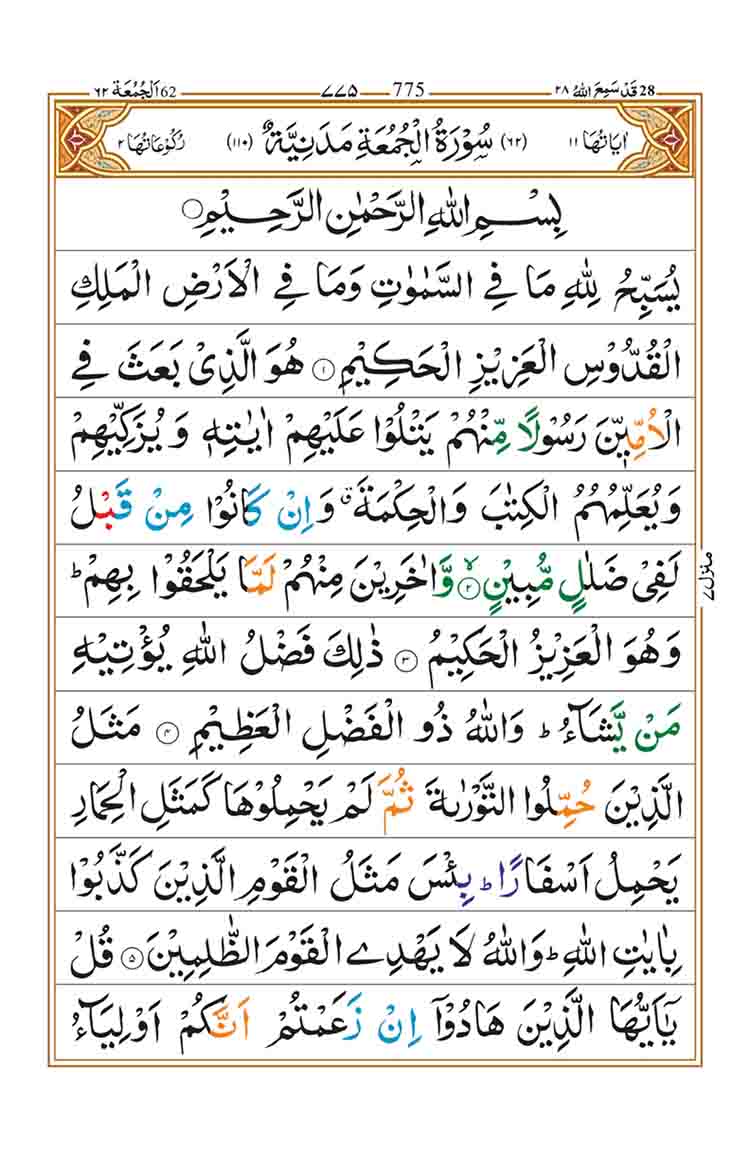
Ayah 1 Arabic: يُسَبِّحُ لِلَّهِ مَا فِي السَّمَاوَاتِ وَمَا فِي الْأَرْضِ الْمَلِكِ الْقُدُّوسِ الْعَزِيزِ الْحَكِيمِ Transliteration: Yusabbihu lillahi ma fi assamawati wama fi al-ardi al-maliki al-quddoosi al-’azeezi al-hakeemi English: Whatever is in the heavens and whatever is on the earth is exalting Allah, the Sovereign, the Pure, the Exalted in Might, the Wise.
Ayah 2 Arabic: هُوَ الَّذِي بَعَثَ فِي الْأُمِّيِّينَ رَسُولًا مِّنْهُمْ يَتْلُو عَلَيْهِمْ آيَاتِهِ وَيُزَكِّيهِمْ وَيُعَلِّمُهُمُ الْكِتَابَ وَالْحِكْمَةَ وَإِن كَانُوا مِن قَبْلُ لَفِي ضَلَالٍ مُّبِينٍ Transliteration: Huwa allathee ba’atha fee al-ommiyyeena rasoolan minhum yatloo ’alayhim ayatihi wayuzakkeehim wayu’allimuhumu alkitaba walhikmata wa-in kanoo min qablu lafee dalalin mubeenin English: It is He who has sent among the unlettered a Messenger from themselves reciting to them His verses and purifying them and teaching them the Book and wisdom – although they were before in clear error.
Ayah 3 Arabic: وَآخَرِينَ مِنْهُمْ لَمَّا يَلْحَقُوا بِهِمْ ۚ وَهُوَ الْعَزِيزُ الْحَكِيمُ Transliteration: Wa-akhareena minhum lamma yalhaqoo bihim wahuwa al-’azeezu al-hakeemu English: And [to] others of them who have not yet joined them. And He is the Exalted in Might, the Wise.
Ayah 4 Arabic: ذَٰلِكَ فَضْلُ اللَّهِ يُؤْتِيهِ مَن يَشَاءُ ۚ وَاللَّهُ ذُو الْفَضْلِ الْعَظِيمِ Transliteration: Thalika fadlu Allahi yu’teehi man yashao wallahu thoo alfadli al-’atheemi English: That is the bounty of Allah, which He gives to whom He wills, and Allah is the possessor of great bounty.
Ayah 5 Arabic: مَثَلُ الَّذِينَ حُمِّلُوا التَّوْرَاةَ ثُمَّ لَمْ يَحْمِلُوهَا كَمَثَلِ الْحِمَارِ يَحْمِلُ أَسْفَارًا ۚ بِئْسَ مَثَلُ الْقَوْمِ الَّذِينَ كَذَّبُوا بِآيَاتِ اللَّهِ ۚ وَاللَّهُ لَا يَهْدِي الْقَوْمَ الظَّالِمِينَ Transliteration: Mathalu allatheena hummiloo attawrata thumma lam yahmilooha kamathali alhimari yahmilu asfaran bi’sa mathalu alqawmi allatheena kaththaboo bi-ayati Allahi wallahu la yahdee alqawma aththalimeena English: The example of those who were entrusted with the Torah and then did not uphold it is like that of a donkey who carries volumes [of books]. Wretched is the example of the people who deny the signs of Allah. And Allah does not guide the wrongdoing people.
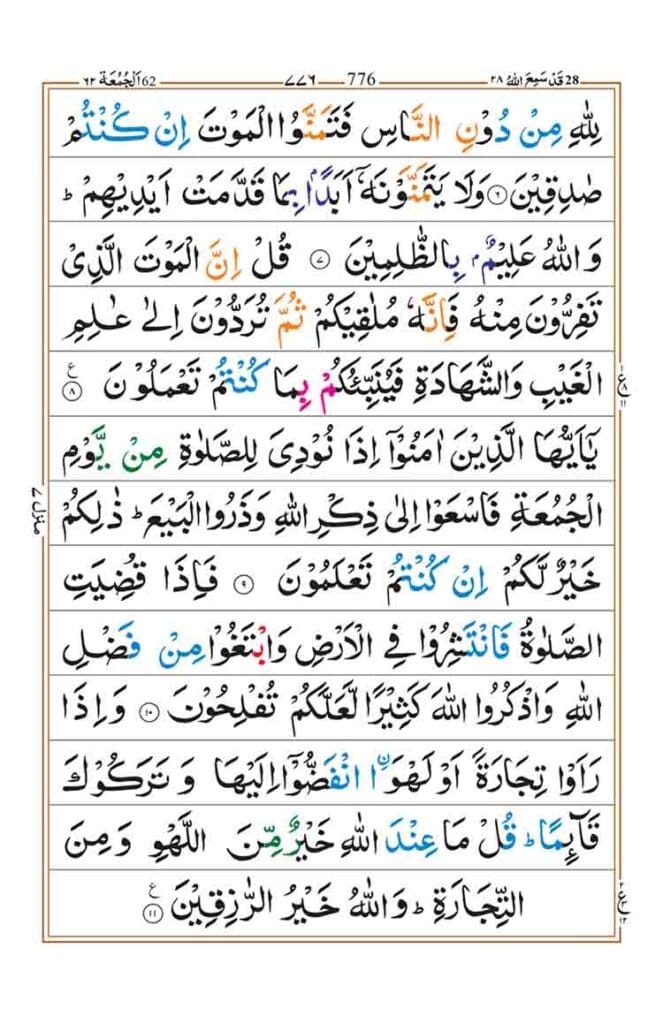
Ayah 6 Arabic: قُلْ يَا أَيُّهَا الَّذِينَ هَادُوا إِن زَعَمْتُمْ أَنَّكُمْ أَوْلِيَاءُ لِلَّهِ مِن دُونِ النَّاسِ فَتَمَنَّوُا الْمَوْتَ إِن كُنتُمْ صَادِقِينَ Transliteration: Qul ya ayyuha allatheena hadoo in za’amtum annakum awliyao lillahi min dooni annasi fatamannaw almawta in kuntum sadiqeena English: Say, “O you who are Jews, if you claim that you are the allies of Allah, excluding the [other] people, then wish for death, if you should be truthful.”
Ayah 7 Arabic: وَلَا يَتَمَنَّوْنَهُ أَبَدًا بِمَا قَدَّمَتْ أَيْدِيهِمْ ۚ وَاللَّهُ عَلِيمٌ بِالظَّالِمِينَ Transliteration: Wala yatamannawnahu abadan bima qaddamat aydeehim wallahu ’aleemun biththalimeena English: But they will never wish for it because of what their hands have put forth. And Allah is Knowing of the wrongdoers.
Ayah 8 Arabic: قُلْ إِنَّ الْمَوْتَ الَّذِي تَفِرُّونَ مِنْهُ فَإِنَّهُ مُلَاقِيكُمْ ۖ ثُمَّ تُرَدُّونَ إِلَىٰ عَالِمِ الْغَيْبِ وَالشَّهَادَةِ فَيُنَبِّئُكُم بِمَا كُنتُمْ تَعْمَلُونَ Transliteration: Qul inna almawta allathee tafirroona minhu fa-innahu mulaqeekum thumma turaddoona ila ’alimi alghaybi washshahadati fayunabbi-okum bima kuntum ta’maloona English: Say, “Indeed, the death from which you flee – indeed, it will meet you. Then you will be returned to the Knower of the unseen and the witnessed, and He will inform you about what you used to do.”
Ayah 9 Arabic: يَا أَيُّهَا الَّذِينَ آمَنُوا إِذَا نُودِيَ لِلصَّلَاةِ مِن يَوْمِ الْجُمُعَةِ فَاسْعَوْا إِلَىٰ ذِكْرِ اللَّهِ وَذَرُوا الْبَيْعَ ۚ ذَٰلِكُمْ خَيْرٌ لَّكُمْ إِن كُنتُمْ تَعْلَمُونَ Transliteration: Ya ayyuha allatheena amanoo itha noodiya lissalati min yawmi aljumu’ati fas’aw ila thikri Allahi watharoo albay’a thalikum khayrun lakum in kuntum ta’lamoona English: O you who have believed, when the call is made for prayer on the day of Jumu’ah [Friday], then proceed to the remembrance of Allah and leave trade. That is better for you, if you only knew.
Ayah 10 Arabic: فَإِذَا قُضِيَتِ الصَّلَاةُ فَانتَشِرُوا فِي الْأَرْضِ وَابْتَغُوا مِن فَضْلِ اللَّهِ وَاذْكُرُوا اللَّهَ كَثِيرًا لَّعَلَّكُمْ تُفْلِحُونَ Transliteration: Fa-itha qudiyati assalatu fantashiroo fee al-ardi wabtaghoo min fadli Allahi wathkuroo Allaha katheeran la’allakum tuflihoona English: And when the prayer has been concluded, disperse within the land and seek from the bounty of Allah, and remember Allah often that you may succeed.
Ayah 11 Arabic: وَإِذَا رَأَوْا تِجَارَةً أَوْ لَهْوًا انفَضُّوا إِلَيْهَا وَتَرَكُوكَ قَائِمًا ۚ قُلْ مَا عِندَ اللَّهِ خَيْرٌ مِّنَ اللَّهْوِ وَمِنَ التِّجَارَةِ ۚ وَاللَّهُ خَيْرُ الرَّازِقِينَ Transliteration: Wa-itha ra’aw tijaratan aw lahwan infaddoo ilayha watarakooka qa’iman qul ma ’inda Allahi khayrun mina allahwi wamina attijarati wallahu khayru arraziqeena English: And when they saw a transaction or amusement, they rushed to it and left you standing. Say, “What is with Allah is better than any amusement or merchandise. And Allah is the best of providers.”
History and Background of Surah Jumuah
Surah Al-Jumu’ah is a Madani Surah revealed in Madinah during the later period of the Prophet Muhammad ﷺ’s life. It was sent down in response to two main situations: first, to affirm the universal mission of the Prophet ﷺ to the unlettered people; second, during a real-life incident when a trade caravan arrived in Madinah while the Prophet ﷺ was delivering the Friday sermon. Many companions left the prayer to rush toward the caravan, leaving only a few behind. Allah revealed this Surah to teach the believers that the remembrance of Allah and the Friday congregation are far more valuable than any worldly gain.
Importance of Surah Jumuah
Surah Al-Jumu’ah teaches the Muslim community the true purpose of Friday. It reminds us that the weekly congregation is not just a ritual but a divine appointment that strengthens faith, purifies the heart, and unites believers.
Virtues and Rewards of Reciting Surah Juma
The Prophet ﷺ encouraged the recitation of Surah Al-Jumu’ah on Fridays. It brings immense spiritual reward, helps in attaining success in both worlds, and serves as a weekly reminder to leave worldly business for the sake of Allah.
Benefits of Surah Al-Jumu’ah in Daily Life
- Brings peace and focus before Jumu’ah prayer
- Protects from hypocrisy and love of worldly things
- Increases barakah (blessings) in business and provision
- Strengthens community ties and brotherhood
- Helps in attaining true success (falah) mentioned in the Surah
Frequently Asked Questions about Surah Jumu’ah
⚠️ Important Disclaimer
The content on this page regarding Surah Al-Jumu’ah is compiled for educational and spiritual purposes based on classical Tafseer and reliable scholarly sources. While every effort has been made to ensure accuracy, this is not a substitute for learning from qualified Islamic scholars. For any religious rulings or personal guidance, please consult a knowledgeable Mufti or local scholar.
Last Updated: April 2026