
Surah Al Hujurat Full – Read Online with Arabic, English Translation, Transliteration & Tafsir | Faiz e Islam
Surah Al Hujurat (سورة الحجرات) is the 49th chapter of the Holy Quran. It is a Madani Surah consisting of 18 verses revealed in Madinah. This Surah is famously known as the “Surah of Manners and Social Etiquette”. It teaches believers how to behave with the Prophet ﷺ, with each other, and how to build a harmonious Muslim society by avoiding backbiting, suspicion, mockery, and spying.
On Faiz e Islam, you can read the complete Surah Al Hujurat with clear Arabic text, accurate English translation, easy Roman transliteration for correct pronunciation, beautiful audio recitation, and detailed Tafsir with practical life lessons. This Surah is a practical guide for improving character, fostering unity, and purifying our social interactions in daily life.
Founder of Faiz e Islam
This detailed explanation of Surah Al-Hujurat has been prepared with authentic sources from the Holy Quran and Sunnah to help Muslims understand and implement its timeless teachings on manners, respect, and social harmony.
Surah Al Hujurat Overview
| Surah Al-Hujurat Ayats | Surah Al Hujurat Words | Surah Al Hujurat Letter | Surah Al Hujurat Ruku |
| 18 | 353 | 1477 | 2 |
Listen Surah Hujurat Online
Color Coded Tajweed Rules

Read Surah e Al Hujurat Online
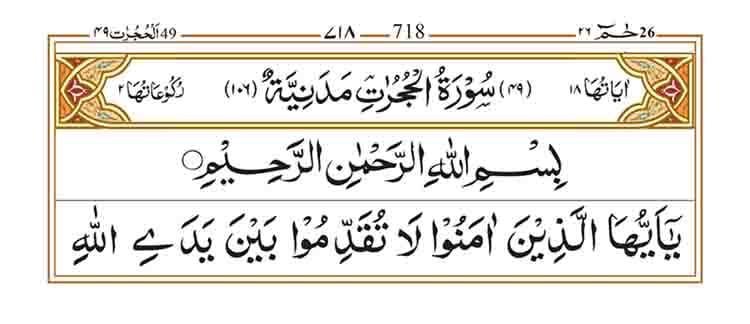
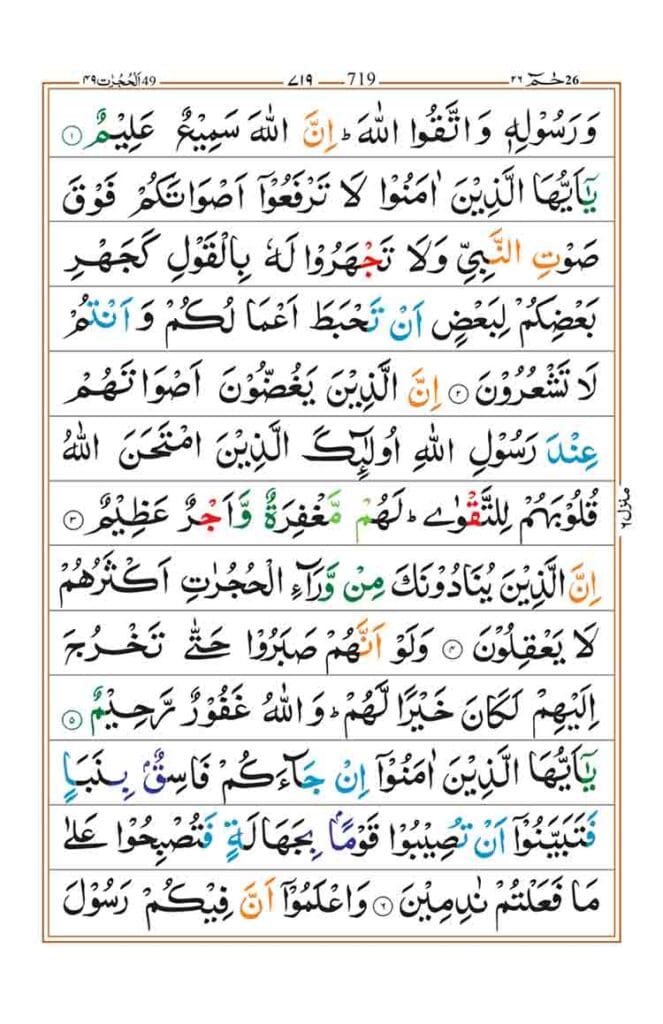
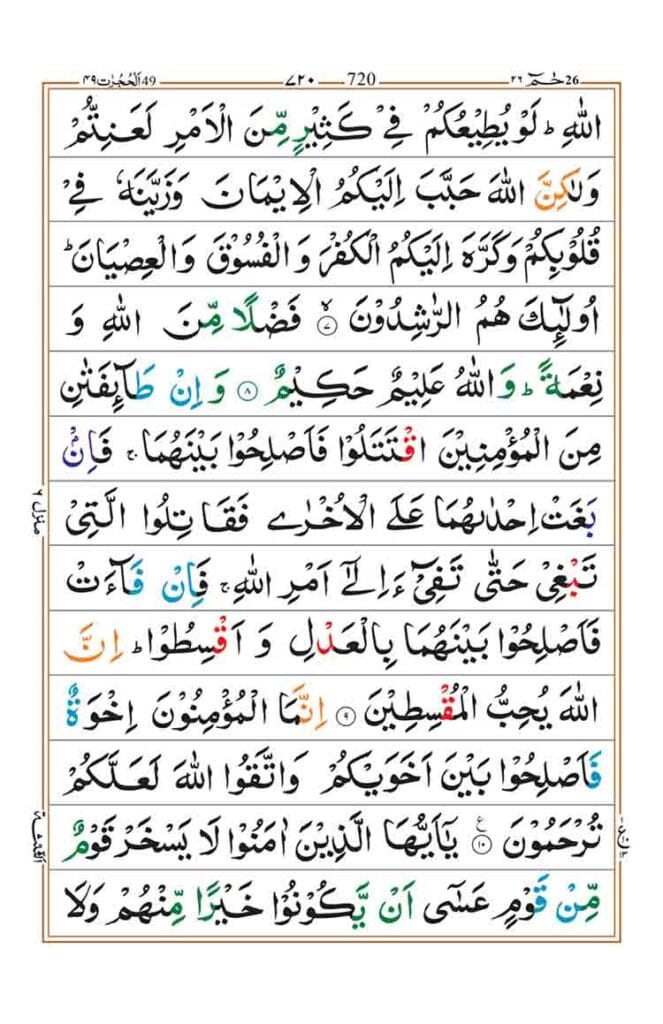
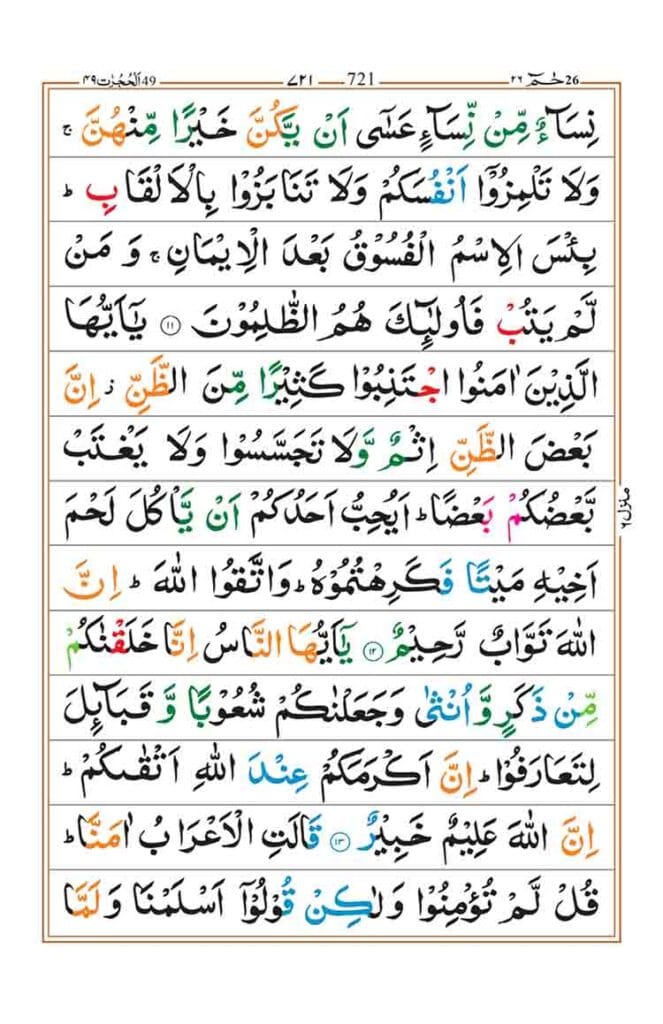
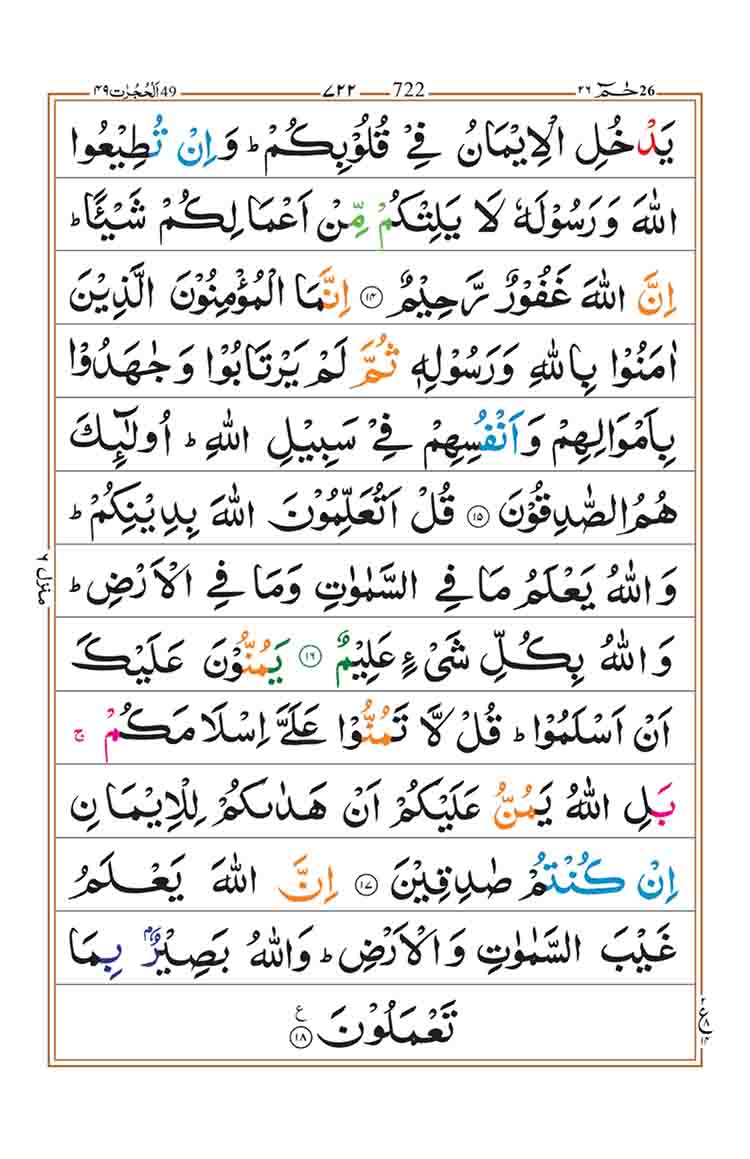
Detailed Tafseer with Translation & Transliteration
Here is the Complete Tafseer of Surah Al-Hujurat (Verse 1 to 18).
Surah Al-Hujurat is a Madani Surah with 18 verses. It focuses on Islamic social etiquette, respect for the Prophet ﷺ, and building a pure Muslim society.
Verse 1 Arabic: يَا أَيُّهَا الَّذِينَ آمَنُوا لَا تُقَدِّمُوا بَيْنَ يَدَيِ اللَّهِ وَرَسُولِهِ ۖ وَاتَّقُوا اللَّهَ ۚ إِنَّ اللَّهَ سَمِيعٌ عَلِيمٌ
Transliteration: Yā ayyuhal-ladhīna āmanū lā tuqaddimū bayna yadayi Allāhi wa rasūlihi wattakū Allāh. Inna Allāha samī‘un ‘alīm.
English Translation: O you who have believed, do not put [your opinion] ahead of Allah and His Messenger. And fear Allah. Indeed, Allah is Hearing and Knowing.
Tafseer & Practical Lesson: This verse warns believers not to rush ahead of Allah and His Messenger with their own opinions, desires, or cultural practices. In daily life, it means we must always check what the Quran and Sunnah say before making any decision.
Verse 2 Arabic: يَا أَيُّهَا الَّذِينَ آمَنُوا لَا تَرْفَعُوا أَصْوَاتَكُمْ فَوْقَ صَوْتِ النَّبِيِّ وَلَا تَجْهَرُوا لَهُ بِالْقَوْلِ كَجَهْرِ بَعْضِكُمْ لِبَعْضٍ أَن تَحْبَطَ أَعْمَالُكُمْ وَأَنتُمْ لَا تَشْعُرُونَ
Transliteration: Yā ayyuhal-ladhīna āmanū lā tarfa‘ū aswātakum fawqa sawtin-nabiyyi wa lā tajharū lahu bil-qawli kajahri ba‘ḍikum liba‘ḍin an taḥbaṭa a‘mālukum wa antum lā tash‘urūn.
English Translation: O you who have believed, do not raise your voices above the voice of the Prophet or speak loudly to him as you speak loudly to one another, lest your deeds become worthless while you perceive not.
Tafseer & Practical Lesson: This verse teaches extreme respect for the Prophet ﷺ. Raising one’s voice in his presence can nullify good deeds. Today, it teaches us to speak about the Prophet ﷺ with utmost reverence and respect.
Verse 3 Arabic: إِنَّ الَّذِينَ يَغُضُّونَ أَصْوَاتَهُمْ عِندَ رَسُولِ اللَّهِ أُولَٰئِكَ الَّذِينَ امْتَحَنَ اللَّهُ قُلُوبَهُمْ لِلتَّقْوَىٰ ۚ لَهُم مَّغْفِرَةٌ وَأَجْرٌ عَظِيمٌ
Transliteration: Innal-ladhīna yaghudḍūna aswātahum ‘inda rasūlillāhi ulā’ikal-ladhīnamtaḥana Allāhu qulūbahum lit-taqwā. Lahum maghfiratun wa ajrun ‘aẓīm.
English Translation: Indeed, those who lower their voices before the Messenger of Allah — it is they whose hearts Allah has tested for righteousness. For them is forgiveness and a great reward.
Tafseer & Practical Lesson: Lowering the voice in front of the Prophet ﷺ is a sign of true piety. Allah rewards such people with forgiveness and great reward.
Verse 4-5 Arabic: إِنَّ الَّذِينَ يُنَادُونَكَ مِن وَرَاءِ الْحُجُرَاتِ أَكْثَرُهُمْ لَا يَعْقِلُونَ وَلَوْ أَنَّهُمْ صَبَرُوا حَتَّىٰ تَخْرُجَ إِلَيْهِمْ لَكَانَ خَيْرًا لَّهُمْ ۚ وَاللَّهُ غَفُورٌ رَّحِيمٌ
Transliteration: Innal-ladhīna yunādūnaka min warā’il-hujurāti aktharuhum lā ya‘qilūn. Wa law annahum sabarū hattā takhruja ilayhim lakāna khayran lahum. Wallāhu ghafūrun raḥīm.
English Translation: Indeed, those who call you from behind the private chambers — most of them do not use reason. And if they had been patient until you could come out to them, it would have been better for them. And Allah is Forgiving and Merciful.
Tafseer & Practical Lesson: Some people shouted for the Prophet ﷺ from outside his house. This verse teaches patience and respect for privacy.
Verse 11 (Most Important Verse) Arabic: يَا أَيُّهَا الَّذِينَ آمَنُوا لَا يَسْخَرْ قَوْمٌ مِّن قَوْمٍ عَسَىٰ أَن يَكُونُوا خَيْرًا مِّنْهُمْ وَلَا نِسَاءٌ مِّن نِّسَاءٍ عَسَىٰ أَن يَكُنَّ خَيْرًا مِّنْهُنَّ ۖ وَلَا تَلْمِزُوا أَنفُسَكُمْ وَلَا تَنَابَزُوا بِالْأَلْقَابِ ۖ بِئْسَ الِاسْمُ الْفُسُوقُ بَعْدَ الْإِيمَانِ ۖ وَمَن لَّمْ يَتُبْ فَأُولَٰئِكَ هُمُ الظَّالِمُونَ
Transliteration: Yā ayyuhal-ladhīna āmanū lā yaskhar qawmum min qawmin ‘asā an yakūnū khayram minhum wa lā nisā’um min nisā’in ‘asā an yakunna khayram min-hunn. Wa lā talmizū anfusakum wa lā tanābazū bil-alqāb. Bi’sal-ismul-fusūqu ba’dal-īmān. Wa man lam yatub fa ulā’ika humuz-zālimūn.
English Translation: O you who have believed, let not a people ridicule [another] people; perhaps they may be better than them. Nor let women ridicule [other] women; perhaps they may be better than them. And do not insult one another and do not call each other by offensive nicknames. Wretched is the name of disobedience after [one’s] faith. And whoever does not repent — then it is those who are the wrongdoers.
Tafseer & Practical Lesson: This verse strictly prohibits mocking, backbiting, and using offensive nicknames. It is extremely relevant in the age of social media and trolling.
Verse 12 Arabic: يَا أَيُّهَا الَّذِينَ آمَنُوا اجْتَنِبُوا كَثِيرًا مِّنَ الظَّنِّ إِنَّ بَعْضَ الظَّنِّ إِثْمٌ ۖ وَلَا تَجَسَّسُوا وَلَا يَغْتَب بَّعْضُكُم بَعْضًا ۚ أَيُحِبُّ أَحَدُكُمْ أَن يَأْكُلَ لَحْمَ أَخِيهِ مَيْتًا فَكَرِهْتُمُوهُ ۚ وَاتَّقُوا اللَّهَ ۚ إِنَّ اللَّهَ تَوَّابٌ رَّحِيمٌ
Transliteration: Yā ayyuhal-ladhīna āmanū ijtanibū kathīram minaẓ-ẓanni inna ba‘ḍaẓ-ẓanni ithm. Wa lā tajassasū wa lā yaghtab ba‘ḍukum ba‘ḍā. Ayuḥibbu aḥadukum an ya’kula laḥma akhīhi maytan fakarihtumūh. Wattaqullāh. Inna Allāha tawwābun raḥīm.
English Translation: O you who have believed, avoid much [negative] assumption. Indeed, some assumption is sin. And do not spy or backbite each other. Would one of you like to eat the flesh of his brother when dead? You would detest it. And fear Allah. Indeed, Allah is Accepting of repentance and Merciful.
Tafseer & Practical Lesson: This is one of the strongest warnings against suspicion, spying, and backbiting (Gheebah). Backbiting is compared to eating dead brother’s flesh — a very powerful image.
Verse 13 Arabic: يَا أَيُّهَا النَّاسُ إِنَّا خَلَقْنَاكُم مِّن ذَكَرٍ وَأُنثَىٰ وَجَعَلْنَاكُمْ شُعُوبًا وَقَبَائِلَ لِتَعَارَفُوا ۚ إِنَّ أَكْرَمَكُمْ عِندَ اللَّهِ أَتْقَاكُمْ ۚ إِنَّ اللَّهَ عَلِيمٌ خَبِيرٌ
Transliteration: Yā ayyuhan-nāsu innā khalaqnākum min dhakarin wa unthā wa ja‘alnākum shu‘ūban wa qabā’ila lita‘ārafū. Inna akramakum ‘indallāhi atqākum. Inna Allāha ‘alīmun khabīr.
English Translation: O mankind, indeed We have created you from male and female and made you peoples and tribes that you may know one another. Indeed, the most noble of you in the sight of Allah is the most righteous of you. Indeed, Allah is Knowing and Acquainted.
Tafseer & Lesson: This is one of the most famous verses on equality and brotherhood. Superiority is not based on race, color, or tribe — only on Taqwa (piety).
Verse 18 (Last Verse) Arabic: إِنَّ اللَّهَ يَعْلَمُ غَيْبَ السَّمَاوَاتِ وَالْأَرْضِ ۚ وَاللَّهُ بَصِيرٌ بِمَا تَعْمَلُونَ
Transliteration: Inna Allāha ya‘lamu ghaybas-samāwāti wal-arḍ. Wallāhu baṣīrun bimā ta‘malūn.
English Translation: Indeed, Allah knows the unseen of the heavens and the earth. And Allah is Seeing of what you do.
Tafseer & Lesson: Allah knows everything hidden and apparent. This is a strong reminder to always remain conscious of Allah in our actions and words.
Benefits of Reciting Surah Al Hujurat
Reciting Surah Al-Hujurat regularly brings great spiritual rewards and practical blessings:
- Protection from Major Sins Regular recitation helps protect from backbiting, suspicion, mockery, and spreading rumors.
- Improvement in Character & Manners This Surah is a practical manual for good manners (Adab). It helps develop humility, respect, and patience.
- Strengthens Community Unity It promotes brotherhood and warns against division, making it ideal for building strong Muslim communities.
- Increased Taqwa (God-consciousness) The Surah repeatedly reminds believers to fear Allah in their social interactions.
- Barakah in Daily Life Many scholars recommend reciting this Surah daily to bring peace, harmony, and blessings in family and social relationships.
The Prophet ﷺ and his companions gave great importance to this Surah because it corrects the foundation of society — how we treat one another.
Practical Life Lessons from Surah Al-Hujurat
Surah Al-Hujurat is one of the most practical Surahs for modern life. Here are key life lessons:
- Respect the Prophet ﷺ – Never speak casually or raise your voice when discussing him.
- Avoid Negative Assumptions – Do not judge people based on suspicion.
- Stop Backbiting & Gossip – Speaking ill of someone in their absence is like eating their dead flesh.
- Never Mock Others – Especially based on race, tribe, looks, or status.
- Respect Privacy – Do not disturb people unnecessarily or shout from outside.
- Promote Unity – All Muslims are one Ummah. Superiority is only through Taqwa (piety), not race or nationality.
- Verify Information – Always check facts before spreading news (especially important in the age of social media).
- Use Good Language – Avoid offensive nicknames and harsh words.
These lessons are extremely relevant in today’s world of social media, where backbiting, trolling, and division have become very common.
Last Updated: 27 March 2026
All content on this page, including Quranic verses, translations, transliterations, and Tafseer, is compiled from authentic sources such as the Holy Quran and recognized books of Tafseer and Hadith. We strive for accuracy according to mainstream Islamic scholarship. However, for any specific religious rulings or personal guidance, please consult a qualified Islamic scholar or local Imam.
May Allah accept this effort and grant us all the ability to act upon the teachings of Surah Al-Hujurat. Ameen.
Frequently Asked Questions about Surah Al-Hujurat
Read More Surahs
Surah Yaseen | Surah Maryam | Surah Yusuf |
Surah Waqiah | Surah Kahf | Surah Rahman |
Surah Juma | Surah Muzammil | Surah Falaq |