
Surah At Tahrim | The Prohibition (سورۃ التحریم)
Surah At Tahrim is the 66th chapter of the Holy Quran. It consists of 12 verses and was revealed in Madinah. This Surah addresses important matters related to family life, the rights of wives, the power of repentance, and the importance of Taqwa (God-consciousness). It also contains a powerful warning and glad tidings for the believers.
The name At-Tahrim means “The Prohibition”. It refers to an incident where the Prophet Muhammad ﷺ prohibited something upon himself to please his wives, upon which Allah revealed divine guidance.
Surah At Tahrim Overview
| Surah At Tahrim Ayats | Surah At Tahrim Words | Surah At Tahrim Letter | Surah At Tahrim Ruku |
| 12 | 254 | 1078 | 2 |
Listen Surah At Tahrim Online
Colour Coded Tajweed Rules

Read Surah At Tahrim Online
Transliteration of Surah At-Tahrim (Verse by Verse)
Transliteration (Verse by Verse)
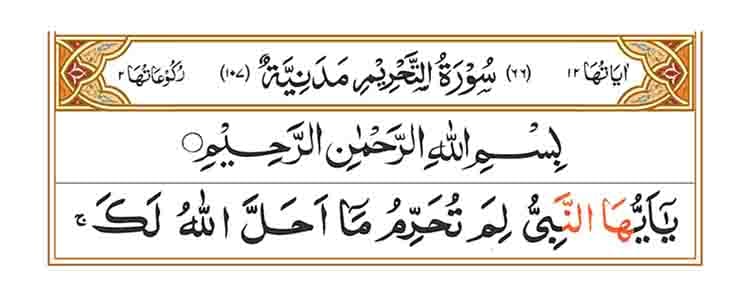
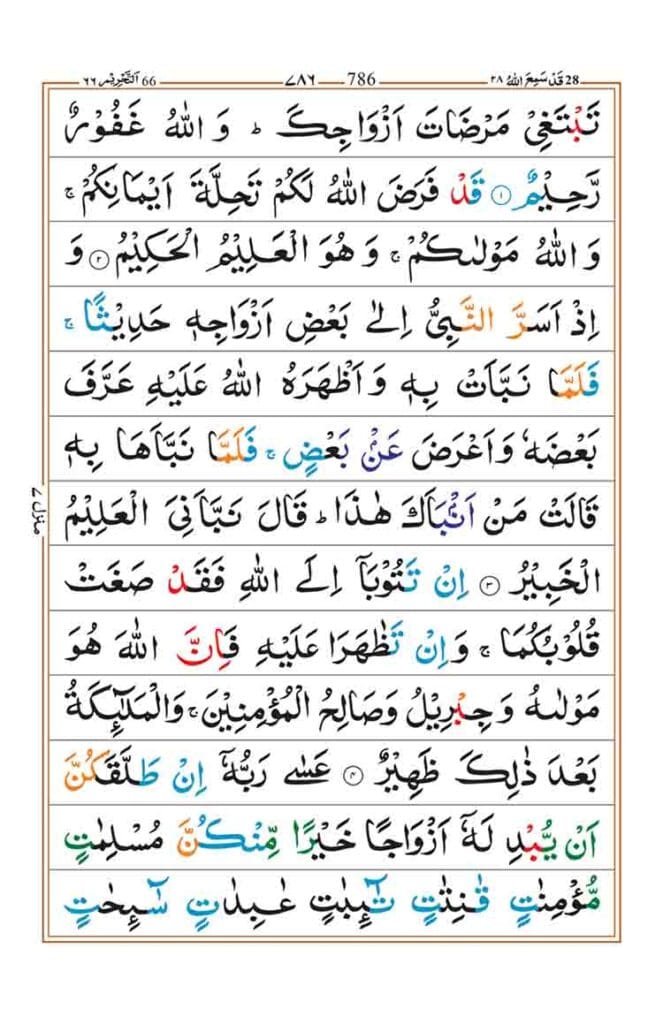
- Yā ayyuhan-nabiyyu limā tuḥarrimu mā aḥallallāhu laka tabtaghī marḍāta azwājik, wallāhu ghafūrun raḥīm.
- Qad faradallāhu lakum taḥillata aymānikum, wallāhu mawlākum, wa huwa al-ʿalīmu al-ḥakīm.
- Wa idh asarra an-nabiyyu ilā baʿḍi azwājihi ḥadīthan, fa lammā nabba’at bihi wa aẓharahullāhu ʿalayhi ʿarrafa baʿḍahu wa aʿraḍa ʿan baʿḍin, fa lammā nabba’ahā bihi qālat man anba’aka hādhā, qāla nabba’anī al-ʿalīmu al-khabīr.
- In tatūbā ilallāhi fa qad ṣaghat qulūbukumā, wa in taẓāharā ʿalayhi fa innallāha huwa mawlāhu wa Jibrīlu wa ṣāliḥul-mu’minīn, wall-malā’ikatu baʿda dhālika ẓahīr.
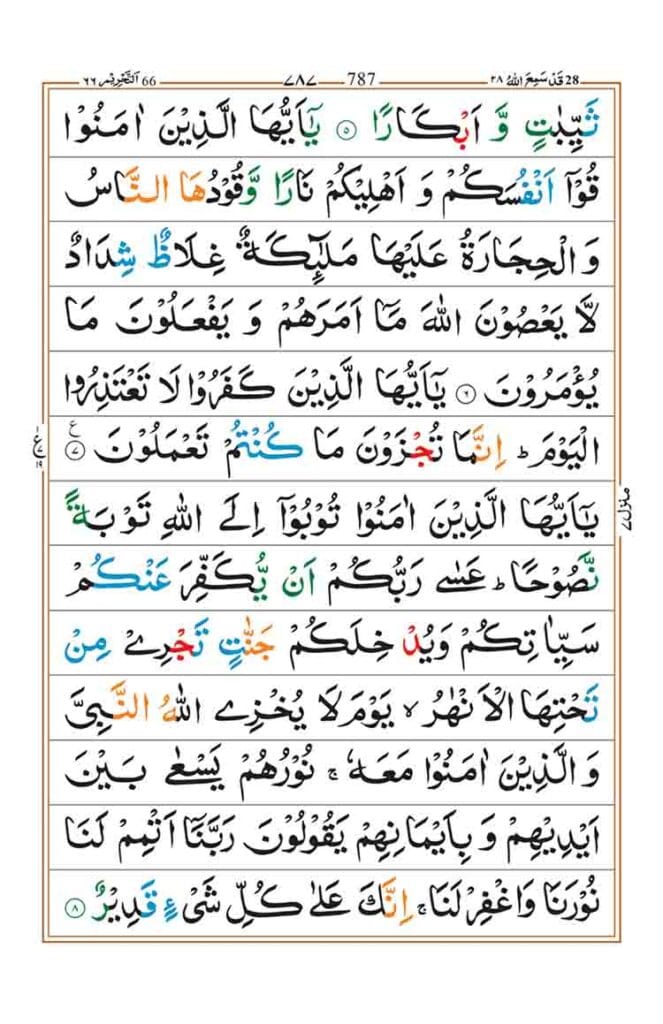
- ʿAsā rabbuhu in ṭallaqakunna an yubdilahū azwājan khayran minkunna muslimātin mu’minātin qānitātin tā’ibātin ʿābidātin sā’iḥātin thayyibātin wa abkārā.
- Yā ayyuhal-ladhīna āmanū qū anfusakum wa ahlikum nārān waqūduhan-nāsu wal-ḥijārah, ʿalayhā malā’ikatun ghilāẓun shidādun lā yaʿṣūna allāha mā amarahum wa yafʿalūna mā yu’marūn.
- Yā ayyuhal-ladhīna kafarū lā taʿtadhirū al-yawma, innamā tujzawna mā kuntum taʿmalūn.
- Yā ayyuhal-ladhīna āmanū tūbū ilallāhi tawbatan naṣūḥā, ʿasā rabbukum an yukaffira ʿankum sayyi’ātikum wa yudkhilakum jannātin tajrī min taḥtihal-anhāru yawma lā yukhzi allāhu an-nabiyya walladhīna āmanū maʿah, nūruhum yasʿā bayna aydīhim wa bi’aymānihim yaqūlūna rabbanā atmim lanā nūranā waghfir lanā innaka ʿalā kulli shay’in qadīr.
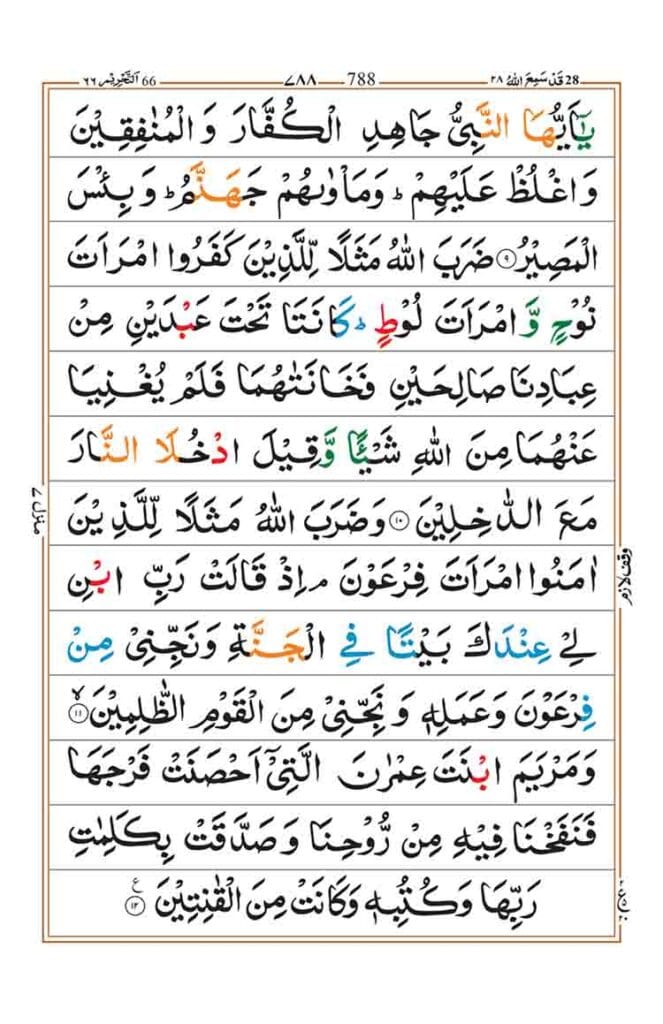
- Yā ayyuhan-nabiyyu jāhidil-kuffāra wal-munāfiqīna waghluẓ ʿalayhim, wa ma’wāhum jahannam, wa bi’sal-maṣīr.
- Ḍaraba allāhu mathalan lilladhīna kafarū imra’ata Nūḥin wamra’ata Lūṭin, kānatā taḥta ʿabdayni min ʿibādinā ṣāliḥayni fa khānatāhumā fa lam yughniyā ʿanhumā minallāhi shay’an wa qīla adkhulā an-nāra maʿad-dākhilīn.
- Wa ḍaraba allāhu mathalan lilladhīna āmanū imra’ata Firʿawna idh qālat rabbi bni lī ʿindaka baytan fil-jannati wa najjinī min Firʿawna wa ʿamalihi wa najjinī minal-qawmiẓ-ẓālimīn.
- Wa Maryama bnata ʿImrāna allatī aḥṣanat farjahā fa nafakhna fīhi min rūḥinā wa ṣaddaqat bi kalimāti rabbihā wa kutubihī wa kānat minal-qānitīn.
Surah At-Tahrim (The Prohibition) – 12 Verses
Ayah 1 Arabic: يَا أَيُّهَا النَّبِيُّ لِمَ تُحَرِّمُ مَا أَحَلَّ اللَّهُ لَكَ ۖ تَبْتَغِي مَرْضَاتَ أَزْوَاجِكَ ۚ وَاللَّهُ غَفُورٌ رَّحِيمٌ
English Translation: O Prophet, why do you prohibit [yourself from] what Allah has made lawful for you, seeking the approval of your wives? And Allah is Forgiving and Merciful.
Ayah 2 Arabic: قَدْ فَرَضَ اللَّهُ لَكُمْ تَحِلَّةَ أَيْمَانِكُمْ ۚ وَاللَّهُ مَوْلَاكُمْ ۖ وَهُوَ الْعَلِيمُ الْحَكِيمُ
English Translation: Allah has already ordained for you [Muslims] the dissolution of your oaths. And Allah is your Master, and He is the Knowing, the Wise.
Ayah 3 Arabic: وَإِذْ أَسَرَّ النَّبِيُّ إِلَىٰ بَعْضِ أَزْوَاجِهِ حَدِيثًا فَلَمَّا نَبَّأَتْ بِهِ وَأَظْهَرَهُ اللَّهُ عَلَيْهِ عَرَّفَ بَعْضَهُ وَأَعْرَضَ عَن بَعْضٍ ۖ فَلَمَّا نَبَّأَهَا بِهِ قَالَتْ مَنْ أَنبَأَكَ هَٰذَا ۖ قَالَ نَبَّأَنِيَ الْعَلِيمُ الْخَبِيرُ
English Translation: And [remember] when the Prophet confided to one of his wives a statement; and when she informed [another] of it and Allah showed it to him, he made known part of it and ignored part. And when he informed her about it, she said, “Who told you this?” He said, “I was informed by the Knowing, the Acquainted.”
Ayah 4 Arabic: إِن تَتُوبَا إِلَى اللَّهِ فَقَدْ صَغَتْ قُلُوبُكُمَا ۖ وَإِن تَظَاهَرَا عَلَيْهِ فَإِنَّ اللَّهَ هُوَ مَوْلَاهُ وَجِبْرِيلُ وَصَالِحُ الْمُؤْمِنِينَ ۖ وَالْمَلَائِكَةُ بَعْدَ ذَٰلِكَ ظَهِيرٌ
English Translation: If you two [wives] repent to Allah, your hearts have deviated, but if you cooperate against him, then indeed Allah is his protector, and Gabriel and the righteous of the believers and the angels, moreover, are his assistants.
Ayah 5 Arabic: عَسَىٰ رَبُّهُ إِن طَلَّقَكُنَّ أَن يُبْدِلَهُ أَزْوَاجًا خَيْرًا مِّنكُنَّ مُسْلِمَاتٍ مُّؤْمِنَاتٍ قَانِتَاتٍ تَائِبَاتٍ عَابِدَاتٍ سَائِحَاتٍ ثَيِّبَاتٍ وَأَبْكَارًا
English Translation: Perhaps his Lord, if he divorced you [all], would substitute for him wives better than you – submitting [to Allah], believing, devoutly obedient, repentant, worshipping, and traveling – [ones] previously married and virgins.
Ayah 6 Arabic: يَا أَيُّهَا الَّذِينَ آمَنُوا قُوا أَنفُسَكُمْ وَأَهْلِيكُمْ نَارًا وَقُودُهَا النَّاسُ وَالْحِجَارَةُ عَلَيْهَا مَلَائِكَةٌ غِلَاظٌ شِدَادٌ لَّا يَعْصُونَ اللَّهَ مَا أَمَرَهُمْ وَيَفْعَلُونَ مَا يُؤْمَرُونَ
English Translation: O you who have believed, protect yourselves and your families from a Fire whose fuel is people and stones, over which are [appointed] angels, harsh and severe; they do not disobey Allah in what He commands them but do what they are commanded.
Ayah 7 Arabic: يَا أَيُّهَا الَّذِينَ كَفَرُوا لَا تَعْتَذِرُوا الْيَوْمَ ۖ إِنَّمَا تُجْزَوْنَ مَا كُنتُمْ تَعْمَلُونَ
English Translation: O you who have disbelieved, make no excuses that Day. You will only be recompensed for what you used to do.
Ayah 8 Arabic: يَا أَيُّهَا الَّذِينَ آمَنُوا تُوبُوا إِلَى اللَّهِ تَوْبَةً نَّصُوحًا عَسَىٰ رَبُّكُمْ أَن يُكَفِّرَ عَنكُمْ سَيِّئَاتِكُمْ وَيُدْخِلَكُمْ جَنَّاتٍ تَجْرِي مِن تَحْتِهَا الْأَنْهَارُ يَوْمَ لَا يُخْزِي اللَّهُ النَّبِيَّ وَالَّذِينَ آمَنُوا مَعَهُ ۖ نُورُهُمْ يَسْعَىٰ بَيْنَ أَيْدِيهِمْ وَبِأَيْمَانِهِمْ يَقُولُونَ رَبَّنَا أَتْمِمْ لَنَا نُورَنَا وَاغْفِرْ لَنَا ۖ إِنَّكَ عَلَىٰ كُلِّ شَيْءٍ قَدِيرٌ
English Translation: O you who have believed, repent to Allah with sincere repentance. Perhaps your Lord will remove from you your misdeeds and admit you into gardens beneath which rivers flow [on] the Day Allah will not disgrace the Prophet and those who believed with him.
Ayah 9 Arabic: يَا أَيُّهَا النَّبِيُّ جَاهِدِ الْكُفَّارَ وَالْمُنَافِقِينَ وَاغْلُظْ عَلَيْهِمْ ۚ وَمَأْوَاهُمْ جَهَنَّمُ ۖ وَبِئْسَ الْمَصِيرُ
English Translation: O Prophet, strive against the disbelievers and the hypocrites and be harsh upon them. And their refuge is Hell, and wretched is the destination.
Ayah 10 Arabic: ضَرَبَ اللَّهُ مَثَلًا لِّلَّذِينَ كَفَرُوا امْرَأَتَ نُوحٍ وَامْرَأَتَ لُوطٍ ۖ كَانَتَا تَحْتَ عَبْدَيْنِ مِنْ عِبَادِنَا صَالِحَيْنِ فَخَانَتَاهُمَا فَلَمْ يُغْنِيَا عَنْهُمَا مِنَ اللَّهِ شَيْئًا وَقِيلَ ادْخُلَا النَّارَ مَعَ الدَّاخِلِينَ
English Translation: Allah presents an example of those who disbelieved: the wife of Noah and the wife of Lot. They were under two of Our righteous servants but betrayed them, so those prophets did not avail them from Allah at all, and it was said, “Enter the Fire with those who enter.”
Ayah 11 Arabic: وَضَرَبَ اللَّهُ مَثَلًا لِّلَّذِينَ آمَنُوا امْرَأَتَ فِرْعَوْنَ إِذْ قَالَتْ رَبِّ ابْنِ لِي عِندَكَ بَيْتًا فِي الْجَنَّةِ وَنَجِّنِي مِن فِرْعَوْنَ وَعَمَلِهِ وَنَجِّنِي مِنَ الْقَوْمِ الظَّالِمِينَ
English Translation: And Allah presents an example of those who believed: the wife of Pharaoh, when she said, “My Lord, build for me near You a house in Paradise and save me from Pharaoh and his deeds and save me from the wrongdoing people.”
Ayah 12 Arabic: وَمَرْيَمَ ابْنَتَ عِمْرَانَ الَّتِي أَحْصَنَتْ فَرْجَهَا فَنَفَخْنَا فِيهِ مِن رُّوحِنَا وَصَدَّقَتْ بِكَلِمَاتِ رَبِّهَا وَكُتُبِهِ وَكَانَتْ مِنَ الْقَانِتِينَ
English Translation: And [the example of] Mary, the daughter of ʿImrān, who guarded her chastity, so We breathed into her [a spirit] through Our angel, and she believed in the words of her Lord and His scriptures and was of the devoutly obedient.
History and Background of Surah At-Tahrim
Surah At-Tahrim is a Madani Surah revealed in the later period of the Prophet Muhammad’s ﷺ life in Madinah, most likely between the 7th and 8th year after Hijrah. It was revealed in response to a specific domestic incident in the Prophet’s household that carried important lessons for the entire Muslim community.
According to authentic narrations in Sahih Bukhari and Muslim, the Prophet ﷺ once spent more time with his wife Maria al-Qibtiyyah (or in another narration, he accepted honey from one of his wives). This caused jealousy among some of his other wives. They united and expressed their displeasure to the Prophet ﷺ. In response, the Prophet ﷺ made a personal vow and temporarily forbade something that was lawful for him, in order to bring peace in his household.
Upon this, Allah revealed Surah At-Tahrim. The Surah begins by gently correcting the Prophet ﷺ while teaching universal principles: that no one should forbid what Allah has made lawful just to please others, that justice in marriage is essential, and that sincere repentance can erase mistakes. This Surah is unique because it combines personal guidance for the Prophet’s family with timeless lessons for all believers until the Day of Judgment.
Key Lessons for Modern Life from Surah At-Tahrim
In today’s fast-paced and often chaotic world, Surah At-Tahrim offers extremely practical and much-needed guidance, especially for family life and personal character development.
The Surah strongly emphasizes that pleasing Allah must always take priority over pleasing people — even one’s closest family members. Many modern problems in marriages arise when people make unnecessary compromises or prohibitions just to avoid conflict or gain approval. This Surah teaches us to maintain balance and justice instead.
It also highlights the importance of justice and fairness in marriage. A husband must treat his wives equally and fairly, without favoritism driven by emotions. For wives, it teaches patience, loyalty, and the power of sincere advice given with wisdom.
Another major lesson is the power of Tawbah Nasuha (sincere repentance). No matter how serious the mistake, if a person turns to Allah with genuine regret and a firm intention not to repeat it, Allah is ready to forgive and even replace bad deeds with good ones.
Finally, the Surah repeatedly stresses Taqwa — God-consciousness. In modern life, where temptations and family pressures are high, maintaining awareness of Allah helps protect individuals and families from spiritual and moral downfall.
Benefits of Reciting Surah At-Tahrim
Reciting Surah At-Tahrim regularly carries numerous spiritual, emotional, and practical benefits. Because this Surah directly deals with family matters, repentance, and Taqwa, its recitation is especially beneficial for those facing challenges in married life, household harmony, or personal spiritual growth.
Regular recitation helps strengthen family bonds, reduces unnecessary arguments, and brings barakah (blessings) into the home. It increases one’s consciousness of Allah and creates a protective shield against domestic fitnah (trials). Many scholars recommend this Surah for couples experiencing marital discord, as it promotes justice, patience, and sincere repentance.
On a deeper level, reciting this Surah with understanding helps a person develop the habit of prioritizing Allah’s commands over emotional or social pressure. It also serves as a powerful reminder of the Hereafter and the importance of protecting oneself and one’s family from Hellfire.
Virtues and Excellence of Surah At-Tahrim
The Prophet ﷺ taught that reflecting upon the Quran and implementing its teachings brings immense reward. Surah At-Tahrim holds special virtue because it combines divine correction, mercy, warning, and hope in a very short span of 12 verses.
Its greatest virtue lies in its practical guidance for family life — one of the most important aspects of a Muslim’s existence. Those who recite it with reflection and act upon its teachings are more likely to maintain justice in their homes, seek sincere forgiveness when they err, and develop strong Taqwa.
The Surah also contains powerful examples of righteous women (Asiyah and Maryam), which serve as motivation and role models for all believing women. For men, it serves as a warning against injustice and emotional decision-making in family matters.
In summary, Surah At-Tahrim is a Surah of reform, mercy, and guidance. Whoever recites it regularly with understanding and implements its lessons can expect improvement in both worldly family life and success in the Hereafter, InshaAllah.
Read More Surahs
Surah Yaseen | Surah Maryam | Surah Yusuf |
Surah Waqiah | Surah Kahf | Surah Rahman |
Surah Juma | Surah Muzammil | Surah Falaq |