
What is Salaat?
Salaat (prayer) is one of the five pillars of Islam and an essential act of worship for every Muslim. It is a direct way to connect with Allah (SWT), seek His blessings, and maintain spiritual discipline in daily life. Performing Salaat correctly, with proper posture and recitation, ensures that a believer fulfills this sacred obligation with sincerity and devotion.
How to Pray Salaat (Salah/Nimaz/Prayer) in Islam? | Complete Step-by-Step Guide for Beginners
Salaat (also known as Salaah/Namaz/Prayer) is the second pillar of Islam and the most important act of worship after Shahadah. It is a direct connection between a servant and Allah. The Prophet Muhammad ﷺ said:
“The first thing a person will be questioned about on the Day of Judgment is his Salah. If it is correct, then the rest of his deeds will be correct.”
On this page of Faiz e Islam, you will find a complete, easy to understand, step-by-step guide on how to perform Salah correctly, including Wudu, full Rak’ah breakdown with Arabic, transliteration, and translation, along with common mistakes to avoid. Whether you are a new Muslim or want to perfect your prayer, this guide will help you pray with confidence and sincerity.
Importance and Virtues of Salah in Islam (Authentic Hadiths)
Salah (also known as Namaz or Prayer) is the second pillar of Islam and the most important act of worship after the declaration of faith (Shahadah). It is a direct conversation between a servant and Allah. The Quran and authentic Hadiths repeatedly emphasize that Salah is the foundation of a Muslim’s faith and the key to success in both this world and the Hereafter.
1. Salah is the First Thing Questioned on the Day of Judgment
The Prophet Muhammad ﷺ said:
«إِنَّ أَوَّلَ مَا يُحَاسَبُ بِهِ الْعَبْدُ يَوْمَ الْقِيَامَةِ الصَّلَاةُ، فَإِنْ صَلَحَتْ صَلَحَ سَائِرُ عَمَلِهِ، وَإِنْ فَسَدَتْ فَسَدَ سَائِرُ عَمَلِهِ»
English Translation: “The first thing a person will be questioned about on the Day of Judgment is his Salah. If it is correct and complete, then the rest of his deeds will be correct. If it is deficient, then the rest of his deeds will also be deficient.”
— Sahih Bukhari and Sahih Muslim Read full Hadith on Sunnah.com
2. Salah is the Pillar of Islam
The Prophet ﷺ said:
«بُنِيَ الْإِسْلَامُ عَلَى خَمْسٍ: شَهَادَةِ أَنْ لَا إِلَهَ إِلَّا اللَّهُ وَأَنَّ مُحَمَّدًا رَسُولُ اللَّهِ، وَإِقَامِ الصَّلَاةِ، وَإِيتَاءِ الزَّكَاةِ، وَصَوْمِ رَمَضَانَ، وَحَجِّ الْبَيْتِ»
English Translation: “Islam is built upon five pillars: bearing witness that there is no god but Allah and that Muhammad is the Messenger of Allah, establishing Salah, paying Zakat, fasting in Ramadan, and performing Hajj to the House of Allah.”
— Sahih Bukhari (Hadith 8) & Sahih Muslim Read full Hadith on Sunnah.com
3. Salah Distinguishes Between a Believer and a Non-Believer
The Prophet ﷺ said:
«الْعَهْدُ الَّذِي بَيْنَنَا وَبَيْنَهُمُ الصَّلَاةُ، فَمَنْ تَرَكَهَا فَقَدْ كَفَرَ»
English Translation: “The covenant between us and them is Salah. Whoever abandons Salah has disbelieved.”
— Sunan Tirmidhi (Hadith 2621) Read full Hadith on Sunnah.com
4. Five Daily Prayers Erase Sins Like Water Cleanses Dirt
The Prophet ﷺ said:
«أَرَأَيْتُمْ لَوْ أَنَّ نَهْرًا بِبَابِ أَحَدِكُمْ يَغْتَسِلُ مِنْهُ فِي كُلِّ يَوْمٍ خَمْسَ مَرَّاتٍ، هَلْ يَبْقَى مِنْ دَرَنِهِ شَيْءٌ؟ قَالُوا: لَا يَبْقَى مِنْ دَرَنِهِ شَيْءٌ. قَالَ: فَذَلِكَ مَثَلُ الصَّلَوَاتِ الْخَمْسِ، يَمْحُو اللَّهُ بِهِنَّ الْخَطَايَا»
English Translation: “If there was a river at the door of one of you in which he bathes five times a day, would any dirt remain on him?” They said, “No dirt would remain on him.” He said, “That is the example of the five daily prayers. Allah wipes away sins with them.”
— Sahih Bukhari & Sahih Muslim Read full Hadith on Sunnah.com
5. Salah Prevents Evil and Immorality
Allah says in the Holy Quran:
﴿وَأَقِمِ الصَّلَاةَ ۖ إِنَّ الصَّلَاةَ تَنْهَىٰ عَنِ الْفَحْشَاءِ وَالْمُنكَرِ ﴾
English Translation: “And establish prayer. Indeed, prayer prohibits immorality and wrongdoing.”
— Surah Al-Ankabut (29:45)
6. The Reward of Perfecting Salah
The Prophet ﷺ said:
«مَنْ صَلَّى صَلَاةً كَمَا أُمِرَ بِهَا كَانَتْ لَهُ نُورًا وَبُرْهَانًا يَوْمَ الْقِيَامَةِ»
English Translation: “Whoever prays his Salah as it has been commanded will have light and proof on the Day of Judgment.”
— Musnad Ahmad (Authentic)
How to Perform Wudu (Ablution) Step by Step
Wudu is the ritual purification that every Muslim must perform before Salah. It cleanses both the body and prepares the soul for standing before Allah. Allah has commanded the believers to perform Wudu in the Holy Quran:
﴿ يَا أَيُّهَا الَّذِينَ آمَنُوا إِذَا قُمْتُمْ إِلَى الصَّلَاةِ فَاغْسِلُوا وُجُوهَكُمْ وَأَيْدِيَكُمْ إِلَى الْمَرَافِقِ وَامْسَحُوا بِرُءُوسِكُمْ وَأَرْجُلَكُمْ إِلَى الْكَعْبَيْنِ ﴾
English Translation: “O you who have believed, when you rise to [perform] prayer, wash your faces and your forearms to the elbows and wipe over your heads and wash your feet to the ankles.”
— Surah Al-Ma’idah (5:6) Read full verse on Quran.com
This verse clearly outlines the obligatory acts of Wudu.
The Prophet Muhammad ﷺ emphasized the importance of Wudu many times. He said:
«مِفْتَاحُ الْجَنَّةِ الصَّلَاةُ، وَمِفْتَاحُ الصَّلَاةِ الْوُضُوءُ»
English Translation: “The key to Paradise is Salah, and the key to Salah is Wudu.”
— Sahih Muslim Read full Hadith on Sunnah.com
Why Wudu is Important?
Wudu removes minor impurities and brings both physical and spiritual purity. It is mandatory before every Salah, before touching the Quran, and after certain acts that break purity.
When is Wudu Required?
- Before performing any of the five daily prayers
- Before touching or reciting the Holy Quran
- After using the toilet, passing wind, or sleeping deeply
Step-by-Step Guide to Performing Wudu
- Make the Intention (Niyyah) Intend in your heart that you are performing Wudu to purify yourself for the sake of Allah.
- Say Bismillah Begin by saying: بِسْمِ اللَّهِ (Bismillah)
- Wash Both Hands Wash your hands up to the wrists three times.
- Rinse the Mouth Take water with your right hand and rinse your mouth thoroughly three times.
- Clean the Nose Sniff water into the nostrils with the right hand and blow it out with the left hand — three times.
- Wash the Face Wash the entire face from the hairline to the chin and from one ear to the other — three times.
- Wash the Arms Wash the right arm from the fingertips to the elbow (including the elbow) three times, then repeat for the left arm.
- Wipe the Head Wet your hands and wipe your head once, from the front to the back, then back to the front.
- Wipe the Ears Wipe the inside and outside of both ears with the same wet fingers.
- Wash the Feet Wash the right foot up to and including the ankles three times, then wash the left foot in the same manner.
After completing Wudu, it is recommended to recite the following dua:
أَشْهَدُ أَنْ لَا إِلَهَ إِلَّا اللَّهُ وَحْدَهُ لَا شَرِيكَ لَهُ، وَأَشْهَدُ أَنَّ مُحَمَّدًا عَبْدُهُ وَرَسُولُهُ
English: I bear witness that there is no god but Allah alone, with no partner, and I bear witness that Muhammad is His servant and Messenger.
What Breaks Wudu?
Wudu is broken by passing urine, stool, wind, deep sleep, bleeding, or touching private parts without a barrier.
Wudu for Disabled or Incapacitated Persons (Tayammum)
If a person is unable to use water due to disability, injury, illness, or unavailability of water, Tayammum (dry ablution) is the lawful alternative commanded by Allah.
Allah says in the Quran:
﴿وَإِنْ كُنْتُمْ مَرْضَىٰ أَوْ عَلَىٰ سَفَرٍ أَوْ جَاءَ أَحَدٌ مِنْكُمْ مِنَ الْغَائِطِ أَوْ لَامَسْتُمُ النِّسَاءَ فَلَمْ تَجِدُوا مَاءً فَتَيَمَّمُوا صَعِيدًا طَيِّبًا فَامْسَحُوا بِوُجُوهِكُمْ وَأَيْدِيكُمْ مِنْهُ﴾
English Translation: “And if you are ill or on a journey or one of you comes from the place of relieving himself or you have contacted women and do not find water, then seek clean earth and wipe over your faces and your hands with it.”
— Surah Al-Ma’idah (5:6)
How to Perform Tayammum:
- Make intention.
- Say Bismillah.
- Strike both palms on clean earth, dust, or stone.
- Wipe the entire face once.
- Wipe both hands up to the elbows once.
Tayammum remains valid as long as the reason preventing the use of water continues.
Complete Step-by-Step Guide to Performing Salah (Rak’ah Breakdown)
Performing Salah correctly is the most important part of this guide. Below is a clear, detailed breakdown of one full Rak’ah with everything you need to recite, including Arabic text, easy transliteration, and English translation as well.
Note: In the first two Rak’ahs of every Fard Salah, you recite Surah Al-Fatiha followed by another Surah (or a few verses). In the third and fourth Rak’ahs, only Surah Al-Fatiha is recited.
1. Standing (Qiyam) – Takbir & Recitation
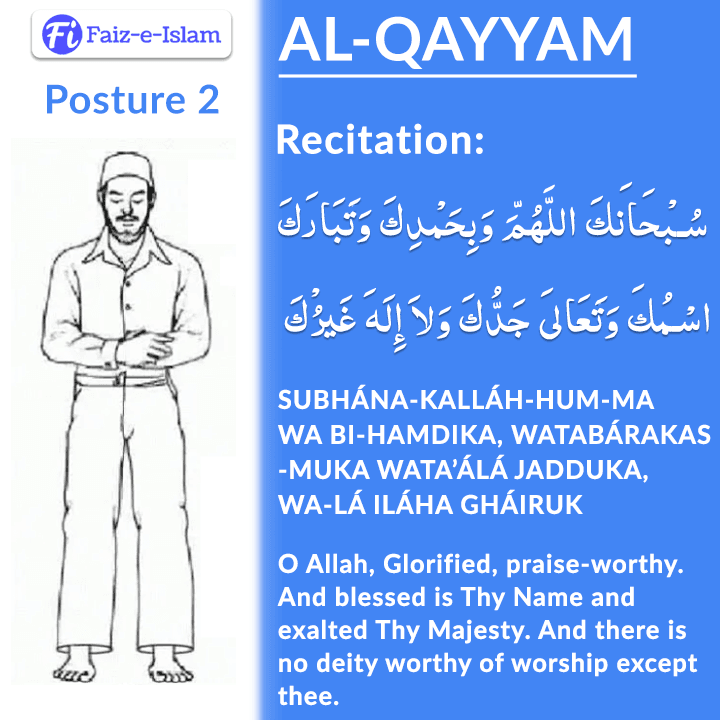
- Takbir e Tahrema (Starting the Prayer) Raise both hands to your ears and say: اللَّهُ أَكْبَرُ Allahu Akbar Allah is the Greatest
- Place your right hand over your left hand on your chest.
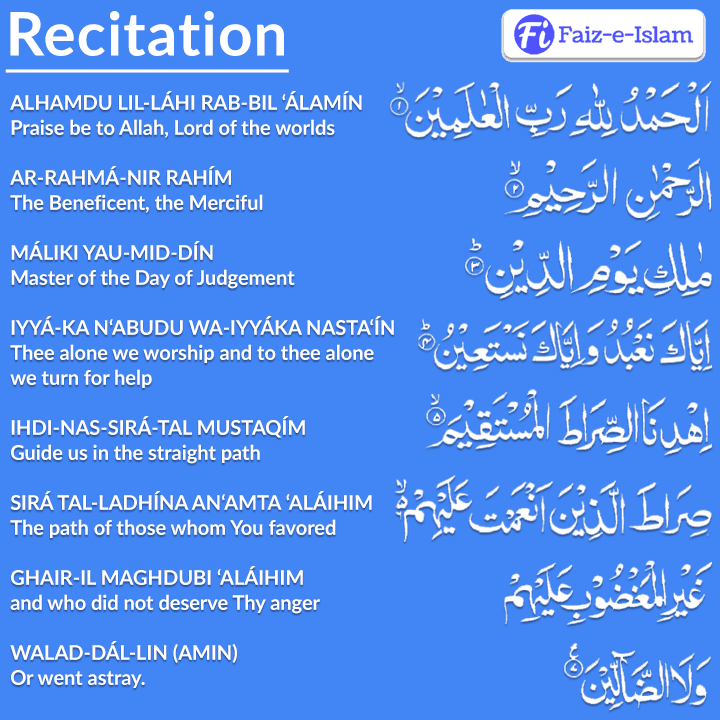
- Recite Surah Al-Fatiha (in every Rak’ah): بِسْمِ اللَّهِ الرَّحْمَٰنِ الرَّحِيمِ Bismillahir Rahmanir Raheem In the name of Allah, the Most Gracious, the Most Merciful.الْحَمْدُ لِلَّهِ رَبِّ الْعَالَمِينَ الرَّحْمَٰنِ الرَّحِيمِ مَالِكِ يَوْمِ الدِّينِ إِيَّاكَ نَعْبُدُ وَإِيَّاكَ نَسْتَعِينُ اهْدِنَا الصِّرَاطَ الْمُسْتَقِيمَ صِرَاطَ الَّذِينَ أَنْعَمْتَ عَلَيْهِمْ غَيْرِ الْمَغْضُوبِ عَلَيْهِمْ وَلَا الضَّالِّينَ
- English Translation: All praise is due to Allah, Lord of all the worlds — The Most Gracious, The Most Merciful — Master of the Day of Judgment. You alone we worship, and You alone we ask for help. Guide us to the straight path — the path of those upon whom You have bestowed favor, not of those who have evoked [Your] anger or of those who are astray.
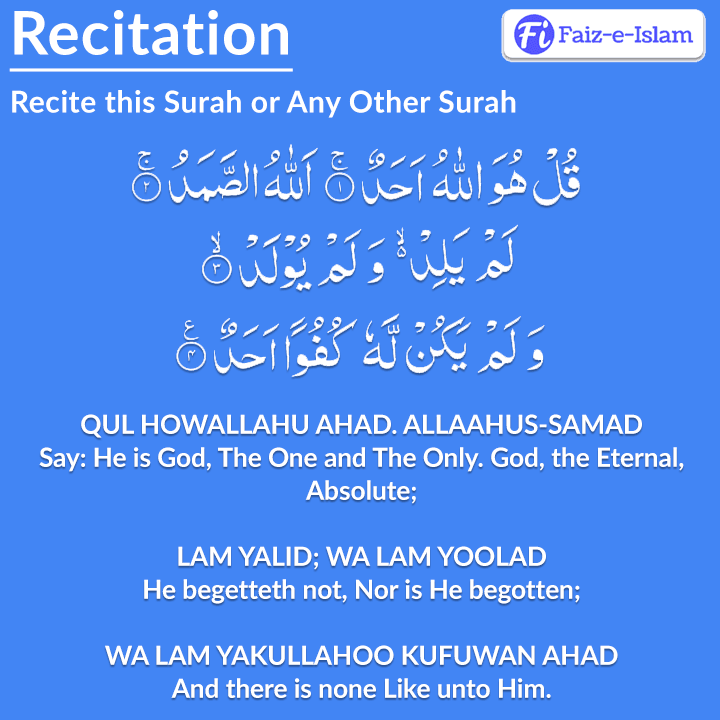
- After Surah Al-Fatiha, say (Ameen)recite any short Surah (e.g., Surah Al-Ikhlas, Surah Al-Falaq, or Surah An-Nas) in the first two Rak’ahs.
2. Ruku (Bowing)
Bend forward at the waist, place your hands on your knees, and keep your back straight. Say:
سُبْحَانَ رَبِّيَ الْعَظِيمِ Subhana Rabbiyal ‘Azeem (3 times)
English: Glory be to my Lord, the Supreme.
3. Qaumah (Standing after Ruku)
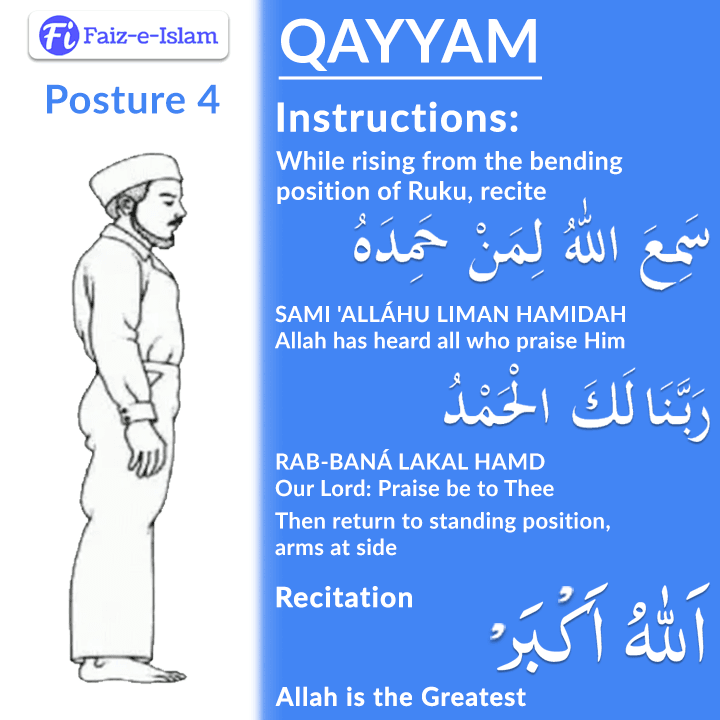
Stand up straight from Ruku and say:
سَمِعَ اللَّهُ لِمَنْ حَمِدَهُ Sami’Allahu liman hamidah
English: Allah hears those who praise Him.
Then say:
رَبَّنَا وَلَكَ الْحَمْدُ Rabbana wa lakal hamd
English: Our Lord, and to You is all praise.
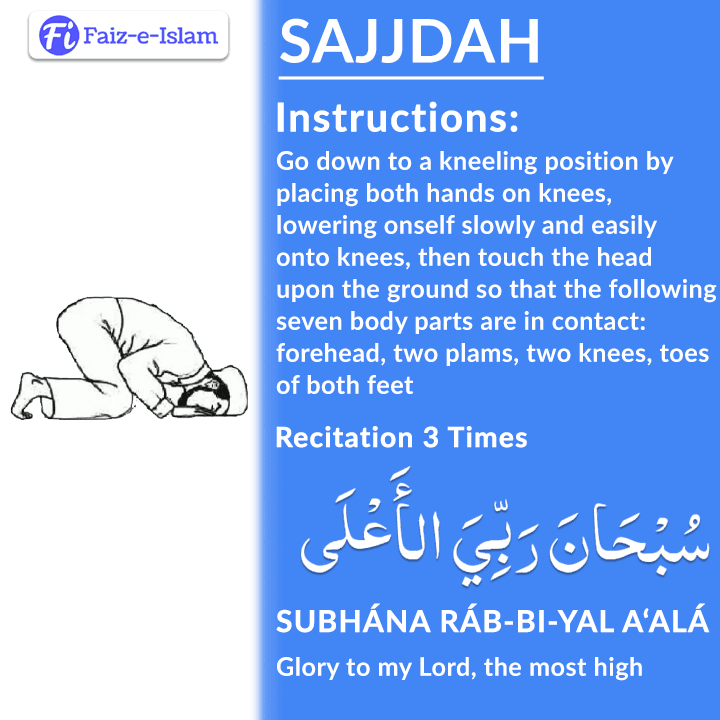
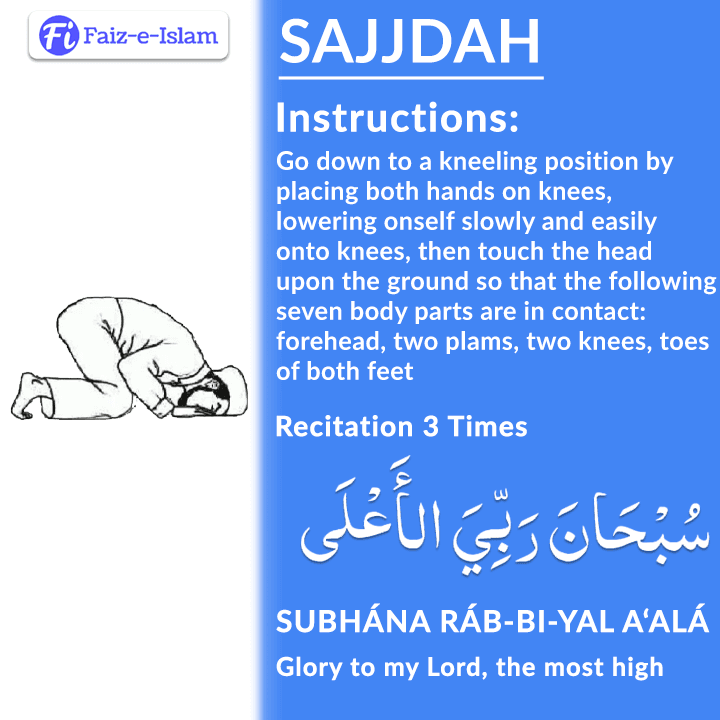
4. Sujood (Prostration) – First and Second
Go down into prostration (Sujood) with your forehead, nose, palms, knees, and toes touching the ground. Say:
سُبْحَانَ رَبِّيَ الْأَعْلَى Subhana Rabbiyal A’la (3 times)
English: Glory be to my Lord, the Most High.
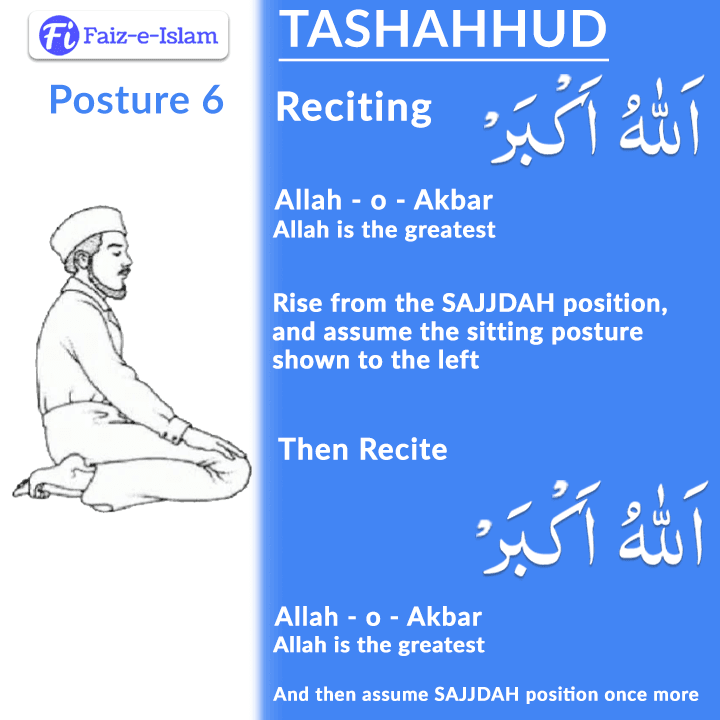
Sit up briefly between the two prostrations (Jalsah), then perform the second Sujood and repeat the same dua.
5. Jalsah (Sitting between the two Sujoods)
Sit upright between the two prostrations with calm and then go to second sajdah.
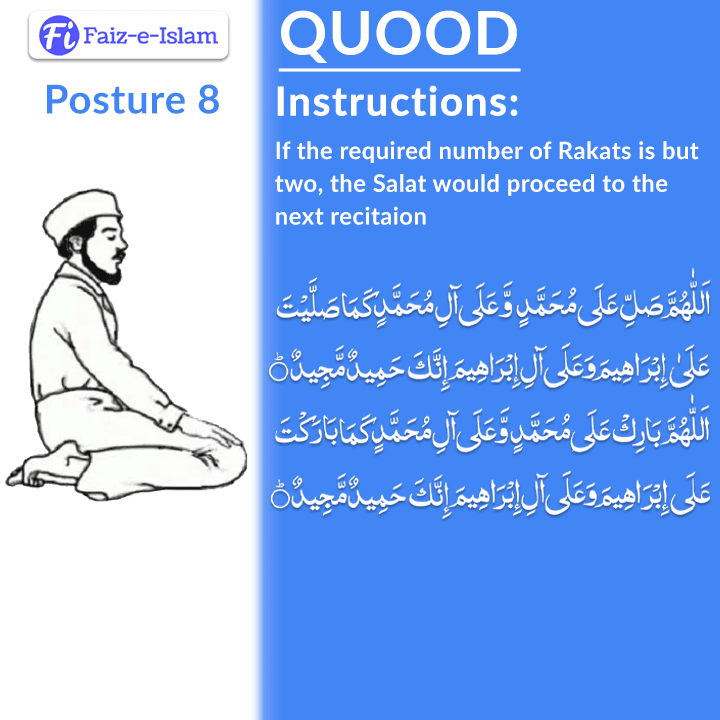
6. Tashahhud (Sitting Position)
After the second Sujood of the second Rak’ah (and in the final Rak’ah), sit and recite Tashahhud:
التَّحِيَّاتُ لِلَّهِ وَالصَّلَوَاتُ وَالطَّيِّبَاتُ ۚ السَّلَامُ عَلَيْكَ أَيُّهَا النَّبِيُّ وَرَحْمَةُ اللَّهِ وَبَرَكَاتُهُ ۚ السَّلَامُ عَلَيْنَا وَعَلَىٰ عِبَادِ اللَّهِ الصَّالِحِينَ ۚ أَشْهَدُ أَنْ لَا إِلَهَ إِلَّا اللَّهُ وَأَشْهَدُ أَنَّ مُحَمَّدًا عَبْدُهُ وَرَسُولُهُ
English Translation: All compliments, prayers, and pure words are due to Allah. Peace be upon you, O Prophet, and the mercy of Allah and His blessings. Peace be upon us and upon the righteous servants of Allah. I bear witness that there is no god but Allah, and I bear witness that Muhammad is His servant and Messenger.
In the final Rak’ah, after Tashahhud, recite Salawat (Durood-e-Ibrahimi) and then make dua before ending the prayer.
After Tashahhud (in the Final Rak’ah)
After reciting Tashahhud in the last Rak’ah, continue with Salawat (Durood-e-Ibrahimi) and then make dua before ending the prayer.
Durood-e-Ibrahimi (Salawat):
Arabic: اللَّهُمَّ صَلِّ عَلَىٰ مُحَمَّدٍ وَعَلَىٰ آلِ مُحَمَّدٍ كَمَا صَلَّيْتَ عَلَىٰ إِبْرَاهِيمَ وَعَلَىٰ آلِ إِبْرَاهِيمَ إِنَّكَ حَمِيدٌ مَجِيدٌ ۚ اللَّهُمَّ بَارِكْ عَلَىٰ مُحَمَّدٍ وَعَلَىٰ آلِ مُحَمَّدٍ كَمَا بَارَكْتَ عَلَىٰ إِبْرَاهِيمَ وَعَلَىٰ آلِ إِبْرَاهِيمَ إِنَّكَ حَمِيدٌ مَجِيدٌ
Easy Transliteration: Allahumma salli ala Muhammadin wa ala ali Muhammadin kama sallayta ala Ibrahima wa ala ali Ibrahima innaka Hamidun Majid. Allahumma barik ala Muhammadin wa ala ali Muhammadin kama barakta ala Ibrahima wa ala ali Ibrahima innaka Hamidun Majid.
English Translation: O Allah, send blessings upon Muhammad and upon the family of Muhammad, as You sent blessings upon Ibrahim and upon the family of Ibrahim. Indeed, You are Praiseworthy and Glorious. O Allah, bless Muhammad and the family of Muhammad as You blessed Ibrahim and the family of Ibrahim. Indeed, You are Praiseworthy and Glorious.
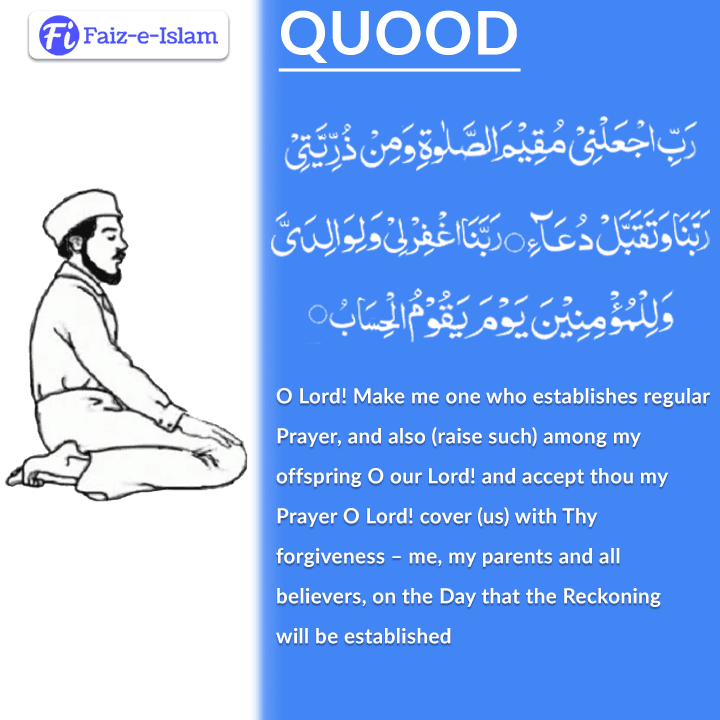
Arabic: رَبِّ اجْعَلْنِي مُقِيمَ الصَّلَاةِ وَمِنْ ذُرِّيَّتِي ۚ رَبَّنَا وَتَقَبَّلْ دُعَاءِ ۚ رَبَّنَا اغْفِرْ لِي وَلِوَالِدَيَّ وَلِلْمُؤْمِنِينَ يَوْمَ يَقُومُ الْحِسَابُ
Easy Transliteration: Rabbij’alni muqeemas-salati wa min dhurriyyati. Rabbana wa taqabbal du’aa. Rabbanagh-fir li wa liwalidayya wa lilmu’mineena yawma yaqumul hisab.
English Translation: O my Lord, make me an establisher of prayer, and [also] from my descendants. Our Lord, and accept my supplication. Our Lord, forgive me and my parents and the believers on the Day the account is established.
7. Salaam (Ending the Prayer)
Turn your face to the right and say: السَّلَامُ عَلَيْكُمْ وَرَحْمَةُ اللَّهِ Assalamu Alaikum wa Rahmatullah
Then turn to the left and repeat the same.
Important Tips:
- Keep your eyes focused on the place of Sujood during prayer.
- In the first two Rak’ahs, recite a short Surah after Al-Fatiha.
- In the third and fourth Rak’ahs, recite only Surah Al-Fatiha.
Detailed Visual Guides to Perform Salaat
Salaat (prayer) is one of the five pillars of Islam and an essential act of worship for every Muslim. It is a direct way to connect with Allah (SWT), seek His blessings, and maintain spiritual discipline in daily life.



How to Pray Different Daily Salah (Fajr, Dhuhr, Asr, Maghrib, Isha)
Islam has prescribed five daily prayers (Salah). Each prayer has a different number of Rak’ahs consisting of Fardh (obligatory), Sunnah (following the Prophet ﷺ), Nafl (voluntary), and Witr.
1. Difference Between Fardh, Sunnah, Nafl, and Witr
| Type | Meaning | Status | Reward / Consequence |
|---|---|---|---|
| Fardh | Obligatory act commanded by Allah | Compulsory | Must be performed; leaving it is a major sin |
| Sunnah | Actions regularly performed by the Prophet ﷺ | Highly recommended | Great reward; leaving it regularly is disliked |
| Nafl | Voluntary / extra prayers | Optional | Brings extra reward and closeness to Allah |
| Witr | Odd-numbered prayer performed after Isha | Wajib (highly emphasized) | Strongly recommended; some scholars consider it obligatory |
2. Rak’ah Breakdown of the Five Daily Prayers
| Prayer | Sunnah Before | Fardh (Obligatory) | Sunnah After | Nafl (Optional) | Witr | Total Rak’ahs |
|---|---|---|---|---|---|---|
| Fajr | 2 | 2 | – | – | – | 4 |
| Dhuhr | 4 | 4 | 2 | 2 | – | 12 |
| Asr | 4 (optional) | 4 | – | – | – | 8 |
| Maghrib | – | 3 | 2 | 2 | – | 7 |
| Isha | 4 (optional) | 4 | 2 | 2 | 3 Witr | 15 |
Jumu’ah (Friday) Prayer – Special Congregational Prayer
Jumu’ah (Friday Prayer) is a special weekly congregational prayer performed in place of the Zuhr prayer every Friday. It holds great virtues and is one of the most important acts of worship in Islam.
Allah says in the Holy Quran:
﴿ يَا أَيُّهَا الَّذِينَ آمَنُوا إِذَا نُودِيَ لِلصَّلَاةِ مِنْ يَوْمِ الْجُمُعَةِ فَاسْعَوْا إِلَىٰ ذِكْرِ اللَّهِ وَذَرُوا الْبَيْعَ ۚ ذَٰلِكُمْ خَيْرٌ لَكُمْ إِنْ كُنْتُمْ تَعْلَمُونَ ﴾
English Translation: “O you who have believed, when the call is made for prayer on the day of Jumu’ah, then proceed to the remembrance of Allah and leave trade. That is better for you, if you only knew.”
Rak’ah Breakdown of Jummah Prayer
| Part | Number of Rak’ahs | Details |
|---|---|---|
| Sunnah before | 4 Rak’ahs (Mu’akkadah) | Performed before the Khutbah |
| Fardh (Jumu’ah) | 2 Rak’ahs | Congregational prayer (led by Imam) |
| Sunnah after | 4 Rak’ahs (Mu’akkadah) | Performed after the Fardh |
| Nafl (Optional) | 2 Rak’ahs | Can be performed after the 4 Sunnah after |
Total Rak’ahs usually performed: 4 (before) + 2 (Fardh) + 4 (after) = 10 Rak’ahs
Important Points about Jumu’ah:
- Listening to the Khutbah silently is obligatory.
- Jumu’ah prayer replaces the Zuhr prayer on Friday.
- It must be performed in congregation (Jam’ah) in the Masjid.
- The Imam delivers two Khutbahs (sermons) before the 2 Fardh Rak’ahs.
Common Mistakes in Salah and How to Correct Them
Many Muslims make unintentional mistakes while praying. Here are the most common mistakes and how to correct them:
- Rushing Through Salah Praying too fast without proper calmness. Correction: Perform each position slowly and with full concentration. The Prophet ﷺ said, “The worst thief is the one who steals from his prayer.
- Not Reciting Surah Al-Fatiha Properly Rushing or skipping Surah Al-Fatiha in any Rak’ah. Correction: Recite Surah Al-Fatiha slowly and clearly in every Rak’ah. It is obligatory.
- Incorrect Posture in Ruku and Sujood Not keeping the back straight in Ruku or not placing the forehead and nose properly in Sujood. Correction: In Ruku, keep your back straight and parallel to the ground. In Sujood, ensure forehead, nose, both palms, both knees, and toes touch the ground.
- Looking Around During Prayer Moving eyes or head unnecessarily. Correction: Keep your gaze focused on the place of Sujood (where your forehead touches the ground).
- Not Sitting Properly in Tashahhud Sitting incorrectly or not pointing the index finger. Correction: Sit on your left foot with the right foot upright. Point your right index finger toward the Qibla while saying “Ash-hadu an la ilaha illallah.
- Performing Salah Without Proper Wudu Praying while Wudu is invalid. Correction: Always ensure you have performed Wudu correctly before starting Salah.
- Not Raising Hands at Takbir e Tahreema Starting Salah without raising hands to the ears. Correction: Raise both hands up to your ears when saying “Allahu Akbar” at the beginning of Salah.
- Uneven Shoulders in Rows (During Congregation) Leaving gaps between shoulders in congregational prayer. Correction: Stand shoulder to shoulder and foot to foot with the person next to you.
Frequently Asked Questions about Salah
Here are answers to the most common questions about Salah:
- What is the minimum age to start praying Salah? Children should be encouraged to pray from the age of 7 and must pray regularly from the age of 10.
- Can women pray Salah during their periods (menses)? No. Women are exempt from Salah and fasting during menstruation. They do not need to make up the missed prayers.
- Is it allowed to pray Salah in English? The Fardh (obligatory) part of Salah must be recited in Arabic. However, you can make personal dua in any language after Tashahhud.
- Can I pray Salah while sitting if I am sick or disabled? Yes. If you cannot stand, you may pray while sitting or even lying down. Make gestures for Ruku and Sujood as much as possible.
- Does missing one Salah break my fast? No. Missing Salah does not break the fast, but it is a major sin. You should pray it as soon as possible (Qada).
- What should I do if I forget a Rak’ah during Salah? If you forget a Rak’ah, perform the two Sujood as-Sahw (prostrations of forgetfulness) at the end before Tasleem.
- Is Witr prayer compulsory? Witr is Wajib (highly emphasized) according to the Hanafi school. It is strongly recommended to perform it after Isha.
- Can I combine Dhuhr and Asr or Maghrib and Isha prayers? Yes, in case of travel, severe rain, or illness, you may combine Dhuhr with Asr, and Maghrib with Isha (with conditions).
- What is the ruling on praying Salah in a car or while traveling? You may pray while sitting if standing is difficult, but you should face the Qibla whenever possible.
- Does laughing during Salah break the prayer? Loud laughter breaks both Wudu and Salah. Smiling does not break Salah.
Final Advice for Perfecting Your Salah
Establishing Salah is the most important duty of every Muslim. The Prophet Muhammad ﷺ said:
“The coolness of my eyes is in Salah.”
Make Salah the most beautiful and peaceful part of your day. Start with correct Wudu, focus on what you are reciting, and pray with full humility and khushu (concentration).
About This Guide
Written by Muhammad Mobushir Founder of Faiz e Islam
This complete guide to performing Salah has been prepared with the sincere intention of helping Muslims especially new Muslims and beginners, learn how to pray correctly according to the Quran and authentic Sunnah of Prophet Muhammad ﷺ. All references are taken from well-known and reliable Islamic sources.
Last Updated: 26 March 2026
Disclaimer
All content on this page, including the step-by-step guide, Quranic verses, Hadith references, and explanations, is compiled from authentic sources such as the Holy Quran, Sahih Bukhari, Sahih Muslim, Sunan Tirmidhi, and established Islamic scholarship.
We strive to present accurate and reliable information. However, Salah is an act of worship, and minor differences may exist between Islamic schools of thought (Hanafi, Shafi’i, Maliki, Hanbali). We strongly recommend that readers consult a qualified local Islamic scholar or Imam for any specific rulings or personal circumstances.
May Allah accept our efforts and grant us all the ability to perform Salah with sincerity, khushu, and perfection. Ameen.